



Coffee and IBS: Can You Still Drink It?

Let's start with the truth, because you deserve it straight: for many people with IBS, regular coffee is a trigger. That's not marketing — it's what the research shows, and pretending otherwise wouldn't help you.
But “coffee is a trigger for many” is not the same as “coffee is off-limits for everyone.” The relationship between coffee and IBS is genuinely individual, it depends on your IBS type, and — importantly — the part of coffee that drives most IBS symptoms is something decaf removes.
This guide explains what's actually going on, what the science says, and why a clean, chemical-free decaf is the option worth trying if you're not ready to give up the ritual.
Does Coffee Trigger IBS?
For a meaningful share of people with IBS, yes — coffee can trigger or worsen symptoms. Studies that ask people with IBS about their triggers find that roughly a quarter to a third name coffee as one of them.
The reason matters, because it points to the solution. With acid reflux, the concern is mostly acidity. With IBS, the bigger driver is different:
Caffeine speeds up your gut. Caffeine stimulates movement (motility) in the colon. For someone with IBS — especially the diarrhea-predominant type (IBS-D) — that extra push can mean cramping, urgency, and loose stools.
Coffee also stimulates stomach acid, which can add to abdominal discomfort, particularly on an empty stomach.
Here's the key insight most coffee brands skip: low-acid roasting does not reduce caffeine. So “low-acid coffee” alone only addresses one of the two mechanisms. If caffeine-driven motility is your problem, the option that actually targets it is decaf.
What the Research Actually Says
The science is mixed — and being honest about that is more useful than overselling.
Some research finds a real association. A study of coffee and caffeine intake and IBS (Koochakpoor et al., 2021) found a significant link between higher caffeine intake and the odds of IBS, particularly among women. A 2023 systematic review and meta-analysis pooling the available studies found the overall picture conflicting — some studies show coffee worsening symptoms, others show little effect, and a few suggest coffee's gut-stimulating effect might even help the constipation-predominant type (IBS-C).
Why Decaf Is the Smarter Starting Point for IBS
Decaf removes caffeine — the single ingredient most often behind IBS flare-ups from coffee. That's the core of the case, and it's a far stronger one than “low-acid” can make on its own for IBS.
But not all decaf is equal, and for sensitive guts the how matters:
1. The decaffeination process matters
Many conventional decafs are processed with synthetic chemical solvents. If your digestion is already sensitive, a cleaner process is worth seeking out. Our Sugarcane EA Decaf uses naturally derived ethyl acetate from fermented sugarcane — not harsh synthetic chemicals.
2. Low-acid still helps the second mechanism
Removing caffeine handles motility; keeping the coffee low-acid helps with the stomach-acid irritation that can also bother IBS. Our decaf keeps the same naturally low-acid profile as the rest of our coffee, so you get both.
3. What you add matters more than you think (the FODMAP factor)
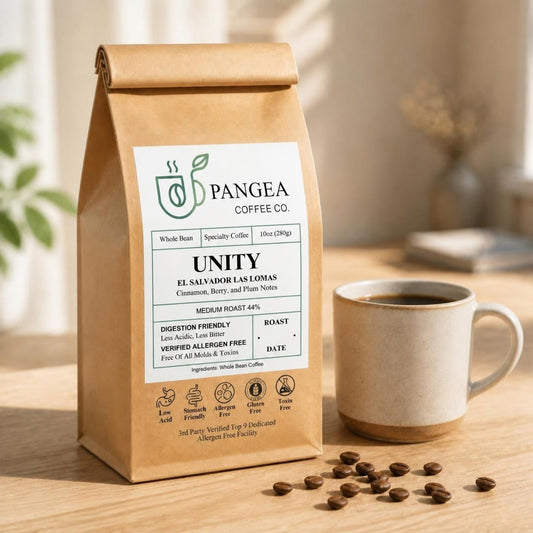
Plain coffee is low in FODMAPs — the fermentable carbs that commonly trigger IBS. But the add-ins often aren't: many milks, creamers, and flavored syrups are high-FODMAP and can be the real culprit. Because our coffee is SPOKIN-verified allergen-free with nothing added, you start from a clean baseline and stay in control of what goes in your cup.
If you also deal with acid reflux alongside IBS, our dedicated Decaf Coffee for Acid Reflux & GERD guide goes deeper on the reflux side.
Doctor-Recommended for Sensitive Digestion
We're recommended by Dr. Joseph Salhab, a board-certified gastroenterologist known as @TheStomachDoc, who focuses on managing GERD, IBS, and reflux through nutrition and lifestyle.

If You Want to Keep Some Caffeine
Not everyone with IBS needs to drop caffeine entirely — tolerance varies. If you want to reduce rather than remove it, these approaches help:
- Never drink coffee on an empty stomach — always pair it with food to blunt the gut-stimulating effect.
- Keep portions small — larger amounts of caffeine are more likely to trigger symptoms than a single modest cup.
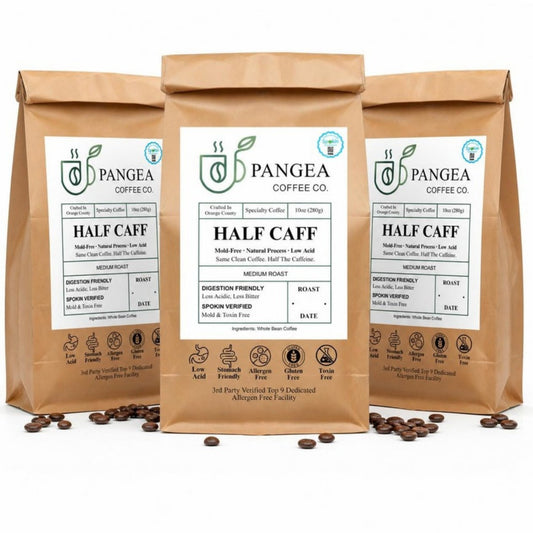
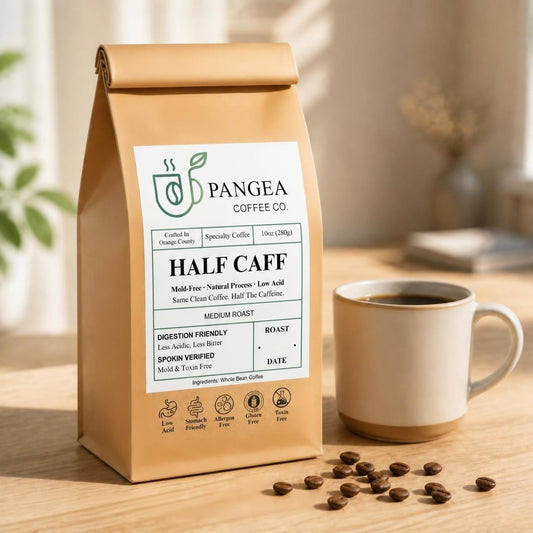
- Try a half-caff blend — Half Caff comes premixed 50/50 with Natural EA decaf, or mix our decaf with a low-acid regular roast yourself to step down gradually.
- Watch the add-ins — skip high-FODMAP milks and syrups; they're often the real trigger.
For caffeinated low-acid options, browse our low-acid coffee collection — though for IBS specifically, decaf remains the gentlest starting point.
How to Reintroduce Coffee With IBS
If coffee has been off your list, here's a measured way to test whether decaf works for you:
- Start with one small cup of decaf, with food — ideally after breakfast, not first thing.
- Keep everything else the same for a few days so you can isolate coffee's effect.
- Track how you feel over the following hours — cramping, urgency, bloating, or nothing at all.
- Give it about a week of consistency before judging. One day isn't enough signal.
- Work with your doctor if symptoms are significant — IBS needs proper management, and coffee is just one variable.
What Customers With Sensitive Stomachs Say
These are genuine reviews from customers with sensitive digestion. (We don't publish condition-specific claims we can't verify — so we're sharing real sensitive-stomach feedback rather than putting words in anyone's mouth.)
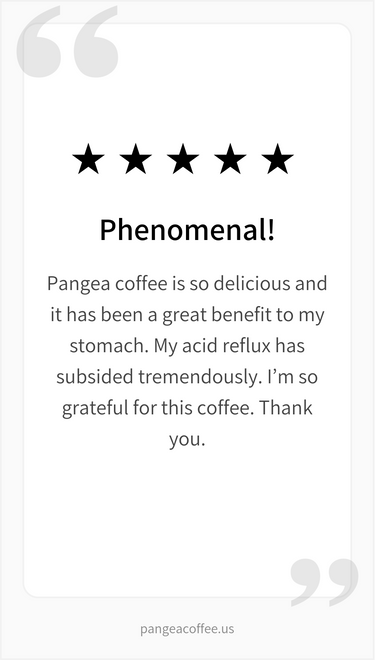
“Delicious coffee that goes down easy. I have to be very careful with my stomach, and I am delighted that I can still drink this coffee.”
— Drea, Sensitive Stomach
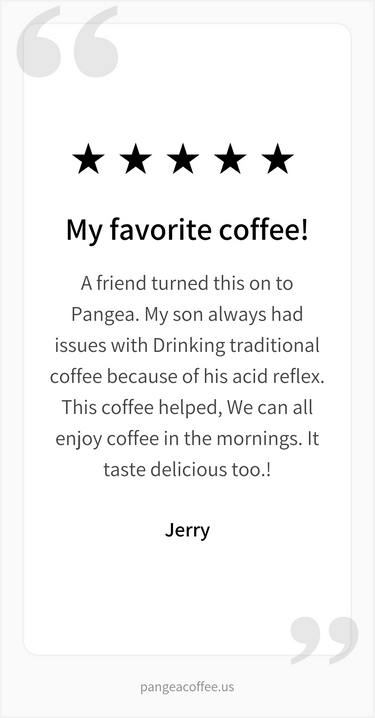
“My family and I love how all the coffee varieties taste and how they don't hurt our stomachs. We will be drinkers of Pangea for as long as it's roasted.”
— Thomas E., Verified Buyer
“Wonderful product and wonderful service. I really like that the medium roast is not burnt but still has a full body taste.”
— Ellie, Unity Medium Roast
Individual results vary. Start small and monitor your own symptoms.
Frequently Asked Questions
Is coffee bad for IBS?
It can be for many people. Studies find roughly a quarter to a third of people with IBS name coffee as a trigger, mainly because caffeine speeds up gut motility and coffee stimulates stomach acid. But responses are individual and depend on your IBS type, so it isn't universally off-limits — many people tolerate a clean decaf well.
Is decaf coffee better than regular coffee for IBS?
Often, yes — because decaf removes caffeine, the ingredient most associated with the gut-motility effects that trigger IBS symptoms like cramping and diarrhea. Decaf isn't a cure, but for many people it's noticeably better tolerated than regular coffee.
Why does coffee make my IBS worse?
Two main reasons: caffeine stimulates movement in your colon (which can cause urgency and loose stools, especially with IBS-D), and coffee increases stomach acid (which can add to abdominal discomfort). Add-ins like milk and flavored syrups can also be high in FODMAPs, which are common IBS triggers.
What kind of decaf is best for a sensitive gut?
Look for decaf processed without harsh synthetic solvents, and ideally low-acid with no additives. Our Sugarcane EA Decaf uses naturally derived ethyl acetate from fermented sugarcane, stays low-acid, and is SPOKIN-verified allergen-free with nothing added.
Does low-acid coffee help with IBS?
Low-acid coffee may help with the stomach-acid side of the discomfort, but on its own it does not reduce caffeine — and caffeine-driven motility is the bigger IBS trigger for most people. That's why, for IBS specifically, decaf (which removes the caffeine) is usually the better starting point than caffeinated low-acid coffee.
Can coffee ever help IBS?
For some people with constipation-predominant IBS (IBS-C), coffee's gut-stimulating effect may actually help regularity. The research is mixed and individual, so this isn't a recommendation — just a reason the answer isn't a simple “avoid coffee.” Talk with your doctor about your specific IBS type.
Should I drink coffee on an empty stomach with IBS?
Best not to. Coffee on an empty stomach amplifies both the acid and the gut-stimulating effects. Pairing coffee with food — even a small breakfast — tends to make it much easier to tolerate.
Are coffee add-ins a problem for IBS?
Often yes. Plain coffee is low in FODMAPs, but many milks, creamers, and flavored syrups are high-FODMAP and can trigger IBS symptoms on their own. Starting with a clean, additive-free coffee lets you control exactly what goes in.
Is Pangea decaf allergen-free?
Yes. Pangea is the first SPOKIN-verified coffee company in America — a third-party allergen-free facility verification. Our facility doesn't process nuts, gluten, dairy, or any of the Top-9 allergens, with strict protocols to prevent cross-contamination.
Ready to Try Coffee Again?
If IBS has pushed coffee out of your life, a clean decaf is the gentlest way to test the waters — caffeine removed, low-acid, nothing added.
Start Gentle With Pangea Decaf
✓ Caffeine-Free • ✓ Low-Acid • ✓ SPOKIN-Verified Allergen-Free • ✓ No Additives
Learn More:
- Decaf Coffee for Acid Reflux & GERD
- Best Coffee for a Sensitive Stomach
- Low-Acid Coffee & Gut Health
- Shop All Low-Acid Coffee
Scientific References
This guide reflects peer-reviewed research. Where the evidence is mixed or preliminary, we've said so.
-
Koochakpoor, G., et al. (2021). “Association of Coffee and Caffeine Intake With Irritable Bowel Syndrome in Adults.” Frontiers in Nutrition, 8, 632469.
View on PubMed Central →
Found a significant association between higher caffeine intake and odds of IBS, particularly among women. -
Systematic Review & Meta-Analysis (2023). “Examining the Association between Coffee Intake and the Risk of Developing Irritable Bowel Syndrome.”
View on PubMed Central →
Pooled analysis finding conflicting results across studies — supporting that coffee's effect on IBS is individual rather than universal.
Medical Disclaimer: This article is for informational purposes only and does not constitute medical advice. Coffee affects IBS differently from person to person, and the research is mixed. If you have IBS or another digestive condition, consult your physician before making dietary changes. This information should not replace professional medical diagnosis or treatment.
Quality Assurance at Pangea:
- SPOKIN-Verified: The first allergen-free verified coffee company in America
- Q-Grader Inspection: Certified graders evaluate our coffee at our facility — and sometimes at the source
- Chemical-Free Decaf: Naturally derived ethyl acetate from fermented sugarcane
- No Additives: Nothing added — you control what goes in your cup
Last Updated: June 2026
Citations verified at time of publication.