


-
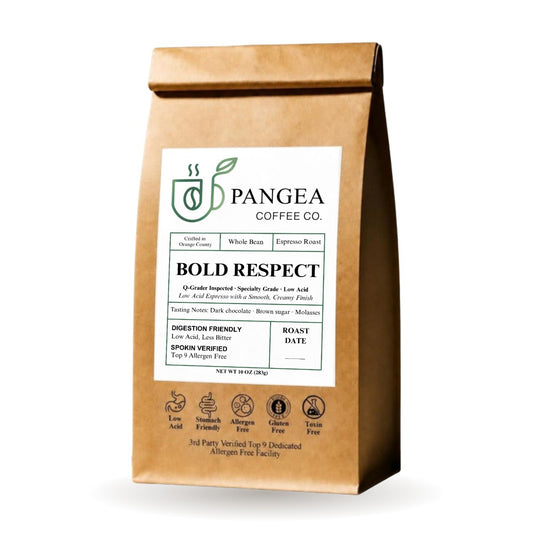
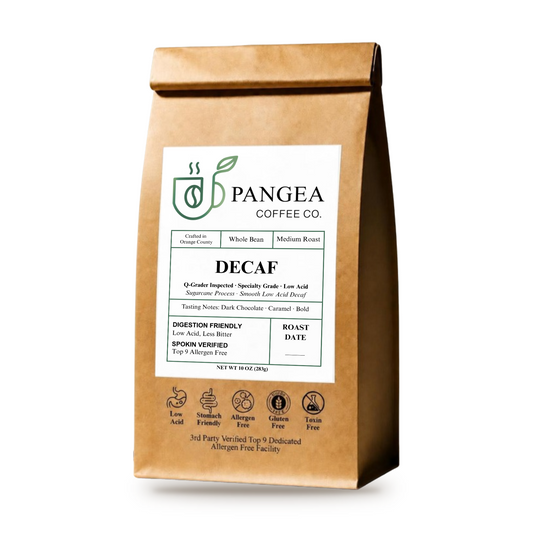
Pangea Decaf — Low Acid Sugarcane ProcessVendor: Pangea Coffee Co.All the flavor. Almost none of the caffeine. No harsh solvents. Pangea Decaf uses the natural Sugarcane EA process to remove caffeine while preserving the rich dark chocolate, caramel, and bold depth you expect from a great cup of coffee. Mold-free. SPOKIN-verified allergen-free. Gastroenterologist-recommended...
- $20.99
- $20.99
- Unit price
- per
-
Pangea Decaf 3-Pack — Low Acid Sugarcane ProcessVendor: Pangea Coffee Co.Who it's for The Decaf 3-Pack is for the evening coffee drinker, or the household that has settled on Pangea Decaf and wants fewer reorders. Why three bags Three 10oz bags of Pangea Decaf, 30oz in total, each sealed for freshness. It is decaffeinated...
- $49.99
$62.97- $49.99
- Unit price
- per



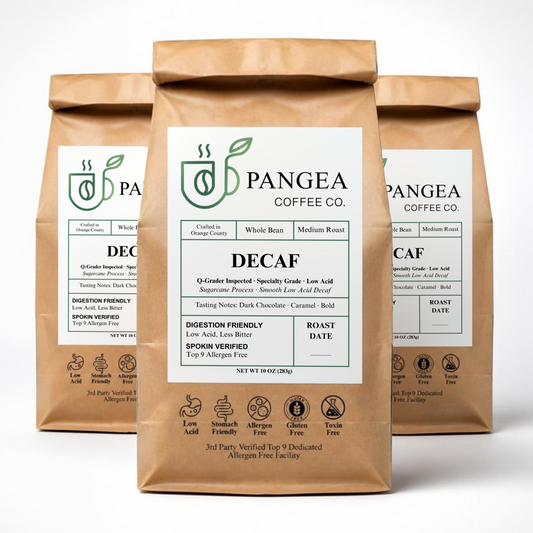

Sugarcane EA — and Why It Matters
Most decaf on American shelves is processed with methylene chloride. It's effective, it's permitted, and it's not something most people know they're drinking. We use the sugarcane EA process instead — ethyl acetate derived from fermented sugarcane, a naturally occurring compound found in ripening fruit. It's gentler on the bean, which is why our decaf still tastes like coffee rather than a memory of one.
The tradeoff is cost and sourcing. Sugarcane EA decaf is more expensive and available on fewer lots, which is why most brands don't bother. We think a decaf you'd actually choose is worth the difference.
Expect — dark chocolate, caramel, full body
Genuinely low acid — not just caffeine-free
Best brewed as — drip, espresso, French press
Good for — evenings, second cups, anyone cutting back
Is Decaf Still Acidic?
Usually, yes — removing caffeine doesn't do much to the compounds that make a cup taste sharp. That's the part most people miss when they switch to decaf hoping for a gentler cup and don't get one. Ours is built low acid from the lot up and roasted to keep it that way, so the decaf isn't just a caffeine decision. More in our guide to decaf and acidity.
Truth in Coffee:
Every roast is clean, allergen-free, and low-acid.
See how we do it. →
See how we do it. →
- Choosing a selection results in a full page refresh.