Best Coffee for Sensitive Stomach: Complete Guide (2026)

If coffee leaves you reaching for antacids or running to the bathroom, you're not alone. Discover why coffee bothers your stomach and find truly stomach-friendly coffee that's SPOKIN-verified, naturally low-acid, and Q grader certified. Doctor-backed guide with brewing tips for GERD, IBS, and food allergies.
Why Does Coffee Bother Your Stomach?
An estimated 40 million Americans experience digestive discomfort from coffee, leading many to give up their morning ritual entirely. But here's what most people don't realize: it's not the coffee itself—it's the quality of the beans and how they're processed.
After working with thousands of customers with sensitive stomachs (and dealing with these issues in my own family), I've learned that the right coffee can be completely gentle on your digestive system while still delivering the flavor and energy you love.
The 4 Root Causes of Coffee-Related Stomach Issues
1. Chemical Contaminants & Mold: Regular commercial coffee often contains trace amounts of mold toxins (mycotoxins) and chemical residues from pesticides. A 2003 study found that up to 91.7% of green coffee beans showed some level of mold contamination. Even in small amounts, these can trigger digestive inflammation.
2. High Acidity: Regular coffee from many commercial sources tends to be highly acidic, which can trigger acid reflux, irritate the stomach lining, worsen IBS symptoms, and cause bloating and gas. Coffee from certain regions (like Brazil and Sumatra) naturally contains less acid.
3. Low-Quality Beans & Processing: Commercial coffee is often processed in facilities that handle multiple allergens, stored improperly before roasting, and may contain rancid oils from stale beans or chemical additives.
4. Caffeine Sensitivity: While caffeine isn't the main problem for most people, it can stimulate acid production and speed up digestion—which isn't ideal if you already have a sensitive system.
The Science: Why Your Gut Reacts to Bad Coffee
Your digestive system is lined with a protective mucus layer. When you consume coffee contaminated with mycotoxins, pesticides, or high acidity, it can damage the mucus layer, trigger inflammatory responses, alter gut microbiome balance, and stimulate excessive acid production. This is why the same amount of caffeine from clean, low-acid coffee often causes zero issues.
What Makes Coffee "Stomach-Friendly"?
Truly stomach-friendly coffee isn't just "low-acid" or "organic"—it needs to address all four root causes. Here's what to look for:
✓ Allergen-Free & Contamination-Free
Look for: SPOKIN Verification or certified allergen-free facilities
This is the game-changer most people miss. Even "organic" coffee can be processed in facilities that handle wheat, soy, tree nuts, and other allergens—leading to cross-contamination that triggers digestive issues.
At Pangea Coffee, we're SPOKIN-verified, meaning our facility processes zero of the top 9 food allergens, every batch is independently verified by SPOKIN, we use dedicated equipment for coffee only, and our supply chain is fully traceable from farm to bag.
This level of protection is crucial if you have food allergies, celiac disease or gluten sensitivity, IBS or IBD, or chronic digestive inflammation.
✓ Naturally Low-Acid (From Low-Acid Regions)
Look for: Coffee from naturally low-acid growing regions
Truly low-acid coffee comes from specific growing regions known for producing beans with naturally lower acidity. This isn't about adding chemicals—it's about starting with the right beans from the right places.
How do you get truly low-acid coffee? Source from naturally lower-acid regions (Brazil, Sumatra, parts of Guatemala), use wet processing (removes more acids), choose medium to dark roasts (breaks down chlorogenic acids), and verify through expert tasting.
At Pangea, we source exclusively from regions known for low-acid coffee and use roast profiles that further reduce acidity. Our expert roasters and tasters verify every batch for the smooth, gentle profile our customers need.
✓ Specialty-Grade & Q Grader Certified
Look for: Specialty-grade (80+ points) certified by Q graders
Specialty-grade coffee (scoring 80+ on the 100-point scale) is rigorously evaluated by certified Q graders—trained coffee professionals who inspect beans on-site at origin. This isn't just about flavor—it's about your health.
Regular "commodity-grade" coffee can legally contain up to 86 defects per 300g sample. Specialty-grade allows a maximum of 5 defects. That's a 17x difference in quality standards.
At Pangea, we work exclusively with specialty-grade coffee certified by Q graders who inspect our beans at origin—ensuring on-site inspection by trained experts, visual and physical defect screening, cup quality evaluation, and freshness verification at source.
✓ Clean Processing & No Additives
Look for: Single-origin, no flavoring, no additives
Stomach-friendly coffee should be just coffee—no "natural flavors," no processing aids, no mystery ingredients. This means single-origin beans, direct trade relationships with farmers, small-batch roasting for quality control, and transparent sourcing.
Best Coffee Beans for Sensitive Stomachs
Not all coffee is created equal when it comes to digestive comfort. Here's what to look for:
✓ Brazil (Low Acid, Smooth)
Why it's gentle: Brazilian coffees are naturally low in acidity due to lower elevation growing regions and processing methods that minimize acid content.
Flavor profile: Chocolate, nutty, sweet with minimal brightness
Best for: People who need the lowest possible acidity and prefer a smooth, mellow cup
Try: Our Unity Brazil Ipe features Brazilian beans for maximum digestive comfort
✓ Guatemala (Balanced, Clean)
Why it's gentle: Guatemalan coffees from specific regions offer balanced acidity that's easier on sensitive stomachs when properly processed with wet-processing methods.
Flavor profile: Cocoa, caramel, subtle fruit notes
Best for: Coffee lovers who want flavor complexity without harsh acidity
Try: Our Hope - Guatemala Colemnar is wet-processed for gentler acidity
✓ Sumatra (Earthy, Full-Body)
Why it's gentle: Sumatran coffees use unique processing methods that produce very low acidity and heavy body.
Flavor profile: Earthy, herbal, dark chocolate, tobacco
Best for: Dark roast lovers who prefer bold, full-bodied coffee
Try: Look for Sumatran coffee in our seasonal single-origin offerings
Best Roast Levels for Sensitive Stomachs
Medium to Dark Roasts are generally gentler on sensitive stomachs because longer roasting breaks down chlorogenic acids, creates less reactive compounds, develops fuller body and smoother mouthfeel, and has lower perceived acidity.
Our recommendations:
- Light roasts: Choose wet-processed, naturally low-acid origins like our Guatemala Colemnar
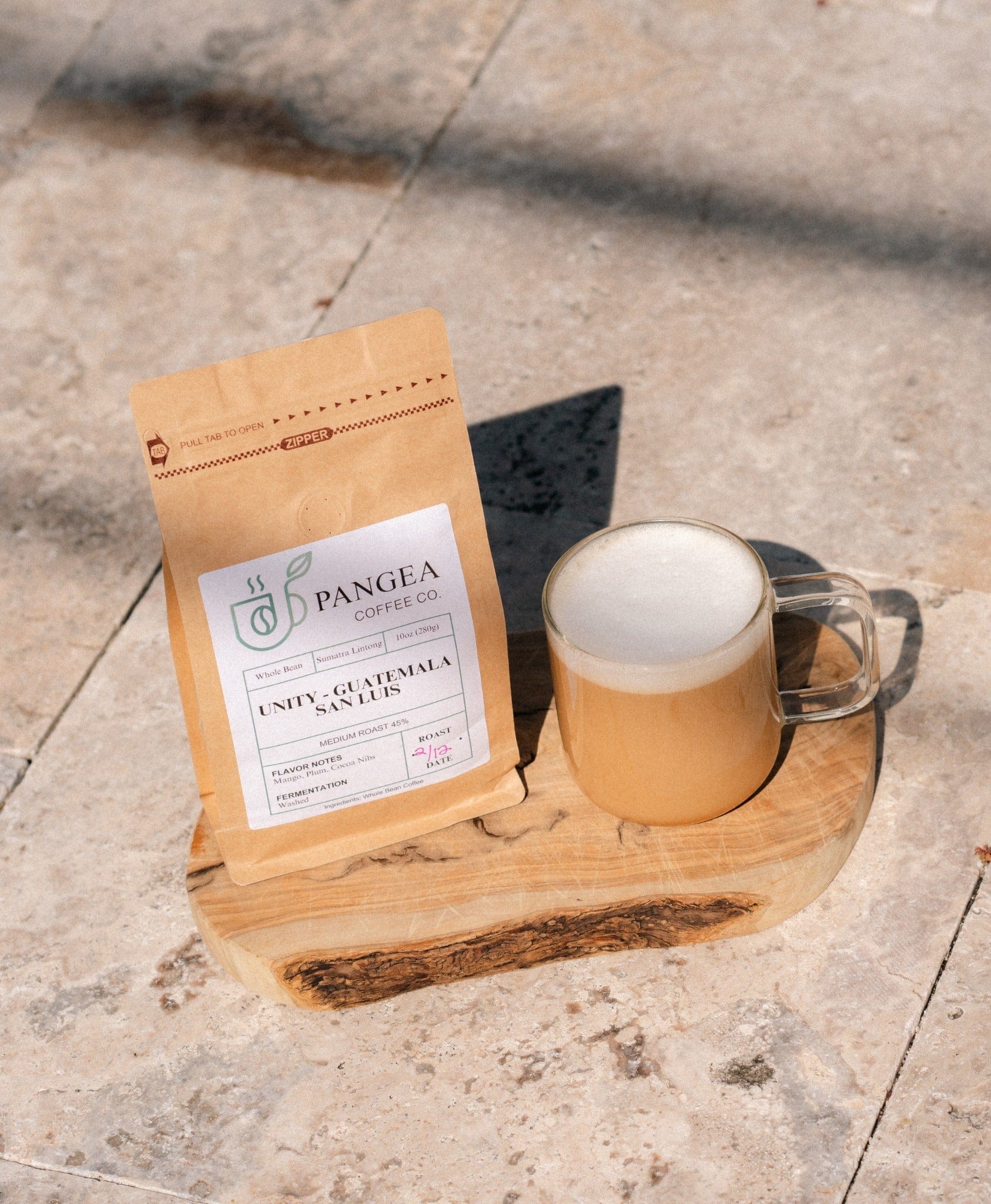
- Medium roasts: The sweet spot for flavor + digestive comfort (our Unity Blend)
- Dark roasts/Espresso: Maximum acidity reduction (our Bold Respect No. 3)
For Caffeine-Sensitive Individuals
If you're sensitive to caffeine's effects on your digestive system, our Sugarcane EA Decaf offers all the stomach-friendly benefits without the caffeine:
- Chemical-free process: Uses natural ethyl acetate derived from sugarcane (not harsh chemical solvents)
- SPOKIN-verified & allergen-free: Same strict facility standards as our regular coffee
- Naturally low-acid: Perfect for evening enjoyment without sleep disruption
Try our Sugarcane EA Decaf or read our Complete Guide to Decaf Coffee for Sensitive Stomachs.
How to Brew Coffee for a Sensitive Stomach
Even the best beans can cause issues if brewed incorrectly. Here's how to brew for maximum comfort:
✓ Cold Brew (Lowest Acid)
Acidity reduction: Up to 67% less acidic than hot-brewed coffee
Why it works: Cold water extracts fewer acidic compounds and produces a smoother, naturally sweet concentrate
How to make it: Use coarse ground coffee (1:4 ratio for concentrate), steep in cold water for 12-24 hours in the fridge, strain through fine mesh, and dilute concentrate 1:1 with water or milk
Pro tip: Add a pinch of sea salt to reduce bitterness even more
✓ French Press (Medium Acid, Full-Body)
How to make it gentle: Use water at 195°F (not boiling), steep for exactly 4 minutes (longer = more acid), use coarse grounds to reduce over-extraction, and press slowly and pour immediately
✓ Pour Over (Light-Medium Acid, Clean)
Why it works: Paper filters remove oils that can irritate sensitive stomachs
How to make it gentle: Use medium-coarse grounds, water temperature 195-200°F, total brew time 3-3.5 minutes, and use quality paper filters
Control Your Water Temperature
Ideal temperature: 195-200°F (90-93°C)
Water that's too hot (205°F+) extracts more acidic compounds. Water that's too cool (below 190°F) under-extracts and tastes weak.
Easy hack: Bring water to a boil, then let it sit for 30-45 seconds before brewing.
Watch Your Coffee-to-Water Ratio
Recommended ratio: 1:15 to 1:17 (coffee:water by weight)
Using too much coffee creates an over-concentrated brew that's harder on your stomach. Use a kitchen scale:
- For 12 oz cup: 20-22g coffee (about 3 tablespoons)
- For 16 oz cup: 27-30g coffee (about 4 tablespoons)
Natural Stomach-Soothers to Add
✓ Coconut Milk
Why it helps: Unsweetened coconut milk can help neutralize acidity and add healthy fats that slow caffeine absorption
Best choice: Unsweetened coconut milk (contains MCTs that support gut health)
Avoid: Sweetened varieties with added carrageenan (a gut irritant for some people)
✓ Cinnamon
Why it helps: Natural anti-inflammatory that can soothe digestive upset
How to use: Add 1/4 tsp to grounds before brewing, or sprinkle on top
Bonus: Adds natural sweetness so you can reduce added sugar
✓ Cardamom
Why it helps: Traditional Middle Eastern addition that aids digestion and reduces acid
How to use: Crack 2-3 cardamom pods and add to grounds before brewing
Flavor: Adds a subtle, sweet spice note
Don't Drink Coffee on an Empty Stomach
This is crucial: always have a small amount of food before your coffee. Coffee stimulates stomach acid production. If there's no food to digest, that acid can irritate your stomach lining.
Best pre-coffee foods:
- Half a banana
- Slice of toast with butter or coconut oil
- Small bowl of oatmeal
- Plain rice cake
Best Coffee for Specific Digestive Issues
For Acid Reflux & GERD
If you have acid reflux or GERD, you need coffee that's from naturally low-acid regions (Brazil, Sumatra), medium to dark roast (breaks down more acids), and brewed cold or at lower temperature (cold brew is best).
Our recommendation: Unity Medium Roast brewed as cold brew or French press
Also helpful:
- Drink coffee mid-morning (not first thing)
- Limit to one cup per day initially
- Avoid drinking within 3 hours of bedtime
- Stay upright for at least 30 minutes after drinking
For more detailed guidance, see our Complete Guide to Coffee for Acid Reflux & GERD.
For IBS
If you have IBS, you need coffee that's SPOKIN-verified or allergen-free (no cross-contamination), specialty-grade and Q grader certified (minimal defects), low FODMAP (black coffee is naturally low-FODMAP), and moderate caffeine.
Our recommendation: Any of our SPOKIN-verified coffees, starting with half your normal serving to assess tolerance
IBS-friendly brewing tips:
- Cold brew reduces compounds that speed digestion
- Use lactose-free milk or unsweetened coconut milk (oat milk may be high FODMAP)
- Avoid sugar alcohols and high-FODMAP sweeteners
- Don't drink coffee on an empty stomach
For Food Allergies
If you have food allergies, you need coffee that's SPOKIN-verified (certified allergen-free facility), single-origin (no blends that could hide cross-contamination), direct trade (traceable supply chain), and unflavored (no "natural flavors").
Our recommendation: All Pangea Coffee products are SPOKIN-verified and processed in our dedicated allergen-free facility with zero of the top 9 food allergens.
For Mold Sensitivity
If you're sensitive to mold, you need coffee that's specialty-grade (80+ points = minimal defects), Q grader certified (inspected at origin by trained experts), freshly roasted (within 2-4 weeks), and stored properly (airtight containers, cool and dry).
Our recommendation: All Pangea Coffee is specialty-grade and certified by Q graders who inspect for mold and defects at origin
For more information, see our Complete Guide to Mold-Free Coffee.

How Much Does Stomach-Friendly Coffee Cost?
Let's address the cost question directly: yes, truly stomach-friendly coffee costs more than grocery store coffee. But the value difference is substantial.
Per-Cup Cost Breakdown
Grocery Store Coffee: $8-12 (12 oz) = $0.27-0.50 per cup
Pangea Clean Coffee: $18-22 (12 oz) = $0.60-0.91 per cup
Coffee Shop Latte: $5-7 per cup
The difference: $0.10-0.40 per cup
That's less than the cost of a single antacid tablet, oat milk upcharge at Starbucks, a digestive enzyme supplement, or the cream you add to make cheap coffee drinkable.
What You're Really Paying For
- SPOKIN verification: Independent testing and facility audits
- Specialty-grade beans: 80+ quality score vs. commodity-grade
- Q grader certification: On-site inspection by trained experts
- Small-batch roasting: Quality control and freshness
- Direct trade: Traceable supply chain and farmer relationships
- No digestive discomfort: Priceless when you can finally enjoy coffee again
The Hidden Costs of Cheap Coffee
- $50-100/month on antacids and digestive aids
- $200-500/month on doctor visits and tests
- Lost productivity from stomach discomfort
- Giving up coffee entirely and missing the health benefits
Bottom line: Spending an extra $0.30/cup to solve the problem is a bargain.
Pangea Coffee: Built for Sensitive Stomachs
We didn't start Pangea Coffee as a business idea. We started it because my family needed it. My son has severe food allergies. Finding coffee that was truly safe—not just "gluten-free" but processed in a facility with zero cross-contamination risk—was nearly impossible. So we built it ourselves.
What Makes Pangea Different
SPOKIN-Verified Allergen-Free: We're one of the only coffee companies with SPOKIN verification—the gold standard for allergen-free food products. Our facility processes ZERO of the top 9 allergens, every batch is independently verified, we use dedicated equipment for coffee only, and our supply chain is fully traceable.
Q Grader Certified: All our coffee is specialty-grade and certified by Q graders who inspect beans at origin—trained experts who evaluate on-site for defects, mold, and quality.
Naturally Low-Acid: We source beans from naturally low-acid origins (Brazil, Guatemala) and use roast profiles that minimize acidity through expert roasting and aggressive taste testing.
Small-Batch, Fresh-Roasted: We roast in small batches and ship within days of roasting—not weeks or months. Fresh coffee has more antioxidants, better flavor, and gentler digestion.
Direct Trade Relationships: We work directly with farmers and cooperatives, visiting origin regularly to verify quality and sustainability. You get traceable supply chain, consistent quality, and peace of mind.
Our Best Coffees for Sensitive Stomachs
✓ Unity Medium Roast - Our Gentlest Coffee
Best for: Maximum digestive comfort, acid reflux, GERD
Profile: Smooth, chocolatey, naturally sweet
Acidity: Naturally low-acid
Roast: Medium
✓ Bold Respect No. 3 - Espresso
Best for: Espresso lovers, dark roast fans
Profile: Bold, rich, dark chocolate, caramel
Acidity: Very low-acid from dark roasting
Roast: Dark (espresso roast)
✓ Hope - Guatemala Colemnar
Best for: Flavor-forward coffee lovers who still need low acid
Profile: Caramel, cocoa, subtle fruit
Acidity: Balanced, gentle acidity from wet processing
Roast: Light-medium
✓ Pangea Decaf - Sugarcane EA Process
Best for: Caffeine-sensitive individuals, evening coffee lovers
Profile: Smooth, chocolatey, naturally sweet
Acidity: Naturally low-acid, gentle on stomach
Process: Chemical-free Sugarcane EA decaffeination
✓ Can't Decide? Try Our Discovery Pack
Sample all three of our doctor-recommended roasts in one curated pack: Bold Respect (dark), Unity (medium), and Hope (light).
What Our Customers Say
⭐⭐⭐⭐⭐
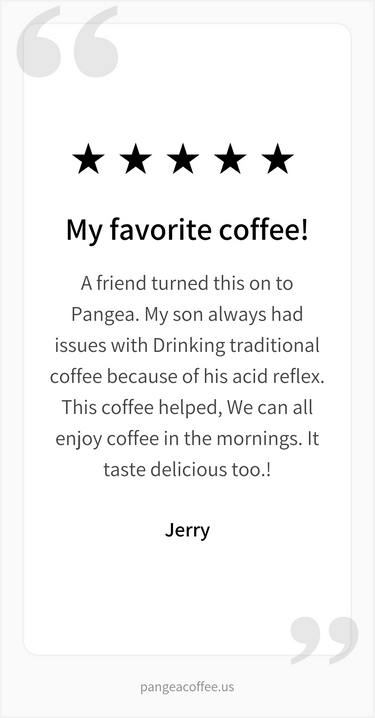
"Honestly, this is so good. I am learning that there are different varieties of 'UNITY' roast as I explore the company more. Ethiopian tastes very different than the Guatemala Candelaria but both are good! I really enjoyed the Guatemala Candelaria. I have REALLY bad GERD and acid reflux. This unity roast does not bother me at all. I also have severe food allergies to nuts and shrimp and drink this safely."
— Alison K., verified customer with GERD
⭐⭐⭐⭐⭐
"The Costa Rica Hope is so smooth and highlighted the notes are well rounded and very enjoyable cup of coffee. Did this as a drip will try it doing pour over"
— Daniel C., verified customer / Coffee Lover
⭐⭐⭐⭐⭐
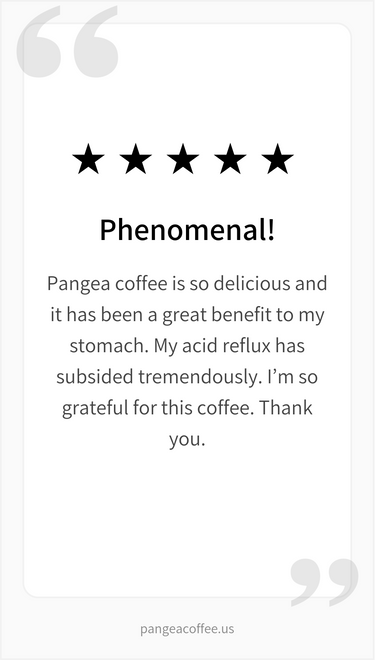
"Delicious coffee that goes down easy. I have to be very careful with my stomach, and I am delighted that I can still drink this coffee."
— Drea., verified customer with Sensitive Stomach
Doctor-Backed Recommendation
"As a gastroenterologist, I regularly advise patients with acid reflux to quit coffee. But with Pangea's truly low-acid, allergen-free coffee, many of my patients can enjoy coffee again without triggering symptoms."
— Dr. Joseph Salhab, Gastroenterologist
Frequently Asked Questions
Will stomach-friendly coffee taste different?
Short answer: Yes, but in a good way. Low-acid coffee tends to taste smoother, sweeter, and less bitter. You might notice more chocolate and caramel notes, less sharp "bite," naturally sweet finish, and fuller, rounder body. Most people prefer the taste once they try it—especially when they realize they can drink it without digestive discomfort.
Is decaf better for sensitive stomachs?
Not necessarily. Caffeine isn't the main culprit for most digestive issues—it's the acidity, contaminants, and quality of the beans. That said, if you're particularly sensitive to caffeine's effects on digestion, decaf might help. Just make sure it's a chemical-free process like our Sugarcane EA method, still specialty-grade and low-acid, and SPOKIN-verified if you have allergies.
⚠️ Important: Be careful with decaf if you have a sensitive stomach, because harsh chemicals are often used to remove caffeine. We use the natural Sugarcane EA process—no harsh chemicals, just gentle, food-safe ethyl acetate derived from sugarcane. Learn more about our chemical-free decaf process.
Can I drink stomach-friendly coffee every day?
Yes—that's the whole point! Clean, low-acid, allergen-free coffee is gentle enough to drink daily without triggering digestive issues. Start with one cup and assess your tolerance, always eat something small before your coffee, drink it mid-morning rather than first thing, stay hydrated, and listen to your body.
How quickly will I notice a difference?
Most people notice a difference immediately. If regular coffee causes acute symptoms (heartburn, stomach pain, bloating), you'll likely feel better from your very first cup of clean, low-acid coffee. If you have chronic digestive issues, it might take a few days to a week to notice reduced inflammation.
Is organic coffee better for sensitive stomachs?
Organic is good, but it's not enough. "Organic" means the coffee was grown without synthetic pesticides—which is great. But it doesn't tell you whether it's naturally low-acid, Q grader certified for mold, processed in an allergen-free facility, or specialty-grade quality. For truly stomach-friendly coffee, you need organic PLUS naturally low-acid PLUS allergen-free PLUS specialty-grade. That's what we provide at Pangea.
What about coffee from Starbucks or other chains?
Most coffee chains use commodity-grade beans with higher acidity and potential cross-contamination. Commercial coffee chains typically use beans with naturally higher acidity. Additionally, their beans are often over-roasted to mask quality defects, processing facilities handle multiple allergens, beans may be stored for months before use, and there's no transparency about Q grading or quality certification. If you need truly stomach-friendly coffee, specialty roasters focused on digestive health (like Pangea) are your best bet.
Can I add milk/cream to stomach-friendly coffee?
Yes, but choose carefully. Best choices: unsweetened coconut milk (anti-inflammatory fats), organic lactose-free dairy milk (if not dairy-sensitive), oat milk (if not sensitive to FODMAPs). Avoid: regular dairy (if lactose intolerant), creamers with carrageenan or artificial ingredients, sweetened varieties with excess sugar.
Is cold brew always better for sensitive stomachs?
Cold brew is gentler, but hot coffee from naturally low-acid beans is also great. Cold brew is up to 67% less acidic than hot-brewed coffee—making it an excellent choice for people with severe acid reflux or GERD. However, if you're using truly low-acid beans from regions like Brazil, hot brewing methods (French press, pour-over) are also very gentle and offer more flavor complexity. Try both and see what works best for your digestive system.
Where can I buy truly stomach-friendly coffee?
Look for coffee that meets ALL these criteria: SPOKIN-verified or certified allergen-free facility, from naturally low-acid growing regions (Brazil, Sumatra, Guatemala, Mexico), specialty-grade (80+ points) certified by Q graders, freshly roasted (within 2-4 weeks), and transparent sourcing and processing. All Pangea Coffee products meet these standards.
Take Back Your Coffee Ritual
You shouldn't have to choose between enjoying coffee and feeling good. With truly stomach-friendly coffee—SPOKIN-verified, naturally low-acid, specialty-grade, and Q grader certified—you can have both.
Whether you're dealing with acid reflux, IBS, food allergies, or just general digestive sensitivity, the right coffee can make all the difference.
Our Commitment to You
Pangea Coffee is a family-owned business built on personal experience with food allergies and digestive sensitivities. We're not a faceless corporation trying to capitalize on a trend. We're a family that needed clean, safe, stomach-friendly coffee—and we built it for ourselves first.
Every bag of Pangea Coffee is:
- ✅ Roasted fresh to order in our allergen-free facility
- ✅ Independently verified by SPOKIN
- ✅ Q grader certified for quality and safety
- ✅ Backed by our happiness guarantee
If our coffee doesn't work for your sensitive stomach, we'll make it right. You have nothing to lose—and your morning coffee ritual to gain back.
Join Our Community
Thousands of people with sensitive stomachs have rediscovered their love of coffee with Pangea.
Connect with us:
- 📧 Email us: info@pangeacoffee.us with questions about your specific digestive needs
- 📱 Follow us on Instagram: @pangea_coffee_co for brewing tips and customer stories
- 💬 Join the conversation: Share your stomach-friendly coffee journey using #PangeaCoffee

This article is for informational purposes only and is not medical advice. If you have a diagnosed digestive condition, consult your healthcare provider before making dietary changes.
Scientific References
- Urbano, G.R., et al. (2003). "Occurrence of ochratoxin A-producing fungi in raw Brazilian coffee." Journal of Food Protection, 66(12), 2368-2372. https://pubmed.ncbi.nlm.nih.gov/14690699/ [Referenced for mold contamination statistics in commercial green coffee]
- Rao, N.Z., & Fuller, M. (2018). "Acidity and antioxidant activity of cold brew coffee." Scientific Reports, 8, 16030. [Referenced for cold brew acidity reduction compared to hot brewing]
- Specialty Coffee Association. "Coffee Quality Standards and Protocols." SCA Coffee Standards Committee. [Referenced for Q grader certification and specialty-grade defect standards]
Quality Assurance: Pangea Coffee maintains SPOKIN certification for allergen-free production. Our Q graders (licensed coffee quality experts) evaluate every batch on-site at origin. We source from naturally low-acid regions and employ wet-processing methods to minimize contamination risk. We rely on our sourcing standards, Q grader evaluation, and SPOKIN-verified facility protocols to ensure stomach-friendly coffee.
Last Updated: March 2026