Elijah's Law & Allergen-Free Coffee: Why It Matters in 2026

When 3-year-old Elijah Silvera died in 2017 after his daycare gave him a grilled cheese sandwich—despite knowing about his severe dairy allergy—his parents refused to let his death be in vain. They created Elijah's Law, New York's landmark food allergy safety framework that's now spreading nationwide. And 2026 is shaping up to be a pivotal year.
As a family-owned coffee company where our own children have food allergies, we understand this fear personally. That's why we built our facility from the ground up to eliminate these risks.
What Is Elijah's Law?
Elijah's Law is New York's comprehensive food allergy safety framework for licensed child care programs, created after the preventable death of Elijah Silvera from anaphylaxis. Elijah's parents, Thomas Silvera and Dina Hawthorne, engineered and co-founded the law, which requires child care facilities to follow standardized protocols for prevention, preparedness, and emergency response when it comes to food allergies.
Core requirements include:
- Written allergy action plans for every child with known allergies
- Staff training on recognizing and treating anaphylaxis
- On-site epinephrine auto-injectors (EpiPens)
- Weight based does epinephrine delivery devices
- Documented emergency response protocols
- Clear prevention and communication procedures
For the official framework, see the New York Office of Children and Family Services (OCFS) Elijah's Law guidance. The OCFS Provider Letter (PDF) offers practical implementation details for facilities.
What happened to Elijah Silvera?
On November 3, 2017, Elijah Silvera's daycare had complete documentation of his life-threatening dairy allergy, asthma, and allergy action plan. Despite this, a staff member fed him a grilled cheese sandwich. When he began showing symptoms, staff failed to call 911, administer his EpiPen, or inform his mother that he had eaten cheese. They only called when symptoms appeared minor. By the time his mother rushed him to the hospital, it was too late. This preventable tragedy led his parents to create Elijah's Law—ensuring no other family would face this nightmare.

Why 2026 Is a Turning Point for Food Allergy Safety
While Elijah's Law has been protecting children in New York since 2019, the movement is accelerating—and 2026 marks a critical expansion of these protections.
NYC's Major Step Forward: Int. 0895-2024
In late 2025, New York City enacted NYC Int. 0895-2024, a local law requiring schools and child care programs to stock epinephrine devices. The legislation takes effect 120 days after enactment, placing full implementation in 2026.
What this means for families: environments where staff are prepared and life-saving medication is on-site when seconds matter. View the full NYC Council legislation here.
National Momentum: From New York to Illinois—and Beyond
Elijah's Law has become a template for food allergy policy nationwide. So far, 6 laws and 2 State Ordinances have been passed:
- Elijah’s Law NY 2019
- Illinois 2021 HB102 - Adopted its own Elijah's Law in 2021, expanding anaphylaxis protocols across child care and school settings (source: Allergic Living)
- Virginia 2022 HB1328 – Legislation introduced and pending
- Maryland 2024 HB1195
- California 2024 AB2317 – Legislation introduced and pending
- Arkansas - AR HB1166 ("Alex's Law")
- Kansas City Ordinance 2023 Sub 230 300
- NYC ordinance 2025 INT 895
- Federal interest – Advocacy groups pushing for nationwide standards
The Asthma and Allergy Foundation of America (AAFA) tracks Elijah's Law adoption and provides state-by-state analysis of food allergy protections in child care settings.

The Hidden Allergen Problem Nobody Talks About: Coffee
When people think about allergen exposure, they picture schools, restaurants, or packaged foods. Coffee rarely makes the list. But coffee production facilities face the exact same cross-contamination risks that Elijah's Law was designed to address.
How Coffee Facilities Create Allergen Risks
Commercial coffee roasting facilities often process multiple products that create cross-contamination opportunities:
- Hazelnut-flavored coffee – Direct tree nut contact on shared equipment
- Dairy-based products – Many facilities also produce lattes, cappuccino mixes, or cream-flavored coffees
- Baked goods – Some coffee companies co-produce pastries containing wheat, eggs, soy
- Shared packaging lines – Equipment processes multiple products sequentially
- Airborne particles – Allergen dust can contaminate "allergen-free" batches
The FDA evaluates how facilities implement controls to prevent allergen cross-contact. Most coffee companies fail to meet these rigorous standards because they prioritize variety over safety.
Understanding the "Big 9" Allergens
In the United States, food manufacturers must control for the nine major allergens recognized under federal law. These allergens—milk, eggs, fish, shellfish, tree nuts, peanuts, wheat, soybeans, and sesame—account for over 90% of serious allergic reactions.
Official guidance from regulators:
How much allergen exposure is dangerous?
Research shows it only takes 1-2 milligrams of an allergen—roughly the size of a grain of salt—to trigger a severe reaction in highly sensitive individuals. When roasting equipment isn't thoroughly cleaned between products, these trace amounts easily transfer. Most coffee companies use "basic cleaning" protocols that may not prevent cross-contact, especially with airborne particles.

How Pangea Coffee Applies Elijah's Law Principles to Coffee Production
Elijah's Law is fundamentally about trust: clear protocols, trained staff, and environments that take allergen risk seriously. That same standard guided how we built our facility.
1. SPOKIN Third-Party Verification (Like Having an Inspector)
We're one of the first coffee companies in America to achieve SPOKIN verification—the food allergy community's trusted third-party certification.
Why this matters: Most coffee companies self-certify their "allergen-free" claims. SPOKIN verification means an independent organization has confirmed we meet rigorous standards—just like how Elijah's Law requires third-party oversight in childcare facilities.
2. 100% Dedicated Allergen-Free Facility (Zero Exceptions)
We never allow any of the Big 9 allergens in our facility. Not in break rooms. Not in storage. Not anywhere.
| Major Allergen | Pangea Policy | Industry Standard |
|---|---|---|
| Milk/Dairy | ❌ Never in facility | ⚠️ Often present |
| Eggs | ❌ Never in facility | ⚠️ Often present |
| Peanuts | ❌ Never in facility | ⚠️ May be present |
| Tree Nuts | ❌ Never in facility | ⚠️ Hazelnut coffee common |
| Fish | ❌ Never in facility | ✓ Usually not present |
| Shellfish | ❌ Never in facility | ✓ Usually not present |
| Wheat | ❌ Never in facility | ⚠️ Often present (baked goods) |
| Soy | ❌ Never in facility | ⚠️ May be present |
| Sesame | ❌ Never in facility | ⚠️ May be present |
3. Q Graders On-Site for Quality Control (Our Version of Trained Staff)
Just like Elijah's Law requires trained staff who can recognize allergic reactions, we have Q graders—certified coffee professionals—test every batch on-site before it reaches customers.
Why this matters: Some companies claim "mold-free" or "clean" coffee without proper testing. We test every single batch to catch contamination, off-flavors, or quality issues that could indicate problems.
What is a Q grader?
A Q grader is a professional coffee taster certified by the Coffee Quality Institute (CQI). They undergo rigorous training to evaluate coffee quality using standardized protocols. Q graders can detect defects, mold, and contamination that regular lab tests might miss—similar to how trained daycare staff can recognize early signs of anaphylaxis.
Our Family Connection: Why This Is Personal
We understand food allergy vigilance because we live it. Our children have food allergies. When you're a parent managing food allergies, "small risks" are never small.
You learn to look for what others miss: unclear sourcing, shared equipment, vague facility practices, and unverified claims. You question everything. You read every label. You call manufacturers. You decline products when you can't get clear answers.
That's why we built Pangea the way we did. We couldn't find coffee we trusted for our own family—so we created it.
We care about you more than clicks, views, or trends. If you have questions about our allergen-free protocols, our family is here to answer them personally.
Beyond Allergens: Why Our Coffee Is Easier on Your Stomach
Allergen safety is part of our mission, but many of our customers also struggle with digestive issues like GERD and acid reflux. Our low-acid coffee addresses both concerns:
- GERD-friendly – Won't trigger acid reflux or heartburn
- Gentle roasting process – Naturally reduces acidity without chemicals
- No harsh additives – Clean, pure coffee only
- Mold-free testing – Q graders verify every batch
- Doctor-backed – Endorsed by gastroenterologists

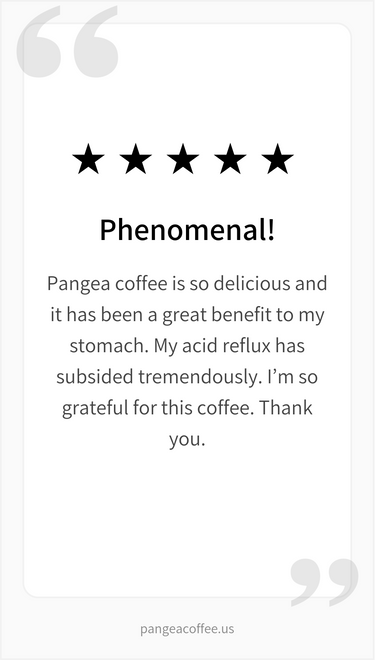
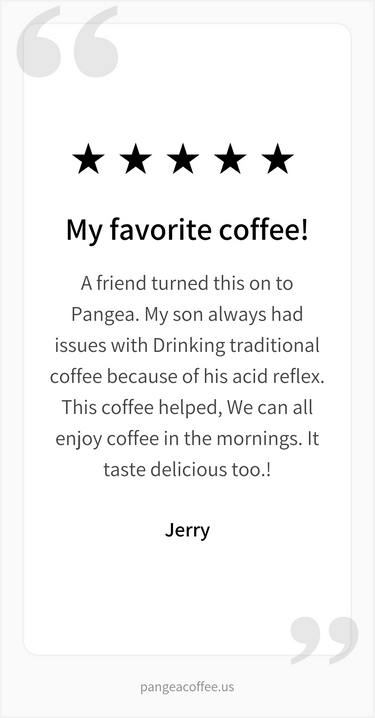
Thousands of customers with sensitive stomachs have switched to Pangea and finally found coffee they can enjoy without pain. Learn more about how low-acid coffee helps with GERD and acid reflux.
What the Coffee Industry Can Learn From Elijah's Law
Elijah's Law set a new standard for child care facilities. The coffee industry should follow the same principles:
A Call to Coffee Facilities: Follow the Standard, Then Raise It
Laws define the minimum. Leadership is what happens next.
What coffee companies should implement:
- Adopt written allergen controls – Document cleaning procedures, equipment changeovers, and contamination prevention
- Train all staff – Ensure everyone understands cross-contact risks, proper labeling, and facility protocols
- Reduce shared processing – Where possible, create dedicated equipment or hard separations between allergen-containing products
- Publish clear policies – Let customers make informed decisions with transparent facility information
- Seek third-party verification – Independent certification builds trust (like SPOKIN for allergen-free claims)
If Elijah's Law has taught us anything, it's this: preparedness saves lives, and transparency builds trust.
Your Voice Matters: Demand Elijah's Law in Your State
New York and Illinois have Elijah's Law. California, Pennsylvania, and Virginia have bills pending. But what about your state?
Every child deserves the same level of protection, regardless of where they live. Food allergy safety shouldn't depend on your zip code.
🗣️ Take Action Today: Contact Your Legislators
It takes 2 minutes to make your voice heard. Here's how:
- Find your representatives: Visit House.gov and Senate.gov to find your federal legislators, or search "[Your State] + state representatives" for local lawmakers
- Call or email: Tell them you're a constituent and you want them to support Elijah's Law in your state
- Share your story: If you or your child has food allergies, explain why this matters to YOUR family
- Be specific: Reference the NYC 2026 expansion and ask them to introduce similar legislation
📝 Sample Email/Call Script (Copy & Customize)
"Dear [Representative Name],
My name is [Your Name], and I'm a constituent from [Your City]. I'm writing to ask you to support legislation similar to New York's Elijah's Law for food allergy safety in childcare and school settings.
Elijah's Law requires:
• Staff training on recognizing and treating anaphylaxis
• On-site epinephrine auto-injectors
• Written allergy action plans for children with food allergies
• Clear emergency protocols
[OPTIONAL: Add your personal story here - "My child has a severe peanut allergy, and I worry every day about their safety at daycare..."]
New York passed Elijah's Law in 2019, and Illinois followed in 2021. NYC just expanded these protections in 2026. California, Pennsylvania, and Virginia have bills pending.
Our children deserve the same level of protection, regardless of where they live. I urge you to introduce or support similar legislation in [Your State].
Thank you for your time and consideration.
Sincerely,
[Your Name]
[Your Address]
[Your Phone Number]"
Organizations Fighting for Food Allergy Safety
You're not alone in this fight. These organizations are working to expand Elijah's Law nationwide:
- Asthma and Allergy Foundation of America (AAFA) – Tracks Elijah's Law adoption state-by-state and provides advocacy toolkits
- Food Allergy Research & Education (FARE) – Advocates for federal and state-level food allergy protections
- Elijah-Alavi Foundation – Founded by Elijah's parents to honor his memory and expand food allergy safety
- Allergic Living – Covers food allergy policy developments and advocacy opportunities
Join their advocacy campaigns. Sign their petitions. Share their resources. Every voice matters when it comes to protecting children's lives.
💚 Already Made the Call? Share This Article
Help spread awareness by sharing this article with other parents, educators, and community members. The more people who understand Elijah's Law, the faster it will spread nationwide.
Change doesn't happen by accident. It happens when people like you demand better.
Elijah's parents turned their grief into action. Now it's our turn to carry that momentum forward—one state, one legislator, one voice at a time.
Our Most Popular SPOKIN-Verified Coffees
Unity Medium Roast
Our bestseller. Smooth, balanced, and GERD-friendly. Perfect for daily drinking.
Hope Light Roast
Bright and fruity. Lowest acidity of any coffee we make. Great for sensitive stomachs.
Bold Respect No. 3
Dark roast espresso. Rich and bold, without the heartburn. Perfect for home espresso machines.
🎁 New to Pangea? Try Our Flavor Discovery Pack
Can't decide which roast to try first? Get all three in one sampler:
- Unity Medium Roast
- Hope Light Roast
- Bold Respect Dark Roast
Perfect for finding your favorite. All 100% allergen-free, low-acid, and SPOKIN-verified.
Frequently Asked Questions
Is Pangea Coffee really allergen-free?
Yes. We're SPOKIN-verified, which means an independent third party verified and confirmed we maintain strict allergen-free protocols. We never allow any of the Big 9 allergens (milk, eggs, peanuts, tree nuts, fish, shellfish, wheat, soy, or sesame) in our roasting facility. This isn't a marketing claim—it's third-party verified fact.
Can I trust "allergen-free" claims from other coffee brands?
Be cautious. Many companies claim to be allergen-free but roast flavored coffees (especially hazelnut) in the same facility or use shared equipment with products containing allergens. Always look for third-party verification like SPOKIN. If a company can't provide independent certification, their claims haven't been verified by objective auditors.
What if my child has multiple food allergies?
Our facility is free from all Big 9 allergens. That means families dealing with multiple allergies can trust every product we make. We use dedicated equipment and never introduce allergens into our space. As parents of children with food allergies ourselves, we understand how critical this is—one allergen exposure is one too many.
How does Elijah's Law relate to coffee?
Elijah's Law addresses the same core issue in childcare that exists in food manufacturing: preventing allergen cross-contamination through documented protocols, staff training, and third-party oversight. While Elijah's Law focuses on childcare facilities, the principles apply to any environment where allergen safety matters—including coffee production.
Why does allergen-free coffee matter for adults?
Food allergies don't end at childhood. Many adults develop sensitivities to dairy, nuts, or other allergens later in life. Plus, if you're buying coffee for your household and someone has allergies, cross-contamination from shared coffee makers can be a real risk. Allergen-free coffee eliminates that worry completely.
How do I know if coffee has mold or contamination?
You usually can't see or taste mold in coffee. That's why testing matters. We have Q graders taste every batch on-site to catch any off-flavors, mold, or contamination. Most coffee companies don't do this level of testing. Learn more about mold-free coffee and why it matters.
Will low-acid coffee help my GERD or acid reflux?
Many customers with GERD and acid reflux tell us Pangea is the only coffee they can drink without pain. Our gentle roasting process naturally reduces acidity (no chemicals added), making it much easier on sensitive stomachs. We also have a doctor-backed guide on coffee for acid reflux that explains the science behind low-acid coffee.
Do you ship nationwide?
Yes! We ship fresh-roasted coffee across the United States. Orders typically arrive within 3-5 business days. We roast in small batches and ship quickly so you always get the freshest, safest coffee possible.
Join the Clean Coffee Movement
Elijah's Law changed how we protect children with food allergies. Now it's time for the coffee industry to follow the same principles: transparency, documented protocols, third-party verification, and putting safety first.
When you choose SPOKIN-verified, allergen-free coffee, you're not just protecting your health—you're supporting a family-owned business that's setting a new standard for accountability in the coffee industry.
Ready to experience coffee you can trust?
Learn More About Our Allergen-Free Commitment
Pangea Coffee is the first and only SPOKIN-verified coffee brand in America. Learn more about our 100% allergen-free facility and third-party verification.
📚 Additional Resources on Food Allergy Safety
Official Elijah's Law Resources:
- NY Office of Children and Family Services: Elijah's Law
- OCFS Provider Letter: Elijah's Law Implementation Guidance (PDF)
- NYC Council: Int. 0895-2024 (Epinephrine Access Law)
- Illinois Elijah's Law Adoption (Allergic Living)
- AAFA: Elijah's Law National Tracking & Advocacy
Federal Allergen Regulations:
- FDA: Food Allergies—Allergen Controls & Cross-Contact Prevention
- USDA FSIS: The Big 9 Major Food Allergens
- FDA: FASTER Act—Sesame as the 9th Major Allergen
Learn More About Clean, Safe Coffee:
Connect with us:
Follow our journey on Instagram and TikTok | Get restock alerts via text