Best Coffee for Acid Reflux & GERD: Doctor-Backed Guide

⚡ Quick Takeaway: You don't necessarily have to quit coffee if you have acid reflux or GERD. Board-certified gastroenterologist Dr. Joseph Salhab (@TheStomachDoc) recommends low-acid coffee from Pangea. For many people, the right coffee and brewing approach makes coffee far easier to tolerate.
If you live with acid reflux or GERD, you know the struggle.
You love coffee. But coffee doesn't always love you back.
That burning sensation. The discomfort. The silent negotiation before every cup—“Will this one trigger heartburn?”
Here's something many people don't realize: for a lot of coffee drinkers, it's less about the caffeine and more about the acidity and how you drink it.
The coffee culture has shifted, too. The biggest trend isn't just flavor anymore—it's comfort and wellness. More people are looking for ways to enjoy coffee without the burn.
So the question usually isn't a flat yes or no. It's about finding a low-acid coffee that works for you and brewing it in a way your stomach tolerates.
Not sure which roast is right for you?
Answer five questions about your symptoms and we'll match you to a roast. Takes about thirty seconds, and you don't need to give us your email to see the result.
Find Your Roast →Why Does Coffee Trigger Acid Reflux and GERD?
Let's talk about what can happen when you drink regular coffee.
Standard coffee is naturally acidic. For people prone to reflux, two mechanisms are often involved:
First: it can relax the lower esophageal sphincter (LES).
The LES is the valve that keeps stomach contents where they belong. When it relaxes, acid can flow upward into the esophagus — that's the burning sensation.
Second: it can increase stomach acid production.
Coffee can stimulate gastric acid. For someone with GERD, more acid plus a relaxed valve is an uncomfortable combination.
But here's the important part: the research is genuinely mixed, and coffee is a trigger for many people but not for everyone. Your individual response matters most — and for many people, choosing low-acid coffee and adjusting how they drink it makes a real difference.
What Makes Coffee “Low-Acid”? The Best Low-Acid Coffee Brands Explained
Low-acid coffee isn't marketing hype — it reflects real differences in beans, roast, and processing.
The best low-acid coffees achieve a smoother, gentler profile through bean selection, roasting method, and quality control—not chemical treatments. Here's what separates genuine low-acid coffee from marketing claims:
How It's Made:
Bean Selection: Coffee from certain regions is naturally lower in acid. Beans from Sumatra, Brazil, and parts of Central America grown at certain altitudes tend to have lower chlorogenic acid levels.
Roasting Process: Longer, slower roasting breaks down some acidic compounds. Darker roasts are generally less acidic than light roasts because they're roasted longer.
Quality Control: Reputable roasters taste-test for harshness and source carefully to reduce mold risk.
At Pangea, we take it further. We aggressively taste-test every batch. If it's harsh or bitter, it doesn't ship. Period.
Wondering how the main low-acid brands actually stack up? We put them side by side on sourcing, acidity, allergen verification and freshness in our low acid coffee brands comparison.
The Coffee Wellness Shift
Something's changed in coffee culture.
More drinkers are choosing coffee for how it feels, not just how it tastes.
Functional coffee is everywhere. Products focused on gut comfort and wellness have moved mainstream, and many coffee drinkers report digestive discomfort from regular coffee—driving demand for gentler options.
Cold coffee is booming. Cold brew keeps expanding, and many people find it smoother and gentler on a sensitive stomach.
This wellness wave is exactly what reflux-prone drinkers need: better beans, cleaner processing, simpler brewing—comfort first.
What the Research Says About Coffee and GERD
The evidence here is more mixed than either side of the internet suggests — and that's actually useful to know.
The most recent and largest review — a 2026 systematic review and meta-analysis from the American College of Gastroenterology pooling 40 studies and 122,074 people — found that coffee drinkers had a small increase in GERD compared with non-drinkers (about 18% higher odds), but the authors emphasized this effect is of unclear clinical significance. Earlier research, including a 2014 meta-analysis of 15 studies and a large cross-sectional study of more than 8,000 people in Japan, found no significant association at all.
On the “what might help” side, a small randomized pilot study in Nutrients found that a specially processed (dewaxed) coffee was associated with fewer reflux symptoms and more heartburn-free days than standard coffee in people with GERD — promising, though preliminary and small.
Bottom line: coffee overall shows only a small, uncertain association with reflux, individual tolerance varies enormously, and choosing a lower-acid coffee and drinking it with food gives many reflux-prone people the best shot at enjoying it comfortably. Low-acid coffee isn't a treatment for GERD — but many people find it noticeably easier to tolerate.
Doctor's Recommendation: Why a Gastroenterologist Recommends Pangea
Not all coffee is the same for sensitive stomachs.
That's why we're recommended by Dr. Joseph Salhab—board-certified gastroenterologist known as @TheStomachDoc, with a large following across TikTok and Instagram.
He focuses on managing GERD, IBS, and reflux through nutrition and lifestyle.
His coffee recommendation for patients? Pangea.

“Pangea Coffee's clean sourcing, low acid profile, and allergen-free roasting process make it one of the best choices for anyone with gut issues.”
— Dr. Joseph Salhab, Board-Certified Gastroenterologist (@TheStomachDoc)
Why Dr. Salhab Recommends Pangea:
Ultra-Low Acid Profile: Every batch is taste-tested. No harsh, bitter acidity ships.
Allergen-Free Facility: SPOKIN-verified, Top-9 allergen-free. We're the first SPOKIN-verified coffee company in America, with strict protocols to keep the facility free from nuts, gluten, dairy, and the other Top-9 allergens.
Mold-Conscious Sourcing: Q-graders on staff inspect coffee at our facility—and sometimes at the source—and we source from regions known for cleaner, lower-mold-risk beans.
Clean Sourcing: Organic, Fair Trade, Non-GMO, specialty-grade Arabica.
Best Low-Acid Coffee for GERD: Which Roast Should You Choose?
Different roast levels work better for different people. Here's a guide by roast:
Bold Respect (Dark Roast) — For the Most Sensitive Stomachs
Our darkest roast tends to have the lowest acidity because extended roasting breaks down more acidic compounds.
Flavor: Rich chocolate, caramel, earth—smooth and creamy
Best For: Higher acid sensitivity, espresso lovers, afternoon coffee
Caffeine: Slightly lower (longer roasting), smooth sustained energy

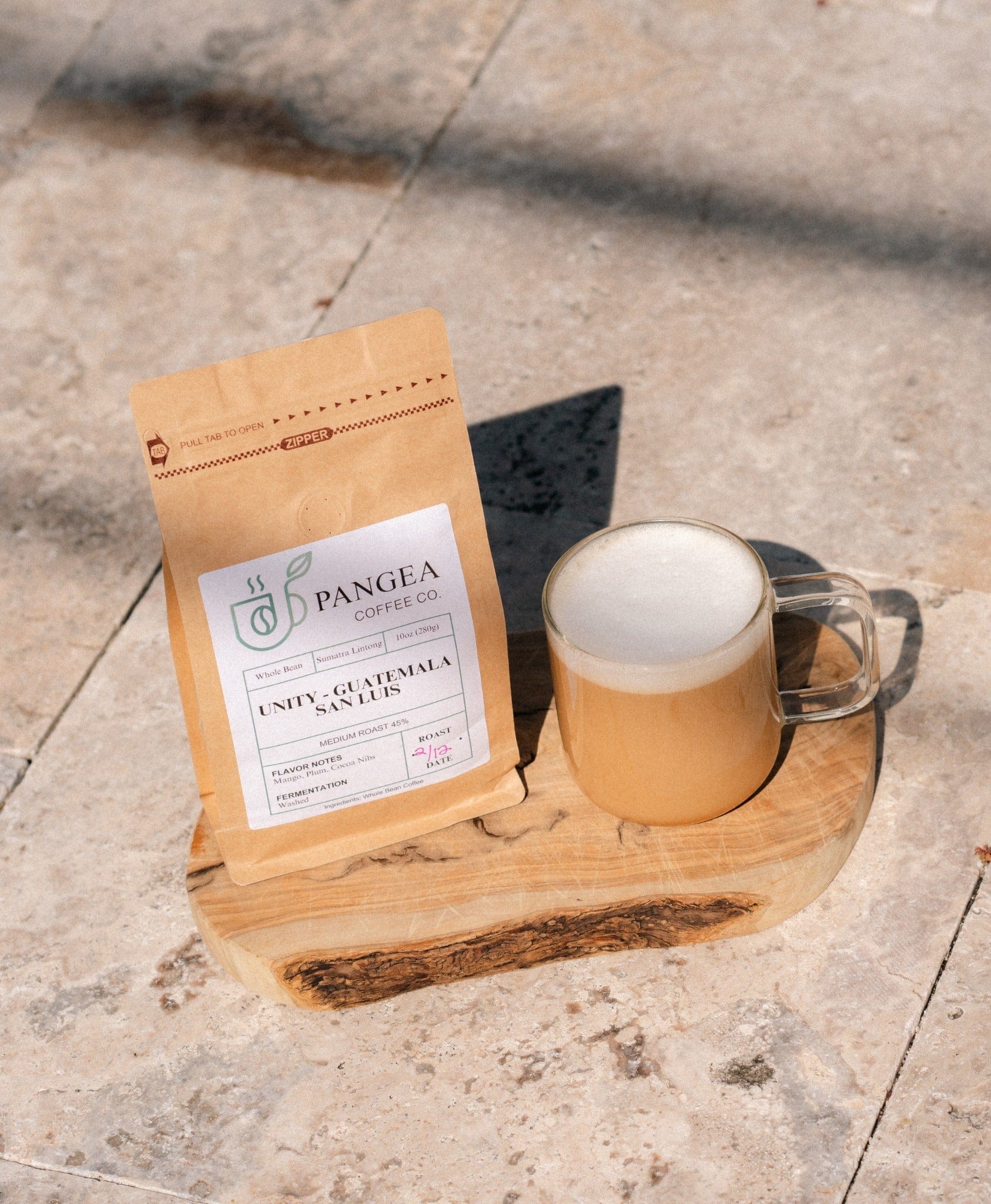
Unity (Medium Roast) — For Everyday Drinking
A balance between flavor complexity and gentleness.
Flavor: Smooth caramel, chocolate, subtle fruit—comforting and approachable
Best For: Daily drinking, most reflux-prone coffee lovers, balanced energy
Caffeine: Balanced for steady energy

Hope (Light Roast) — For Bright Flavor Lovers
Vibrant and fruit-forward while still being low-acid.
Flavor: Delicate fruit, floral notes, clean sweetness—bright without the bite
Best For: Light roast fans, morning coffee, fruity flavors
Caffeine: Highest for maximum morning energy

Can't Decide? Try All Three
Our Flavor Discovery Pack includes all three roasts. Experiment and find what YOUR stomach tolerates best.

Is Decaf Coffee Good for Acid Reflux and GERD?
The short answer: it can be — but the decaffeination process matters.
This is the question we get most. Decaf is often suggested for nighttime use or for people who are caffeine-sensitive, but some conventional decaf can still bother reflux-prone drinkers because of how it's processed and because decaf still contains acids.
- Does decaf coffee cause acid reflux? It can, because decaf still contains chlorogenic acids that stimulate gastric acid. Caffeine isn't the only factor—acidity matters too.
- Is decaf coffee better for acid reflux? Often only if it's also low-acid. Decaf + high acid can still be a problem; decaf + low acid is usually gentler.
- Which decaf is best? A chemical-free, naturally processed decaf combined with low-acid sourcing. Many commercial decafs use solvents like methylene chloride that some sensitive drinkers prefer to avoid.
Pangea Decaf — For Caffeine-Free Coffee
Our decaf uses naturally derived ethyl acetate from fermented sugarcane—not synthetic chemicals. It keeps the same low-acid, mold-conscious, SPOKIN-verified standard without the caffeine.
Process: Naturally derived ethyl acetate from fermented sugarcane—no harsh chemical solvents
Best For: Evening coffee, caffeine sensitivity
Caffeine: 99.9% removed while keeping the low-acid profile
Why our decaf suits reflux-prone drinkers:
- Same low-acid profile as our regular coffees
- No harsh chemical solvents
- SPOKIN-verified allergen-free facility
- Q-grader inspected; sourced for low mold risk
- A good option for evening coffee
Learn more in our complete Decaf Coffee for GERD and Acid Reflux Guide.
How to Brew GERD-Friendly Coffee
Even with low-acid beans, brewing method matters. Here's what tends to help:
Cold Brew — Often the Gentlest Method
A good starting point for many reflux-prone drinkers. Cold extraction tends to produce a smoother, less bitter cup that many people find easier on the stomach.
Is cold brew better for acid reflux? Many people find cold brew noticeably smoother and gentler than hot-brewed coffee, even though laboratory pH measurements between the two can be similar. The cold, slow extraction pulls fewer bitter compounds, which is often what sensitive drinkers notice. It's a method worth trying when reintroducing coffee.
How: Steep coarse-ground coffee in cold water for 12–24 hours, then strain. You can warm the concentrate with hot water for a gentle warm cup.
Paper-Filtered Drip — Clean and Controlled
Paper filters remove oils (cafestol and kahweol) that can irritate sensitive stomachs. Easy to control strength—start lighter and adjust.
Tip: During flare-ups, many people prefer paper-filtered coffee over unfiltered methods like French press, which leave more oils in the cup.
Espresso — With Care
Espresso can work for reflux-prone drinkers with the right approach:
- Never on an empty stomach
- Dilute as an Americano with hot water if a straight shot feels too intense
- Use Bold Respect dark roast (designed for espresso)
Temperature Note:
Hot vs. iced matters less than the coffee's inherent acidity and how it's brewed. That said, many people report cold brew feels gentler—try both and see what works for you.
Coffee Habits That Help Prevent Reflux
Even a gentle low-acid coffee can trigger symptoms if you drink it the wrong way. Here's how to optimize:
🚫 Rule #1: Never on an Empty Stomach
This is the most important rule.
Drinking coffee on an empty stomach can:
- Increase stomach acid production
- Coincide with LES relaxation, creating conditions that favor reflux
Solution: Always pair with food. Even a small breakfast helps.
✓ Strategic Timing
Best times: Mid-morning (after breakfast) or early afternoon
Portion control: If you're at 3–4 cups daily, try replacing one with water.
Stay hydrated: Drink water alongside coffee.
✓ Smart Food Pairing
Pair coffee with neutral, gentle foods:
- ✓ Oatmeal or whole grain toast
- ✓ Bananas or melon
- ✓ Eggs
- ✗ Common triggers to watch: citrus, tomatoes, chocolate, very fatty foods
Is Dark Roast Better for Acid Reflux?
Short answer: generally, yes—with nuance.
A study published in Molecular Nutrition & Food Research (2014) by Rubach and colleagues found that a dark roast coffee blend stimulated less gastric acid secretion in healthy volunteers than a medium roast blend.
Darker roasts are generally less acidic because longer roasting breaks down chlorogenic acids, and they tend to have slightly less caffeine.
That said, at Pangea, all three roasts are low-acid by design, so many reflux-prone customers do well with Unity (medium) or Hope (light) too.
Our suggestion: Start with Bold Respect if you're highly sensitive. Otherwise, try the Discovery Pack to see what your stomach prefers.
Non-Acidic vs. Low-Acid Coffee: What's the Difference?
You'll see both terms. Here's what they mean:
“Non-acidic coffee” = often chemically treated after roasting to strip acids, which can also strip flavor.
“Low-acid coffee” (like Pangea) = naturally lower in acid through bean selection and roasting, with no chemical processing.
We aim for a low-acid profile through:
- Sourcing from Sumatra, Brazil, Ethiopia (Sidama), Guatemala, and Mexico
- Natural processing only—no chemicals
- Taste-testing every batch and sourcing for low mold risk
Result? Gentle on the stomach with rich, complex flavor and no chemical aftertaste.
Real Stories: Coffee Lovers Who Came Back to Coffee
Here's what verified customers say:
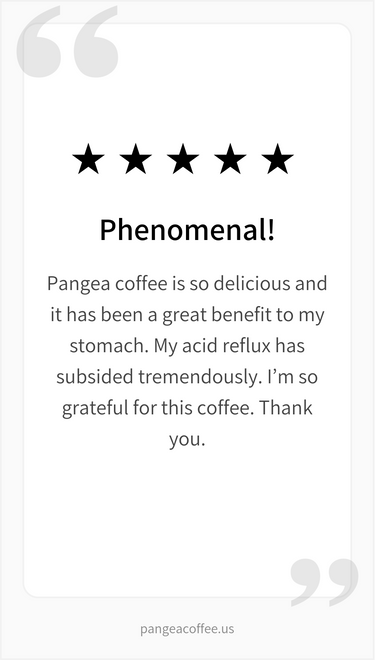
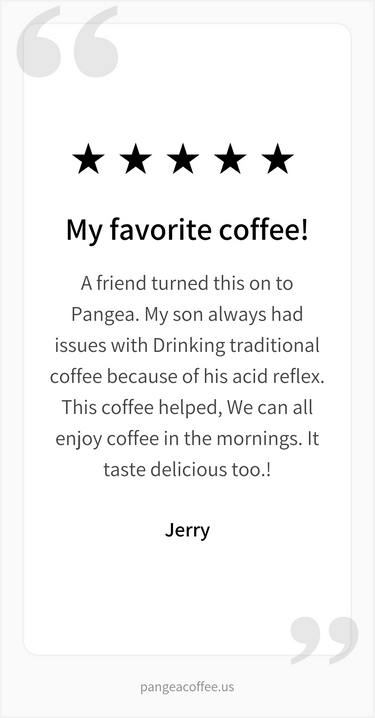
“Life has been better since finding this coffee! The allergen free commitment has matched no other brand. The fact that it is low acid and doesn’t bother my acid reflux or GERD has been a game changer. YES YES YES”
— Allyson K., verified buyer · Pangea Decaf · June 2026
“Wonderful flavor with none of the stomach issues most coffee’s cause me”
— Randy K., verified buyer · Unity Medium Roast · May 2026
“Love this coffee! Doesn't hurt my stomach or make me jittery at all. I used to be able to drink coffee all day long - maybe now I can start drinking more coffee again.”
— Denise H., verified buyer · Hope Light Roast · April 2026
Individual results vary. Start small and monitor your symptoms.
Best Low-Acid Coffee Beans: Regional Guide
Not all beans are equal for acidity. Here's what to look for:
Regions Known for Lower-Acid Coffee:
Brazil: Known for naturally lower acidity and a smooth, chocolatey, caramel-sweet flavor.
Sumatra: Earthy, full-bodied with low perceived acidity; wet-hulling further smooths it.
Ethiopia (Sidama): Certain varietals offer complex flavor with managed acidity.
Guatemala: Specific regions deliver chocolatey, smooth profiles.
Mexico: Smooth, mild, and naturally low in perceived acidity.
What Makes These Special:
- Growing altitude
- Volcanic soil composition
- Processing methods
- Varietals with lower chlorogenic acid
At Pangea, we source from these regions, selecting only beans that meet our low-acid standards.
Coffee Alternatives for Severe GERD
For some people with severe GERD, even low-acid coffee may trigger symptoms. If that's you, here are alternatives:
Herbal “Coffee” Substitutes
Roasted chicory root, dandelion root, or barley-based beverages give a coffee-like experience without caffeine or much acidity. Look for allergen-free facilities if you have sensitivities.
About Mushroom Coffee:
We don't recommend it for people with allergies or GERD—cross-contamination risks vary, and some find mushroom extracts hard on sensitive digestion.
Our Chemical-Free Decaf:
For years we couldn't comfortably recommend decaf because conventional decaffeination often uses harsh chemical solvents. We now offer Pangea Decaf—processed using naturally derived ethyl acetate from fermented sugarcane, keeping our low-acid, SPOKIN-verified standard without caffeine.
Other caffeine-reduction options:
- Smaller portions of regular low-acid coffee
- Dilute with hot water (Americano-style)
- Choose dark roast (naturally slightly lower caffeine)
- Blend half decaf, half regular for gradual reduction
Work With Your Doctor
Coffee tweaks help many people, but GERD needs proper medical management. Don't ignore serious symptoms. Work with your gastroenterologist on dietary changes, medications if needed, lifestyle changes, and sleep positioning.
Your Questions Answered: Complete FAQ
Does low-acid coffee really help with GERD?
For many people, yes — not because low-acid coffee is a treatment, but because it's often easier to tolerate than high-acid coffee. The research on coffee and GERD is mixed, and individual response varies a lot, so the best approach is to try a low-acid coffee with food and see how you feel.
Is coffee bad for acid reflux?
It can be for some people—coffee may relax the LES and stimulate stomach acid. But the largest recent reviews find only a small or no association overall, so it isn't a universal trigger. Low-acid coffee, taken with food, is often well tolerated by reflux-prone drinkers.
What coffee is best for acid reflux?
Low-acid coffee from naturally low-acid regions (Brazil, Sumatra, Guatemala, Mexico), roasted to reduce acidity, and sourced carefully. At Pangea, we suggest Bold Respect (dark roast) for higher sensitivity, or Unity (medium roast) for everyday drinking. For how the main brands compare, see our low acid coffee brands comparison.
Can I drink coffee on an empty stomach with GERD?
It's best not to. Coffee on an empty stomach can increase stomach acid and coincide with LES relaxation. Always pair coffee with food, even a small breakfast.
Does hot coffee affect acid reflux worse than iced?
Temperature is usually a smaller factor than the coffee's acidity and how it's brewed. Many people find cold brew gentler, so it's worth trying both.
Is cold brew better for acid reflux?
Many reflux-prone drinkers find cold brew gentler and smoother than hot-brewed coffee, even though measured pH between the two can be similar. The cold, slow extraction pulls fewer bitter compounds, which is often what people notice. It's a good method to try when reintroducing coffee, using any low-acid roast.
Is dark roast better for acid reflux than light roast?
Generally, yes. A study in Molecular Nutrition & Food Research (2014) by Rubach and colleagues found a dark roast blend stimulated less gastric acid secretion than a medium roast. Dark roasts are also slightly lower in caffeine. That said, at Pangea all roasts are designed to be low-acid, so many customers enjoy all three.
Does decaf coffee cause acid reflux?
It can, because decaf still contains chlorogenic acids that stimulate gastric acid—caffeine isn't the only factor. A low-acid decaf processed with natural, chemical-free methods is usually gentler. Our Sugarcane EA Decaf combines low-acid sourcing with chemical-free processing. See our full Decaf Coffee for GERD and Acid Reflux Guide.
Is decaf coffee better for acid reflux?
Often only if it's also low-acid. Switching to decaf alone may not solve it—acidity matters as much as caffeine. The gentlest choice is decaf that is both low-acid and processed without harsh chemical solvents, like our Sugarcane EA Decaf.
What makes Pangea Coffee different?
Four things: (1) recommended by board-certified gastroenterologist Dr. Salhab, (2) the first SPOKIN-verified allergen-free coffee company in America, (3) Q-graders on staff who inspect coffee at our facility—and sometimes at the source, (4) aggressive taste-testing—if it's harsh or bitter, it doesn't ship.
Can I drink low-acid coffee every day?
For most people, yes—it's designed for daily drinking and tends to be gentler than high-acid coffee. As always, listen to your own body and your doctor's guidance.
Is low-acid coffee the same as decaf?
No. Acidity and caffeine are unrelated. Low-acid coffee has the same caffeine as regular coffee—the roasting that reduces acidity doesn't remove caffeine.
Can I drink decaf coffee with GERD?
Often yes—but the decaffeination process matters. Many conventional decafs use harsh solvents, and decaf still contains acids that can stimulate stomach acid. For reflux-prone drinkers, a chemical-free low-acid decaf is usually the gentlest option. Our Sugarcane EA Decaf uses naturally derived ethyl acetate from fermented sugarcane and keeps our low-acid profile.
How is Pangea checked for mold?
Q-graders on staff inspect coffee at our facility—and sometimes at the source—through sensory evaluation, and we source from regions known for lower mold risk with careful storage. We don't lab-test every batch; our approach is expert sensory inspection plus careful sourcing.
Is Pangea really allergen-free?
Yes—we're SPOKIN-verified, a third-party allergen-free facility verification, and the first coffee company in America to earn it. Our facility doesn't process nuts, gluten, dairy, or any of the Top-9 allergens, with strict protocols to prevent cross-contamination.
Will low-acid coffee help with heartburn?
Many people find switching to low-acid coffee reduces their heartburn, though individual responses vary and the research is mixed. The best approach is to start with one cup with food and monitor how you feel.
Can I use low-acid coffee for espresso?
Yes. Our Bold Respect dark roast is designed as a low-acid espresso—rich, creamy shots. Just avoid espresso on an empty stomach if you're reflux-prone.
Does cold brew have less acid?
Cold brew is widely perceived as smoother and less acidic, though measured pH between cold and hot brew can be similar. Many reflux-prone drinkers find cold brew the gentlest method. You can make it with any of our roasts.
How long to see if it works for my GERD?
Many people notice a difference quickly—often within a few days. If regular coffee gives you heartburn within an hour, a low-acid coffee taken with food should feel noticeably gentler. Give it about a week of consistent use to evaluate.
Can I drink coffee while taking PPIs?
Many people do, but always consult your doctor before dietary changes. Low-acid coffee can often fit alongside a treatment plan.
What if low-acid coffee doesn't work?
If low-acid coffee still triggers symptoms, you may have GERD that needs medical management beyond dietary changes. Work with your gastroenterologist—some people need to pause coffee while the esophagus heals, then reintroduce later.
Is your coffee organic?
Yes. All Pangea Coffee is Organic, Fair Trade, Non-GMO, and specialty-grade Arabica, sourced from carefully selected farms.
Do you offer a money-back guarantee?
Yes. If our low-acid coffee doesn't work for you, we'll refund your money. No questions, no hassle.
Which roast for higher sensitivity?
Start with Bold Respect (dark roast)—lowest acid due to extended roasting. If that works, try Unity (medium) or Hope (light), or get the Discovery Pack to sample all three.
Ready to Enjoy Coffee Again?
Many reflux-prone coffee lovers have found a cup they can enjoy. You may not need to quit coffee—just choose better beans and brew a little smarter.
Start Your Comfortable Coffee Journey
Bold Respect (Dark) Unity (Medium) Hope (Light) Decaf
Can't decide? Try all three roasts:
✓ Doctor-Recommended • ✓ SPOKIN-Verified • ✓ Mold-Conscious Sourcing • ✓ 30-Day Guarantee
Learn More:
- Low Acid Coffee Brands, Compared
- Ultimate Guide to Allergen-Free Coffee
- Benefits of Mold-Free Coffee
- Low-Acid Coffee for Gastritis & Ulcers
- Decaf Coffee & Acid Reflux: Complete Guide
- Shop All Low-Acid Coffee
Scientific References & Research
This guide draws on peer-reviewed research and expert medical opinion. Where the evidence is mixed or preliminary, we've said so.
-
Coffee Intake and Risk of Gastroesophageal Reflux Disease and Complications: A Systematic Review and Meta-Analysis. (2026). Clinical and Translational Gastroenterology.
View on PubMed →
Largest review to date (40 studies, 122,074 patients): coffee was associated with a small increased rate of GERD (OR ~1.18), which the authors described as of unclear clinical significance. -
Kim, J., et al. (2014). “Association between coffee intake and gastroesophageal reflux disease: a meta-analysis.” Diseases of the Esophagus, 27(4), 311–317.
View on PubMed →
Meta-analysis of 15 studies finding no significant overall association between coffee consumption and GERD. -
Shimamoto, T., et al. (2013). “No association of coffee consumption with gastric ulcer, duodenal ulcer, reflux esophagitis, and non-erosive reflux disease: a cross-sectional study of 8,013 healthy subjects in Japan.” PLoS One, 8(6), e65996.
View on PubMed →
Large cross-sectional study supporting that coffee is not universally associated with reflux. -
Polese, B., et al. (2022). “Effect of Dewaxed Coffee on Gastroesophageal Symptoms in Patients with GERD: A Randomized Pilot Study.” Nutrients, 14(12), 2510.
View on PubMed →
Small randomized pilot (40 patients) in which a specially processed dewaxed coffee was associated with fewer reflux symptoms and more heartburn-free days—preliminary evidence. -
Rubach, M., et al. (2014). “A dark brown roast coffee blend is less effective at stimulating gastric acid secretion in healthy volunteers compared to a medium roast market blend.” Molecular Nutrition & Food Research, 58(6), 1370–1373.
View on PubMed →
Found dark roast stimulated less gastric acid secretion than medium roast. -
Boekema, P. J., et al. (1999). “Coffee and gastrointestinal function: facts and fiction. A review.” Scandinavian Journal of Gastroenterology, 34(230), 35–39.
View on PubMed →
Review of coffee's physiological effects on digestion. -
Kaltenbach, T., Crockett, S., & Gerson, L. B. (2006). “Are lifestyle measures effective in patients with gastroesophageal reflux disease? An evidence-based approach.” Archives of Internal Medicine, 166(9), 965–971.
View on PubMed →
Evidence-based review of dietary and lifestyle interventions for GERD. -
Katz, P. O., et al. (2013). “Guidelines for the diagnosis and management of gastroesophageal reflux disease.” American Journal of Gastroenterology, 108(3), 308–328.
View on PubMed →
Clinical practice guidelines on GERD management, including dietary considerations.
Expert Medical Opinion:
Dr. Joseph Salhab, MD — Board-Certified Gastroenterologist. @TheStomachDoc (TikTok) | @TheStomachDoc (Instagram). Dr. Salhab recommends Pangea Coffee as a gentle, low-acid option for people with sensitive stomachs.
Medical Disclaimer: This article is for informational purposes only and does not constitute medical advice. Individual responses to coffee vary, and the research on coffee and GERD is mixed. If you have GERD or another digestive condition, consult your physician before making dietary changes. This information should not replace professional medical diagnosis or treatment.
Quality Assurance at Pangea:
- Q-Grader Inspection: Coffee Quality Institute–certified graders evaluate our coffee at our facility—and sometimes at the source
- SPOKIN Verification: Third-party allergen-free facility verification—the first in America
- Batch Taste-Testing: Sensory evaluation for acidity, bitterness, and quality before release
- Organic & Fair Trade: Specialty-grade Arabica, ethically sourced
Last Updated: August 2026
Citations verified at time of publication.
Not sure which roast is right for you?
Answer five questions about your symptoms and we'll match you to a roast. Takes about thirty seconds, and you don't need to give us your email to see the result.
Find Your Roast →