





Coffee and Bloating: Why It Happens and What Helps
You finish your coffee, and twenty minutes later your waistband feels tighter. Sound familiar?
Here's the honest answer up front: coffee can contribute to bloating for some people — but it's not a universal trigger, and the cause is often fixable. The research doesn't say “coffee bloats everyone.” It says the effect depends on your gut, how you brew, when you drink it, and — very often — what you add to the cup.
Let's break down why it happens and what actually helps.
Does Coffee Cause Bloating?
For some people, yes — but coffee itself doesn't contain gas-producing compounds. Instead, it sets off digestive events that can lead to bloating in sensitive individuals. There are three main mechanisms:
1. It speeds up your gut. Caffeine stimulates the gastrocolic reflex — the wave of muscle activity that moves things through your digestive tract. For most people that's harmless (or even helpful), but if your gut is sensitive, faster movement can mean gas, cramping, and a bloated feeling. If gas is your main symptom rather than that tight, swollen feeling, the fix is different — here's why coffee makes you gassy.
2. It stimulates stomach acid. Coffee prompts your stomach to produce more acid. On an empty stomach especially, that can irritate a sensitive digestive tract and add to discomfort.
3. What you add to it. This is the one most people miss. Milk and cream (if you're sensitive to lactose), sugar, and especially the sugar alcohols in “sugar-free” syrups and creamers are often the real bloating culprit — they ferment in the gut and produce gas. The coffee gets blamed for what the add-ins are doing.
Why Does Coffee Make Me Bloated but Not Others?
Bloating from coffee comes down to individual factors — which is why one person can drink three cups happily while another feels puffy after one.
You may be more prone to coffee bloating if you:
- Have a sensitive stomach, acid reflux, gastritis, or IBS
- Drink coffee on an empty stomach
- Are sensitive to lactose and add milk or cream
- Use sugar-free syrups or creamers (sugar alcohols ferment and produce gas)
- Drink high-acid coffee, which can irritate the gut lining on contact
Notice how many of those are about context, not the coffee itself. That's the encouraging part — most are adjustable.
How to Drink Coffee Without the Bloat
If coffee tends to bloat you, here's what tends to help most, roughly in order of impact:
1. Fix the add-ins first
Before changing your coffee, change what goes in it. Skip sugar-free syrups and sugar alcohols, and if dairy bothers you, go without. Plain coffee is naturally low in FODMAPs — the add-ins are often the real trigger.
2. Never drink it on an empty stomach
Pair coffee with food, even a small breakfast. This blunts both the acid stimulation and the gut-speeding effect, which tend to be strongest on an empty stomach.
3. Choose a lower-acid coffee
High-acid coffee can irritate a sensitive digestive tract. A naturally low-acid coffee is gentler on contact — one less thing irritating an already-sensitive gut.
4. Watch your portion and timing
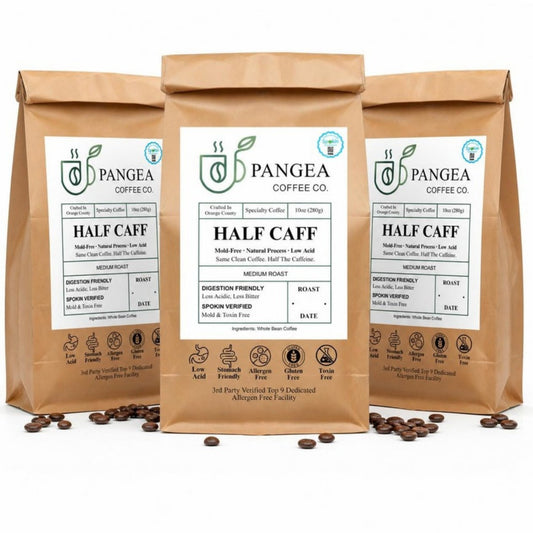
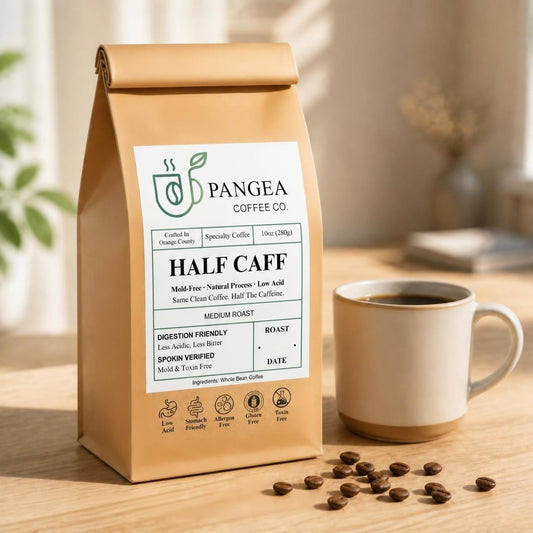
Smaller amounts are easier to tolerate. If you're drinking several cups, try cutting back or spacing them out, and see whether the bloating eases. If you'd rather keep the number of cups, a low-acid half caff blend cuts the caffeine in each one by about half.
5. Consider decaf if caffeine is the driver
If the gut-speeding effect of caffeine is your main issue, a clean low-acid decaf removes that variable while keeping the ritual.
Why a Clean, Low-Acid Coffee Helps
If coffee bloats you, two things about Pangea are worth knowing — not as a cure, but as fewer things working against a sensitive gut:
Naturally low-acid. We source from naturally lower-acid regions and aggressively taste-test for harshness, so there's less acidity irritating your digestive tract on contact.
Nothing added. Because our coffee is SPOKIN-verified allergen-free with nothing added, you start from a clean baseline — no hidden dairy, no sweeteners, no sugar alcohols. You control exactly what goes in your cup, which means you control one of the biggest bloating variables.
Doctor-Recommended for Sensitive Digestion
We're recommended by Dr. Joseph Salhab, a board-certified gastroenterologist known as @TheStomachDoc, who focuses on managing GERD, IBS, and reflux through nutrition and lifestyle.

What Customers With Sensitive Stomachs Say
These are genuine reviews from customers with sensitive digestion. (We share real sensitive-stomach feedback rather than condition-specific claims we can't verify.)
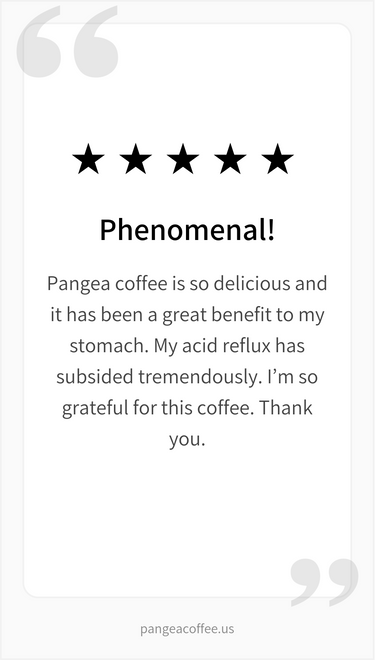
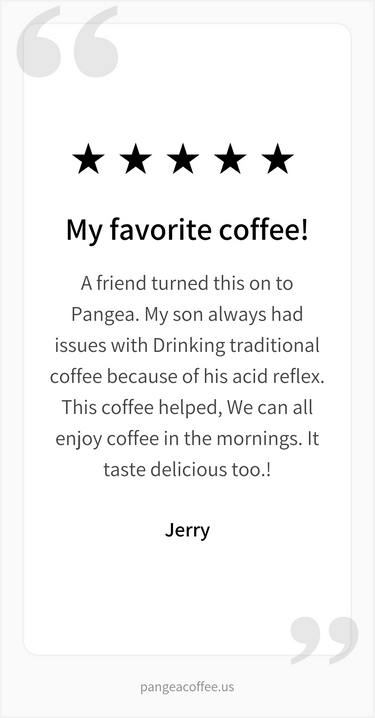
“Delicious coffee that goes down easy. I have to be very careful with my stomach, and I am delighted that I can still drink this coffee.”
— Drea, Sensitive Stomach
“My family and I love how all the coffee varieties taste and how they don't hurt our stomachs. We will be drinkers of Pangea for as long as it's roasted.”
— Thomas E., Verified Buyer
“Wonderful product and wonderful service. I really like that the medium roast is not burnt but still has a full body taste.”
— Ellie, Unity Medium Roast
Individual results vary. Start small and monitor your own symptoms.
Frequently Asked Questions
Does coffee cause bloating?
It can for some people, though coffee itself doesn't contain gas-producing compounds. It can trigger bloating indirectly by speeding up gut motility, stimulating stomach acid, and — very often — through add-ins like milk, sugar, and sugar-free sweeteners. The effect is individual; many people drink coffee with no bloating at all.
Why does coffee make me bloated but not my friend?
Bloating from coffee depends on individual factors: how sensitive your gut is, whether you have conditions like IBS or reflux, whether you drink it on an empty stomach, and what you add. Someone without those sensitivities may feel nothing, while a sensitive gut reacts to the same cup.
Is it the coffee or the creamer causing my bloating?
Often the add-ins. Milk and cream can bloat people sensitive to lactose, and the sugar alcohols in “sugar-free” syrups and creamers ferment in the gut and produce gas. Try plain coffee for a few days — if the bloating eases, the add-ins were the culprit, not the coffee.
Does low-acid coffee help with bloating?
It may help with the irritation side of things. High-acid coffee can irritate a sensitive digestive tract on contact, so a naturally low-acid coffee is gentler. It won't address caffeine-driven motility, but combined with avoiding add-ins and not drinking on an empty stomach, many people find it easier to tolerate.
Does decaf coffee cause less bloating?
It can, if caffeine-driven gut motility is your main trigger — decaf removes that variable. Our Sugarcane EA Decaf is also low-acid and additive-free, so it addresses several bloating factors at once.
Should I drink coffee on an empty stomach if I bloat easily?
Best not to. Coffee on an empty stomach amplifies both the acid stimulation and the gut-speeding effect. Pairing it with food — even a small breakfast — tends to make it much easier to tolerate.
How long does coffee bloating last?
For most people it's short-lived — the gut-stimulating effect happens soon after drinking and settles within a few hours. If bloating is persistent or severe, that points to something beyond coffee, and it's worth talking to your doctor.
Can I drink coffee if I have IBS and bloat easily?
Some people with IBS tolerate coffee and some don't — it's individual. If you do react, a low-acid or decaf coffee with no add-ins, taken with food, is the gentlest way to test it. See our Coffee and IBS guide for more.
Is Pangea coffee gentler for a sensitive stomach?
Many sensitive-stomach customers tell us so. Our coffee is naturally low-acid, SPOKIN-verified allergen-free, and has nothing added — which removes several common irritation and bloating variables. It's not a treatment, but it's a cleaner starting point. Individual results vary.
Enjoy Coffee Again — Without the Bloat
If coffee has been bloating you, try the adjustments first: skip the add-ins, pair it with food, and switch to a clean, low-acid cup. For many people that's the difference.
Try a Cleaner, Low-Acid Cup
✓ Naturally Low-Acid • ✓ SPOKIN-Verified Allergen-Free • ✓ Nothing Added
Learn More:
- Coffee and IBS: Can You Still Drink It?
- Best Coffee for a Sensitive Stomach
- Low-Acid Coffee & Gut Health
- Shop All Low-Acid Coffee
Scientific References
This guide reflects peer-reviewed research and general gastroenterology guidance. Where the evidence is mixed or individual, we've said so.
-
Rubach, M., et al. (2014). “A dark brown roast coffee blend is less effective at stimulating gastric acid secretion in healthy volunteers compared to a medium roast market blend.” Molecular Nutrition & Food Research, 58(6), 1370–1373.
View on PubMed →
Supports that roast level affects how strongly coffee stimulates gastric acid — relevant to acid-related digestive discomfort. -
Boekema, P. J., et al. (1999). “Coffee and gastrointestinal function: facts and fiction. A review.” Scandinavian Journal of Gastroenterology, 34(230), 35–39.
View on PubMed →
Review of coffee's effects on digestion, including motility and acid secretion.
Medical Disclaimer: This article is for informational purposes only and does not constitute medical advice. Coffee affects digestion differently from person to person. If you have persistent bloating or a digestive condition, consult your physician. This information should not replace professional medical diagnosis or treatment.
Quality Assurance at Pangea:
- SPOKIN-Verified: The first allergen-free verified coffee company in America
- Naturally Low-Acid: Sourced from lower-acid regions, taste-tested for harshness
- Nothing Added: No dairy, sweeteners, or additives — you control what goes in your cup
- Q-Grader Inspection: Certified graders evaluate our coffee at our facility — and sometimes at the source
Last Updated: June 2026
Citations verified at time of publication.