H. Pylori and Coffee: What You Can (and Can't) Drink

You have H. pylori and you want to know if you can still drink coffee. The honest answer: it depends on where you are in treatment, how symptomatic you are, and what kind of coffee you're drinking. This guide covers all three — with the research to back it up, not just generic advice to “avoid caffeine.”
H. pylori (Helicobacter pylori) affects roughly half the world’s population and is the leading bacterial cause of gastritis, peptic ulcers, and — in some cases — gastric cancer. If you’ve just been diagnosed, one of the first questions most people ask their doctor is some version of: “Do I have to give up coffee?”
The research is more nuanced than a simple yes or no. Coffee’s relationship with H. pylori is complex — and interestingly, some studies suggest coffee may have mild antibacterial properties against the bacteria itself. What matters most is managing your symptoms, supporting your treatment, and choosing coffee that doesn’t add more irritation to an already inflamed stomach lining.
What Is H. Pylori? A Quick Overview
H. pylori is a spiral-shaped gram-negative bacterium that colonizes the stomach lining. It was first identified in 1982 and is now recognized by the World Health Organization as a Group 1 carcinogen — meaning it’s classified as definitively causing cancer in some cases, specifically gastric adenocarcinoma.
What H. pylori does: The bacteria burrows into the protective mucus lining of the stomach, triggering chronic inflammation (gastritis). Over time, this can lead to peptic ulcers when the lining breaks down, and in a small percentage of cases, gastric cancer with long-term untreated infection.
How it’s treated: Standard treatment is a combination of two antibiotics (typically clarithromycin and amoxicillin) plus a proton pump inhibitor (PPI) like omeprazole, usually for 10–14 days. This is called “triple therapy” or, in more resistant cases, “quadruple therapy.” Eradication rates with current protocols are around 70–85%.
⚠ Important Note
This guide is informational and does not replace your gastroenterologist’s advice. If you have H. pylori, you should be under the care of a physician. Dietary adjustments — including coffee — should be discussed with your doctor alongside your treatment plan.
What Does the Research Say About Coffee and H. Pylori?
This is where it gets interesting — because the research doesn’t paint the simple picture most people expect.
Coffee May Have Mild Antibacterial Properties Against H. Pylori
A 2004 laboratory study published in research on the antibacterial effects of coffee found that coffee demonstrated a strong antibacterial action against H. pylori in laboratory conditions, suggesting it may act as a natural inhibitor of gastritis-related bacterial activity.
This doesn’t mean coffee treats H. pylori — laboratory findings don’t directly translate to clinical outcomes. But it does complicate the simple narrative that “coffee makes H. pylori worse.” The bacteria itself may not be worsened by coffee consumption.
Coffee Can Worsen H. Pylori Symptoms
The more clinically relevant finding is that while coffee may not worsen the infection itself, it can significantly worsen the symptoms it causes. A 2023 cross-sectional study published in Cureus found that coffee consumption was associated with increased upper gastrointestinal symptoms in patients with active H. pylori infection.
This makes physiological sense. Coffee stimulates gastric acid secretion. H. pylori damages the protective stomach lining. An already-inflamed, compromised stomach lining exposed to increased acid production is a recipe for pain, nausea, and worsened symptoms — even if the coffee isn’t technically feeding the bacteria.
Coffee and Peptic Ulcers: Less Clear Than You’d Think
A 2022 narrative review published in Nutrients examined coffee’s effects across the gastrointestinal tract and found that in most studies, there was no significant association between coffee drinking and the risk of peptic ulcers. A large meta-analysis cited in the review noted that approximately 90% of peptic ulcer-related symptoms relate to NSAID use, H. pylori infection, and smoking — not coffee consumption.
The takeaway: coffee doesn’t cause ulcers, and it likely doesn’t worsen the underlying infection. But it can definitely aggravate symptoms in someone whose stomach lining is already damaged or inflamed.
Can You Drink Coffee During H. Pylori Treatment?
This is the most practical question — and it has a more specific answer than “can you drink coffee with H. pylori” generally.
During Active Antibiotic Treatment: Minimize or Avoid
During the 10–14 days of triple or quadruple therapy, most gastroenterologists recommend reducing or eliminating coffee for several reasons:
- Antibiotic absorption: Caffeine can affect the absorption of some antibiotics and may reduce their effectiveness at the gut level.
- Increased acid: PPIs (part of triple therapy) are working to reduce acid production. Coffee directly counteracts this by stimulating acid secretion — undermining your medication.
- Stomach lining recovery: The lining needs time to begin healing. Additional acid stimulation slows this process.
- Symptom management: Nausea and stomach discomfort are common during antibiotic treatment. Coffee can amplify both.
After Treatment: Reintroduce Carefully
Once eradication is confirmed (typically via a follow-up urea breath test or stool antigen test 4–6 weeks after completing antibiotics), the stomach lining begins recovering. At this stage, most patients can reintroduce coffee — but how you reintroduce it matters.
☕ Post-Treatment Coffee Reintroduction Guidelines
- Start with one small cup and monitor your response over 24–48 hours
- Never drink on an empty stomach — always have food first
- Choose low-acid coffee sourced from naturally low-acid origins (more on this below)
- Consider cold brew — cold-water extraction produces significantly lower total acid content than hot brewing
- Avoid very dark roasts initially — lighter and medium roasts from low-acid origins are gentler during recovery
- Avoid coffee with additives — flavored coffees and creamers can introduce irritants your healing stomach doesn’t need
Why Low-Acid Coffee Matters for H. Pylori Recovery
Not all coffee is equally hard on a damaged stomach lining. The acidity of your cup is heavily influenced by where the beans were grown — and choosing naturally low-acid coffee can make a significant difference in symptom management during and after H. pylori treatment.
What Makes Coffee Acidic?
Coffee contains chlorogenic acids, quinic acids, and citric acids — compounds that vary significantly by origin, altitude, processing method, and roast level. Beans grown at high altitudes in regions like Brazil, Sumatra, Guatemala, and Mexico naturally produce lower concentrations of these acids due to slower cherry maturation and different soil composition.
Roasting further reduces chlorogenic acid content — which is why medium roasts can be gentler than very light roasts for some people, despite light roasts being “brighter” in flavor. And cold brewing reduces total acid extraction by a meaningful amount compared to hot brewing, since heat is responsible for extracting many of these acid compounds.
For someone with an H. pylori-damaged stomach lining, every reduction in acid load matters. Starting with naturally low-acid beans, prepared using a lower-acid brewing method, is the most practical way to continue enjoying coffee while minimizing irritation.
The Best Coffee Options During H. Pylori Recovery
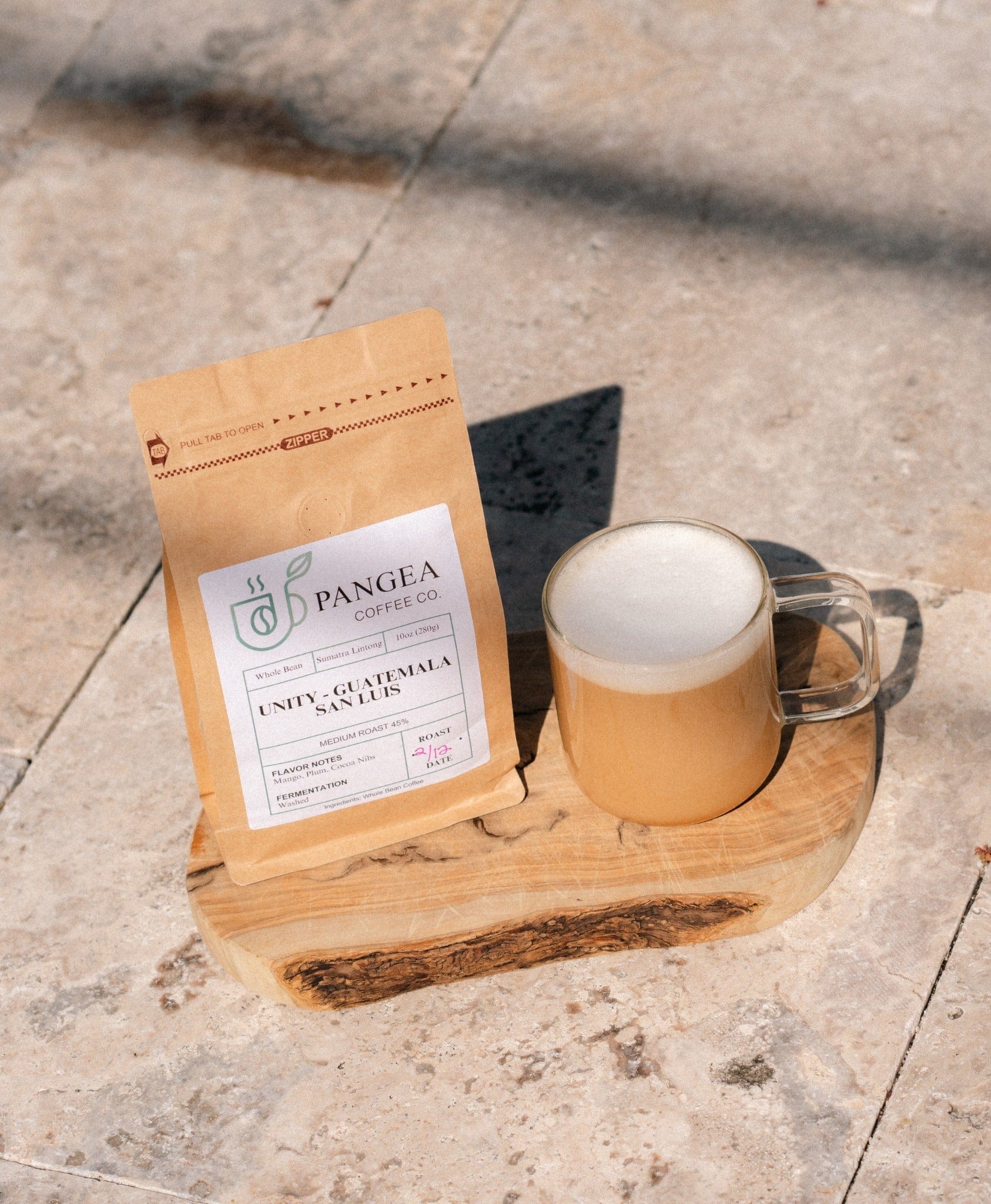
Pangea Coffee is sourced exclusively from naturally low-acid growing regions — Brazil, Sumatra, Guatemala, and Mexico — small-batch roasted, and SPOKIN-verified Top-9 allergen-free. Our Q graders inspect every lot at our facility and sometimes at the source, specifically screening for perceived acidity before roasting.
For people managing H. pylori recovery, here’s how our coffees fit into a careful reintroduction:
☕ Unity Medium Roast — Best Starting Point
The medium roast profile reduces chlorogenic acid levels compared to lighter roasts while maintaining a smooth, balanced cup. Unity’s Brazilian and Sumatran sourcing puts it at the lower end of the acidity spectrum. For most people reintroducing coffee after H. pylori treatment, Unity is the gentlest starting point among caffeinated options.
☕ Sugarcane EA Decaf — Best During Treatment or Early Recovery
For people still in or recently completing H. pylori treatment, decaf is the recommended choice. Our Sugarcane EA Decaf uses a natural ethyl acetate process derived from sugarcane — no harsh chemical solvents like methylene chloride. It’s processed in the same SPOKIN-verified allergen-free facility, naturally low-acid, and delivers a smooth, satisfying cup without the caffeine that stimulates acid production and can interact with antibiotics.
For a deeper look at why clean decaf matters specifically for digestive health, see our complete decaf guide for acid reflux and GERD.
☕ Cold Brew Method — Best Brewing Approach for Recovery
However you choose to brew, cold brew is the gentlest method for a recovering stomach. Cold-water extraction produces coffee with lower total titratable acid compared to hot-brewed coffee from the same beans. If you’re reintroducing coffee post-treatment, starting with cold brew using a low-acid bean like Unity gives you the lowest combined acid load possible. See our complete cold brew guide for ratios and step-by-step instructions.

H. Pylori, Gastritis, and Ulcers: The Connection
H. pylori is the leading cause of both gastritis and peptic ulcers — which is why dietary management for all three conditions overlaps significantly. If you’ve been managing gastritis or ulcers and recently learned H. pylori is the underlying cause, the dietary principles are the same: reduce acid stimulation, support the stomach lining’s healing, and choose clean, low-irritant foods and beverages.
For a detailed breakdown of how low-acid coffee fits into gastritis and ulcer management beyond H. pylori specifically, see our complete guide to low-acid coffee for gastritis and ulcers.
Frequently Asked Questions About H. Pylori and Coffee
Can I drink coffee if I have H. pylori?
It depends on where you are in treatment. During active antibiotic treatment for H. pylori, most gastroenterologists recommend minimizing or avoiding coffee — caffeine stimulates acid production that counteracts your PPI medication, and it can worsen nausea from antibiotics. After confirmed eradication, most people can reintroduce coffee carefully, starting with low-acid, naturally sourced options like decaf or medium roast from low-acid origins.
Does coffee make H. pylori worse?
The research doesn’t show that coffee worsens the H. pylori infection itself. Some laboratory research even suggests coffee has mild antibacterial properties against H. pylori. However, coffee consistently worsens the symptoms caused by H. pylori — including stomach pain, nausea, and upper gastrointestinal discomfort — because it stimulates acid production in a stomach whose protective lining is already compromised. The distinction matters: coffee isn’t feeding the bacteria, but it is irritating the damage it causes.
Can I drink coffee during H. pylori antibiotic treatment?
Most physicians recommend avoiding regular coffee during H. pylori antibiotic treatment. The proton pump inhibitor (PPI) component of triple therapy is specifically designed to reduce stomach acid, and caffeine directly stimulates acid production — working against your medication. Additionally, caffeine can affect antibiotic absorption and worsen treatment-related nausea. If you need a warm beverage during treatment, decaf low-acid coffee or herbal tea is a better choice.
How long after H. pylori treatment can I drink coffee again?
After completing your antibiotic course, most doctors recommend waiting until eradication is confirmed via a follow-up test (typically 4–6 weeks post-treatment) before reintroducing regular coffee. Once confirmed clear and once symptoms have settled, you can begin reintroducing coffee slowly — starting with a small amount of low-acid coffee with food, and monitoring your response. Always follow your gastroenterologist’s specific guidance.
Is decaf coffee OK with H. pylori?
Decaf is a significantly better choice than regular coffee during H. pylori treatment and recovery. Removing caffeine eliminates the acid-stimulating effect that makes regular coffee problematic. However, not all decaf is equal — conventionally processed decaf using chemical solvents like methylene chloride can introduce additional irritants. A naturally processed decaf like Sugarcane EA Decaf — using ethyl acetate derived from sugarcane — is the cleanest option.
What should I avoid eating and drinking with H. pylori?
During active H. pylori infection and treatment, most gastroenterologists recommend avoiding: regular coffee and strong tea (acid stimulants), alcohol (irritates and delays healing), spicy foods, carbonated drinks, NSAIDs like ibuprofen (worsen ulcer risk), and processed or fried foods. Focus on gentle, easy-to-digest foods — cooked vegetables, lean proteins, low-acid fruits, and plain whole grains. As always, your individual response matters — consult your physician for personalized guidance.
Does H. pylori cause acid reflux or GERD?
H. pylori infection and GERD have a complex relationship. H. pylori can alter acid production in ways that either increase or, in some cases, reduce acid output depending on where in the stomach it colonizes. People with H. pylori-related gastritis often experience symptoms that overlap with acid reflux — heartburn, regurgitation, and nausea. After successful H. pylori eradication, some patients find their GERD symptoms improve, while others experience a temporary increase in acid reflux as gastric acid production normalizes. See our GERD and coffee complete guide for more.
What is the best coffee for a sensitive stomach after H. pylori?
The best coffee for post-H. pylori recovery is naturally low-acid, sourced from high-altitude regions like Brazil, Sumatra, Guatemala, or Mexico, produced in a clean allergen-free facility, and brewed using a lower-acid method like cold brew. Pangea’s Unity Medium Roast is our most recommended starting point — balanced, smooth, and gentle on a healing stomach. Start small, drink with food, and listen to your body.
Can coffee cause H. pylori?
No. H. pylori is a bacterial infection transmitted person-to-person, most commonly through oral-oral or fecal-oral pathways — typically acquired in childhood in conditions of poor sanitation or hygiene. Coffee consumption is not a cause of H. pylori infection. The primary risk factors are crowded living conditions, poor handwashing hygiene, and consumption of contaminated water. Once infected, coffee may worsen symptoms, but it did not cause the infection.
What Our Customers Say
⭐⭐⭐⭐⭐
“This coffee has never hurt my stomach at all. I have tried other no-mold coffees that did not hold up to their promises. Not Pangea. I have tried the light, medium and dark roasts and all agreed with me. My favorite is Hope, the light Columbian roast. I am a customer for life.”
Denise — Verified Purchase · Hope Colombia Supremo Light Roast
⭐⭐⭐⭐⭐
“Not only is this espresso low acid it is better than any organic coffee shop we have tried. Already health improvements on digestive tract after one week.”
Jon S. — Verified Purchase · Bold Respect No. 3 Espresso
⭐⭐⭐⭐⭐
“This coffee is absolutely delicious. Now that I have started drinking the decaf, I'm able to drink coffee at night and this is a huge game changer. All coffee makes my stomach sick except for Pangea! Please never stop being allergy free because you're a huge asset to the allergy free community.”
Allyson A. — Verified Purchase · Pangea Decaf 3-Pack
Ready to Find a Coffee Your Stomach Can Handle?
Naturally low-acid sourcing. SPOKIN-verified allergen-free facility. Doctor-backed. Small-batch roasted. We strive for same-day weekday shipping.
Shop Low-Acid Coffee →Related Guides
Medical Disclaimer: This article is for informational purposes only and does not constitute medical advice. H. pylori is a serious bacterial infection requiring diagnosis and treatment by a qualified healthcare provider. If you have been diagnosed with H. pylori, are undergoing treatment, or have symptoms suggestive of gastritis or peptic ulcer disease, please consult your physician or gastroenterologist before making any dietary changes, including changes to your coffee consumption.
Scientific References
- Abdulfattah AA, et al. The Association of Smoking and Coffee Consumption With Occurrence of Upper Gastrointestinal Symptoms in Patients With Active Helicobacter pylori Infection. Cureus. 2023;15(1):e33574. PMC9909123
- Nehlig A. Effects of Coffee on the Gastro-Intestinal Tract: A Narrative Review and Literature Update. Nutrients. 2022;14(2):399. doi:10.3390/nu14020399
- Okabe S, et al. The Antibacterial Effects of Coffee on Escherichia coli and Helicobacter pylori. Pharmaceutical Biology. 2004. ResearchGate
- Rao NZ, Fuller M. Acidity and Antioxidant Activity of Cold Brew Coffee. Scientific Reports. 2018. PMC6207714
- Amaral O, et al. Living Conditions and Helicobacter pylori in Adults. BioMed Research International. 2017;9082716. doi:10.1155/2017/9082716
Quality Assurance: Pangea Coffee Company is SPOKIN-verified Top-9 allergen-free — the first coffee company in the United States to achieve this third-party certification. Q graders on our team inspect coffee at our facility and sometimes at the source. Small-batch roasting only. We strive for same-day weekday shipping.
Last updated: April 2026