



Is Cold Brew Better for Acid Reflux? A Low-Acid Guide (Plus How to Make It)

Quick answer: To make cold brew concentrate, steep 1 cup of coarsely ground coffee in 4 cups of cold filtered water (a 1:4 ratio) in the refrigerator for 16–24 hours, strain through a fine mesh, and dilute 1:1 with water or milk before drinking.
The method is simple. The beans you start with decide whether your cold brew is genuinely gentle on a reflux-prone or sensitive stomach — and that's the part most recipes skip. Full method below, plus the bean side of the equation.
Cold brew has exploded in popularity — and for good reason. The long, slow steep in cold water produces a naturally smooth, sweet, low-acid coffee that's become a go-to for people who can't stomach hot coffee anymore. But not all cold brew is created equal, and most recipes skip the two things that matter most for sensitive stomachs: bean selection and bean quality.
This guide gives you the exact concentrate method — ratios, grind, steep time, and dilution — plus what the science says about why cold brew is gentler, and how to make the cleanest, most gut-friendly cold brew possible.
In This Guide
- What is cold brew coffee?
- How to make cold brew concentrate (step by step)
- How to make cold brew at home without special equipment
- Why cold brew is lower in acid than hot coffee
- Is cold brew actually safe for GERD?
- The hidden problem most cold brew drinkers overlook
- Best beans for low-acid cold brew
- Iced coffee vs cold brew — which is better for reflux?
- Cold brew vs latte — what's the difference?
- Cold brew FAQs
Not sure which roast is right for you?
Answer five questions about your symptoms and we'll match you to a roast. Takes about thirty seconds, and you don't need to give us your email to see the result.
Find Your Roast →What Is Cold Brew Coffee?
Cold brew coffee is coffee brewed by steeping coarsely ground beans in cold or room-temperature water for 12–24 hours, then straining out the grounds. No heat is used at any stage. That single difference — time instead of temperature — is what makes cold brew taste smoother, sweeter, and noticeably less sharp than hot coffee.
Hot brewing pulls flavor out of coffee in about four minutes using water near boiling. Cold brewing does it over the better part of a day using no heat at all. Because many of coffee's harsher, more acidic compounds are more readily extracted at high temperatures, the cold, slow method leaves a good portion of them behind in the grounds.
How to Make Cold Brew Concentrate (Step by Step)
Making cold brew concentrate at home is easier than most people think — and it gives you full control over bean quality, strength, and freshness. You don't need special equipment: a large jar, a strainer, and good beans are enough.
Cold Brew Concentrate Method
- Coarse grind — use a coarse grind setting, similar to French press. Fine grinds over-extract and produce more bitterness and acidity
- Ratio — 1 cup of coarse ground coffee to 4 cups of filtered cold water (1:4 ratio for concentrate)
- Steep — combine in a jar or pitcher and refrigerate for 16–24 hours. Longer = stronger, but don't go past 24 hours or it can turn bitter
- Strain — pour through a fine mesh strainer or cheesecloth to remove all grounds
- Dilute before drinking — mix 1 part concentrate with 1–2 parts water or your preferred milk alternative
- Store — keeps refrigerated for up to 2 weeks in a sealed container
Concentrate vs Ready-to-Drink Ratios
The 1:4 ratio above makes a concentrate — strong on purpose, meant to be diluted. If you'd rather skip dilution and drink it straight from the pitcher, brew at a 1:8 ratio instead (1 cup grounds to 8 cups water). Same steep time, same strain — just ready to pour.
Cold Brew Brewing Tips for Acid Reflux
- Use filtered water — tap water minerals can interact with coffee acids and affect flavor and acidity
- Start with a weaker dilution ratio (1:3 concentrate to water) until you know how your stomach responds
- Add a pinch of baking soda to the finished cold brew — it naturally neutralizes some remaining acidity without affecting flavor
- Drink with food rather than on an empty stomach — even low-acid cold brew can irritate an empty digestive tract
- Choose oat milk or another nut-free plant milk if you add a creamer — dairy can trigger reflux independently
How to Make Cold Brew at Home Without Special Equipment
You do not need a cold brew maker. A large mason jar and a fine mesh strainer will do everything a dedicated brewer does. Here are the three home setups that work, in order of how little equipment they need:
- Mason jar + strainer — combine grounds and water in a 2-quart jar, lid on, into the fridge. After 16–24 hours pour through a fine mesh strainer lined with a paper filter or cheesecloth. Cheapest and cleanest-tasting method.
- French press — add grounds and water, leave the plunger up, refrigerate, then press down and pour when the steep is done. Fewer dishes, slightly more sediment in the cup.
- Dedicated cold brew pitcher — a pitcher with a built-in mesh basket. Convenient and tidy, but it does nothing the mason jar can't.
Whichever you use, the variables that actually determine the result are the same: coarse grind, 1:4 ratio, cold water, 16–24 hours, and good beans.
A Healthier Cold Brew Recipe (No Sugar, No Additives)
Most bottled and cafe cold brews arrive loaded with syrup, sweetened creamers, and flavorings that undo the reason you switched in the first place. Brewing at home lets you keep it clean. This is the version we drink:
- 4 oz cold brew concentrate
- 4 oz cold filtered water (or a Top 9 allergen-free plant milk such as oat)
- A pinch of cinnamon, stirred into the grounds before steeping
- Ice, and nothing else
Adding the cinnamon at the grounds stage rather than the glass gives you warm spice through the whole batch without a single gram of sugar. If you want it sweeter, a splash of unsweetened oat milk adds body and natural sweetness on its own.
Can You Make Nitro Cold Brew at Home?
Nitro cold brew is ordinary cold brew infused with nitrogen gas, which gives it a thick, creamy, almost stout-like texture and a cascading pour — with no dairy involved. At home you can approximate it with a whipped cream dispenser and a nitrogen charger, or buy a countertop nitro tap.
Worth knowing if you have reflux: nitrogen doesn't change the coffee's acidity at all. It changes mouthfeel only. The creaminess can make a strong concentrate feel gentler than it is, so keep your dilution and serving size where you had them.
Why Cold Brew Is Lower in Acid Than Hot Coffee
The science behind this is straightforward. When you brew hot coffee, heat accelerates chemical reactions that extract acidic compounds from the beans — particularly chlorogenic acids, quinic acid, and other organic acids responsible for that sharp, bright taste many acid reflux sufferers feel in their chest.
Cold brew skips the heat entirely. Steeping ground coffee in cold or room-temperature water for 16–24 hours extracts compounds much more slowly and selectively. Measured by pH alone, cold brew and hot brew from the same beans often land closer together than people expect — but pH isn't the whole story. Cold extraction pulls fewer of the bitter and harsh-tasting compounds that hot water releases in minutes, and that's what most drinkers actually notice in the cup.
The honest version: You'll see claims that cold brew is “67% less acidic.” That figure gets repeated a lot but doesn't hold up well under scrutiny. What the research more consistently supports is that cold, slow extraction produces a smoother, less bitter, less harsh cup — which is why so many people with reflux find it better tolerated even when the lab numbers are close. Your stomach is responding to more than one variable.
For people with acid reflux or GERD, this matters a lot. Many people who can't tolerate a single cup of hot coffee find cold brew is far better tolerated.
Is Cold Brew Coffee Actually Safe for GERD?
For most people with GERD, cold brew is a significantly better option than hot coffee — but it's not a guaranteed fix for everyone. GERD is triggered by multiple factors: acidity, caffeine content, fat content in what you mix with it, and individual digestive sensitivity.
Here's the nuance most articles miss: cold brew concentrate is actually higher in caffeine per fluid ounce than regular coffee because it's made at a higher coffee-to-water ratio. If you drink it straight or make it too strong, the caffeine load can still relax the esophageal sphincter and trigger reflux — even though the acid level is lower.
Cold Brew and GERD: What to Watch
- Dilute your concentrate — most cold brew is designed as concentrate; always dilute 1:1 with water or milk before drinking
- Watch your serving size — a large cold brew can contain 2–3x the caffeine of a regular cup (or brew it with Half Caff to halve it)
- Avoid dairy-heavy additions — cream and whole milk can trigger reflux independent of the coffee
- Start with low-acid beans — the brewing method helps, but bean selection matters too
- Don't drink on an empty stomach — even low-acid cold brew can irritate an empty digestive tract
For a complete breakdown of how coffee affects GERD and which options work best, read our Doctor-Backed Guide to Coffee for Acid Reflux and GERD.
The Hidden Problem Most Cold Brew Drinkers Never Think About
Here's where most cold brew guides stop short. Acidity is only one piece of what makes coffee hard on sensitive stomachs. There's a second issue that almost nobody talks about — and it affects cold brew just as much as hot coffee: mold and mycotoxins.
Mold contamination is common in poorly stored or low-quality coffee beans. Mycotoxins — compounds produced by certain molds — are heat-stable, meaning they survive both roasting and brewing. When you make cold brew with contaminated beans, those mycotoxins go straight into your cup, cold water or not.
For people with sensitive stomachs, mycotoxin exposure can cause nausea, bloating, digestive discomfort, and inflammation — symptoms that often get mistakenly attributed to coffee acidity. If you've switched to cold brew and still feel off, the beans themselves may be the issue.
Switching to cold brew is a smart first step — but pairing it with clean, mold-free beans is what actually protects your gut. Learn more in our guide on the surprising benefits of mold-free coffee.
Best Beans for Low-Acid Cold Brew
The brewing method takes you part of the way there. The beans take you the rest. For the lowest-acid, stomach-friendliest cold brew, look for beans with these characteristics:
🌍 Low-Acid Origins
Brazil, Sumatra, Guatemala, and Mexico naturally produce lower-acid beans due to altitude, soil, and processing. These make the best cold brew base for sensitive stomachs.
☕ Dark or Medium Roast
Darker roasts have lower chlorogenic acid levels because the roasting process breaks down more acids. Dark and medium roasts produce the smoothest, gentlest cold brew.
🔍 Q Grader Verified On Site
Look for a roaster that verifies every lot in house. Most brands send one finished sample to a lab. Ask whether a licensed Q grader actually cups their coffee before it ships — it's the factor most cold brew guides skip entirely.
📦 Fresh-Roasted
Stale coffee is more acidic and more likely to have developed mold during long storage. Always use beans roasted within the last few weeks for cold brew.
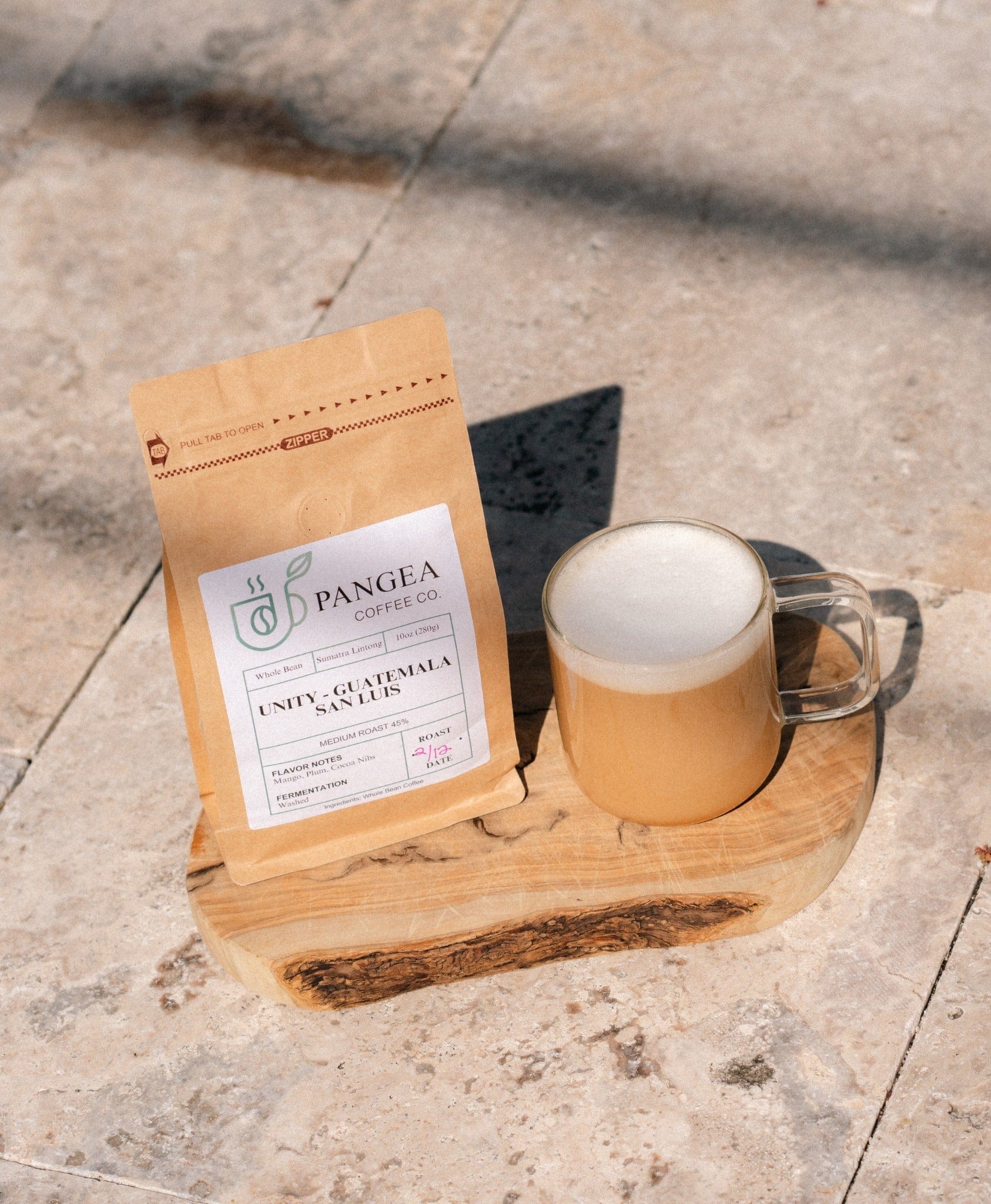
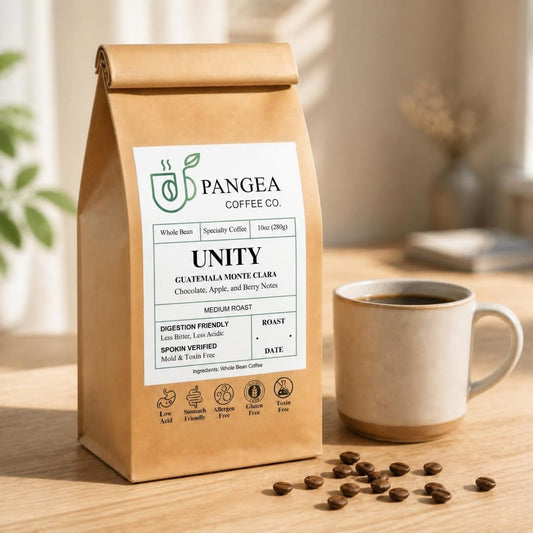
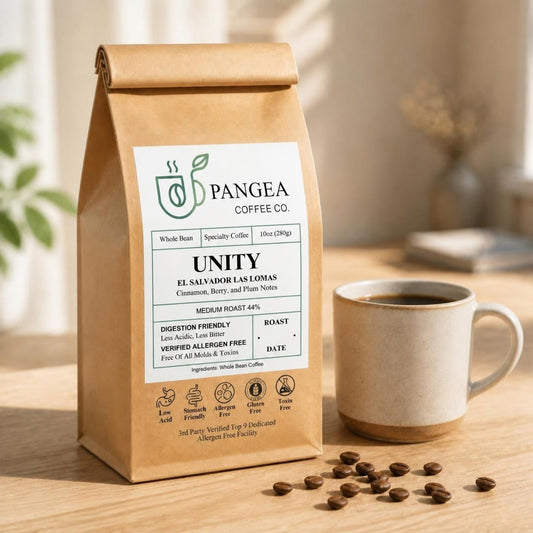
For cold brew specifically, our Bold Respect dark roast and Unity medium roast are both ideal starting points — naturally low-acid origins, Q grader verified on site at our roastery, and roasted in small batches with same-day weekday shipping as our goal.
Iced Coffee vs Cold Brew: Which Is Better for Acid Reflux?
This is one of the most common questions we get — and the answer matters if you're managing reflux. Iced coffee and cold brew are not the same thing, and the difference is significant for sensitive stomachs.
The bottom line: if you're ordering “iced coffee” at a café, you're likely getting hot-brewed coffee poured over ice — which has the same acidity as a regular cup. Always specifically ask for cold brew if you want the lower-acid option.
How to Make Iced Coffee (and Why We'd Steer You to Cold Brew Instead)
Iced coffee is hot-brewed coffee chilled and poured over ice. To make it properly, brew at double strength — roughly 1:8 coffee to water instead of the usual 1:16 — so that melting ice doesn't leave you with something watery. Cool it in the fridge before it hits the ice rather than pouring it hot.
It's fast, and it's the right answer if you want iced coffee in ten minutes. But chilling hot coffee does not lower its acidity — the acidic compounds were already extracted by the hot water, and cooling doesn't remove them. If the reason you're drinking coffee cold is that hot coffee upsets your stomach, iced coffee gives you the temperature without the benefit. Cold brew is the version that actually changes what ends up in the cup.
Cold Brew vs Latte: What's the Difference?
The difference is the brewing method and the milk. Cold brew is coffee steeped in cold water for 16–24 hours and served without milk unless you add it. A latte is espresso — coffee forced through fine grounds with hot, pressurized water in about 30 seconds — combined with a much larger volume of steamed milk.
They sit at opposite ends of the extraction spectrum. One is the slowest, coldest way to brew coffee. The other is the fastest and hottest. For a sensitive stomach that distinction matters more than the name on the menu.
How to Make a Cold Brew Latte at Home
If you like the creaminess of a latte but the espresso doesn't agree with you, a cold brew latte is the middle ground. It uses your concentrate in place of the espresso shot:
- Fill a glass with ice
- Pour 4 oz of cold brew concentrate over it
- Top with 4–6 oz of oat milk or another Top 9 allergen-free plant milk
- Stir and taste before adding anything sweet — concentrate from good beans usually doesn't need it
For reflux-prone drinkers this swap does two useful things at once: it removes the hot, fast espresso extraction, and it lets you choose a lower-fat milk alternative rather than the whole milk most cafes default to. Dairy fat can trigger reflux independently of the coffee, which is why a standard latte sometimes bothers people who tolerate black coffee fine.
Our Bold Respect dark roast makes the best cold brew latte base — the chocolate depth holds up against milk instead of disappearing into it.
“For patients who love coffee but struggle with acid reflux or GERD, switching to cold brew made from low-acid, mold-free beans can make a meaningful difference. The lower acidity and cleaner ingredient profile is exactly what sensitive stomachs need.”
— Dr. Joseph Salhab, Board-Certified Gastroenterologist (@TheStomachDoc)

The Cleanest Cold Brew Starts With the Right Beans
Cold brew technique is only half the equation. The other half is making sure the beans you're starting with are genuinely clean — mold-free, low-acid sourced, and roasted somewhere that takes contamination seriously.
At Pangea Coffee, every lot is Q grader verified on site at our roastery before it ships — cupped and evaluated by a licensed Q grader for defects, consistency, and quality. Some lots are also evaluated at origin before they ever reach us. Most brands never do either; the ones that make claims usually send a single finished sample to a lab and stop there.
Everything is then roasted under clean-room protocols in a facility where no Top 9 allergen is ever permitted — not stored, not handled, never present. That's different from a facility that “also processes” allergens and cleans between runs, and it's why we hold SPOKIN verification as the first coffee company in America to earn it. Your cold brew starts from the cleanest possible base.
Bold Respect — Dark Roast
Rich chocolate, bold depth — our top pick for cold brew concentrate
Shop Bold Respect →Not Sure? Try All Three
Sample Hope, Unity, and Bold Respect — find your perfect cold brew bean
Try the Discovery Pack →☕ Prefer Caffeine-Free Cold Brew?
Our Sugarcane EA Decaf makes exceptional cold brew — all the smooth chocolate depth, with caffeine gently removed using natural ethyl acetate from sugarcane (no harsh solvents), naturally low-acid, and roasted to the same clean-room, Q grader verified standard. Perfect for evening cold brew or anyone sensitive to caffeine.
Cold Brew Concentrate FAQs
What is the best ratio for cold brew concentrate?
A 1:4 ratio — 1 cup of coarsely ground coffee to 4 cups of cold filtered water — is the standard for concentrate. Dilute it 1:1 with water or milk before drinking. For ready-to-drink cold brew with no dilution needed, brew at 1:8 instead.
How long should cold brew steep?
16–24 hours in the refrigerator. Shorter steeps produce a weaker, brighter brew; going past 24 hours can turn the concentrate bitter and over-extracted.
What grind size should I use for cold brew?
Coarse — similar to French press grind. Fine grinds over-extract during the long steep, producing more bitterness and more acidity, and they're much harder to strain cleanly.
Do I need a cold brew maker?
No. A large mason jar and a fine mesh strainer produce the same result as any dedicated brewer. A French press works too — leave the plunger up while it steeps, then press and pour. The equipment doesn't change the coffee; the grind, ratio, and steep time do.
Is cold brew less acidic than regular coffee?
Cold water extracts fewer of the harsh, bitter compounds that hot water pulls out in minutes. Measured purely by pH the two can land close together, which is why the widely repeated “67% less acidic” figure doesn't hold up well — but the cup itself is noticeably smoother, and starting with naturally low-acid beans helps further.
Is cold brew good for acid reflux and GERD?
For most people, cold brew is much better tolerated than hot coffee. Just watch the caffeine: concentrate is stronger per ounce than regular coffee, so dilute properly and keep servings moderate. Our complete GERD coffee guide covers the full picture.
What makes a cold brew coffee mold-free?
Sourcing and handling, not a sticker. Washed-process lots carry lower mold risk than natural process because the fruit is removed before drying. Small-batch roasting and fast shipping mean less time in the warm, humid storage where mold actually develops. And a roaster that verifies every lot in house catches problems a once-a-year lab sample never would — at Pangea, every lot is Q grader verified on site at our roastery before it ships.
What is the difference between cold brew and a latte?
Cold brew is coffee steeped in cold water for 16–24 hours and served without milk unless you add it. A latte is a shot of hot espresso combined with a larger volume of steamed milk. They're opposite extraction methods — slowest and coldest versus fastest and hottest. You can combine them into a cold brew latte by using concentrate in place of the espresso.
Is iced coffee the same as cold brew?
No, and the difference matters for sensitive stomachs. Iced coffee is hot-brewed coffee poured over ice — the acidic compounds were already extracted by the hot water, so chilling it changes the temperature but not the acidity. Cold brew never uses heat at all. If you're ordering out and want the lower-acid option, ask specifically for cold brew.
Is cold brew okay if I have gastritis?
Cold brew's smoother extraction makes it one of the better-tolerated options for many people with gastritis, especially when made from low-acid beans and enjoyed with food. Everyone's sensitivity differs, so start small. See our full guide to coffee and gastritis for details.
Does cold brew have more caffeine than hot coffee?
Per fluid ounce of concentrate, yes — it's brewed at a much higher coffee-to-water ratio. Properly diluted, a serving lands in a similar range to hot coffee. Undiluted concentrate or oversized servings can carry 2–3x the caffeine of a regular cup.
Can I make cold brew with decaf coffee?
Absolutely — same ratios, same steep time. Decaf cold brew is a great choice for evening drinking or anyone sensitive to caffeine. Our Sugarcane EA Decaf is naturally low-acid and processed without harsh solvents.
How long does cold brew concentrate last?
Up to 2 weeks refrigerated in a sealed container. Flavor is best in the first week; after that it slowly flattens. Always store it sealed and cold — never at room temperature.
What Our Customers Say
“I have REALLY bad GERD and acid reflux. This unity roast does not bother me at all. I also have severe food allergies to nuts and shrimp and drink this safely.”
— Alison K.
“Delicious coffee that goes down easy. I have to be very careful with my stomach, and I am delighted that I can still drink this coffee.”
— Drea
“The Costa Rica Hope is so smooth and highlighted the notes are well rounded and very enjoyable cup of coffee.”
— Daniel C.
The Bottom Line
Cold brew is genuinely better tolerated with acid reflux and GERD than hot coffee. The slow cold extraction produces a coffee that's smoother in flavor, less harsh, and easier on the digestive system for most people. And now you have the exact method: 1:4 ratio, coarse grind, 16–24 hour steep, dilute before drinking.
But the full picture requires more than just switching your brewing method. Bean quality matters just as much as technique. Low-acid sourced, freshly roasted, Q grader verified beans are what turn a good cold brew into a genuinely gut-friendly one.
If you've been struggling to find coffee your stomach actually tolerates — cold brew with clean beans is worth trying. It's the combination most people with reflux, GERD, and sensitive stomachs find works best.
🛡️ Allergen-Free Guarantee
Every Pangea roast is produced under clean-room protocols in a SPOKIN-verified facility where no Top 9 food allergen is ever permitted — dairy, eggs, fish, shellfish, tree nuts, peanuts, wheat, soy, and sesame are not stored or handled on site at all. Safe for food allergies, celiac disease, and all sensitivities.

Related Reading
Ready to Make Clean Cold Brew?
Mold-free. Low acid. Allergen-free. Doctor-endorsed. Q grader verified on site — every lot. The best beans for cold brew, GERD, acid reflux, and sensitive stomachs.
Shop Low Acid Coffee →Medical Disclaimer: This article is for informational purposes only and does not constitute medical advice. If you have persistent symptoms of acid reflux, GERD, or any digestive condition, consult a qualified healthcare provider. Individual results may vary.
Scientific References:
- Perrone D, et al. Influence of coffee roasting on the incorporation of phenolic compounds into melanoidins and their relationship with antioxidant activity of the brew. Food Chemistry, 2009. PMID: 19530715
Quality Assurance: Every lot of Pangea Coffee is verified on site at our roastery by a licensed Q grader — every lot, every time — with some lots also evaluated at origin. We source from naturally low-acid regions and roast under clean-room protocols in America's first SPOKIN-verified facility, where no Top 9 food allergen is ever permitted.
Last updated: July 27, 2026
Not sure which roast is right for you?
Answer five questions about your symptoms and we'll match you to a roast. Takes about thirty seconds, and you don't need to give us your email to see the result.
Find Your Roast →