




Coffee Processing Methods Explained: Washed, Natural, Honey & More

A customer once wrote to us asking whether our honey process coffee was safe for their nut and honey allergies. It's one of the most understandable questions we get — and one of the most important to answer clearly.
Coffee processing is one of specialty coffee's best-kept secrets. It's the step between harvesting the coffee cherry and roasting the bean — and it has an enormous impact on flavor, body, and acidity. Understanding it doesn't just make you a more informed buyer. It gives you confidence to explore coffees you might have otherwise avoided.
Let's break down every major method, what the names actually mean, and how each one connects to the clean, low-acid coffee experience Pangea is built around.
What Is Coffee Processing? (And Why It Matters)
Every coffee bean starts its life inside a coffee cherry — a small, fruit-like pod that grows on the coffee plant. After harvest, that fruit has to be removed from the bean before roasting can happen. How farmers remove it is called the "processing method."
The choice of processing method affects:
- Flavor profile — fruity vs. clean vs. complex
- Body and texture — light and tea-like vs. heavy and syrupy
- Acidity — bright and sharp vs. low and smooth
- Fermentation character — subtle wine notes vs. neutral cup
None of these methods add ingredients to the coffee. The bean that goes into your roaster — and into your cup — is still just a coffee bean. Processing is about what's removed and how, not what's added.
The Four Major Coffee Processing Methods
☕ 1. Washed Process (Also Called "Wet Process")
What happens: The coffee cherry's outer skin and most of the fruit (called mucilage) are mechanically removed immediately after harvest. The beans are then soaked in water tanks to ferment briefly, which dissolves any remaining fruit. Finally, they're washed clean with fresh water and dried.
What it produces: Washed coffees are known for clean, bright, high-clarity cups. Because the fruit is removed quickly, its sugars don't influence the bean much. You get the coffee's terroir — origin characteristics, soil, altitude — expressed clearly.
Acidity note: Washed coffees tend to have higher perceived acidity — that crisp, bright quality. If you have acid sensitivity, GERD, or gastritis, washed coffees may be harder on your stomach than natural or honey processed options. This is one reason Pangea prioritizes sourcing from naturally low-acid regions regardless of processing method. Learn more in our gastritis and ulcers healing guide.
Ingredients added: None. Zero. The only things used are water and mechanical equipment. What ends up in your bag is pure coffee bean — nothing else.
Common origins: Ethiopia (Yirgacheffe), Kenya, Central America
🍓 2. Natural Process (Also Called "Dry Process")
What happens: The whole cherry — skin, fruit, and all — is dried in the sun with the bean still inside. This can take three to six weeks. Once dried, the outer layers are hulled off mechanically, leaving the green bean ready for export and roasting.
What it produces: Natural coffees are often described as fruity, wine-like, and complex. Because the bean sits inside the fruit for weeks, it absorbs the cherry's sugars and fermentation characteristics. You often taste blueberry, strawberry, dark fruit, or even a slight fermented quality — all natural byproducts of the drying process, not added flavors.
Acidity note: Natural processed coffees tend to be lower in perceived acidity than washed coffees. The extended fruit contact mellows the cup. Pangea's sourcing from Brazil — where natural processing is traditional — contributes to our characteristically smooth, stomach-friendly profile.
Ingredients added: None. The fruit dries and is hulled off mechanically. No flavors, sugars, or additives are introduced at any point. The fruity, complex taste profile you experience is entirely the result of the bean's interaction with its own cherry — 100% natural chemistry.
Common origins: Brazil, Ethiopia, Yemen, Sumatra
Our Unity Ethiopia Sidama is a beautiful example — complex and fruity, processed the traditional way.
🍯 3. Honey Process — And Why There Is No Honey In It
This is the big one. Let's address it directly: honey process coffee contains zero honey. Not a trace. The name refers to the sticky, honey-like texture of the mucilage layer — the natural fruit pulp that clings to the bean during drying.
What happens: The outer skin of the cherry is removed (like washed), but the sticky mucilage layer is left on the bean intentionally before drying. Depending on how much mucilage remains, you get different "levels" of honey process:
- Yellow Honey — least mucilage left on, lighter fruit character, dries quickly
- Red Honey — more mucilage, more fruit sweetness, longer drying time
- Black Honey — most mucilage, most complex, slowest to dry, closest to natural process in flavor
What it produces: Honey process coffees sit beautifully between washed and natural. Clean enough to show terroir, sweet enough to show fruit character. You get caramel, stone fruit, and a round, smooth body. No sharpness. No overpowering fermentation.
Is it safe for people with honey allergies? Yes, completely. The word "honey" describes only the processing technique — specifically, the appearance and texture of the mucilage during drying. No bee-produced honey is used at any stage. The bean that reaches your roaster has been hulled, sorted, and cleaned. If you have a honey allergy or bee-product sensitivity, honey process coffee poses no risk from the processing method itself.
Ingredients added: None whatsoever — including no actual honey. The name is purely descriptive of a texture, not a recipe. What goes in is a coffee cherry. What comes out is a coffee bean.
For anyone navigating food allergies, our full allergen-free coffee guide covers exactly what our facility verification means for your safety.
🔬 4. Anaerobic Process
What happens: Coffee cherries or depulped beans are sealed in airtight tanks with no oxygen. Fermentation happens under pressure over 24–72 hours. The controlled environment amplifies fermentation byproducts in very specific, intentional ways before the coffee is dried normally.
What it produces: Anaerobic coffees are specialty coffee's most experimental category. You often get intense, unusual notes — tropical fruit, funk, florals, sometimes fermented wine or kombucha character. Love it or find it polarizing, but there's nothing added; it's all chemistry.
Ingredients added: None. The sealed tanks contain only the coffee itself. No cultures, additives, or flavor compounds are introduced — the entire process is the coffee fermenting in its own environment.
Acidity note: Varies widely depending on base processing (anaerobic washed vs. anaerobic natural), but the extended fermentation often softens perceived acidity compared to a standard washed.
Common origins: Costa Rica, Colombia, Ethiopia (growing globally)
🌿 5. Wet-Hulled Process (Giling Basah — Sumatra's Signature Method)
What happens: Used almost exclusively in Sumatra and Indonesia, wet-hulling removes the parchment layer from the bean while it's still partially wet — a step that normally happens after drying in other methods. The exposed bean then finishes drying in open air.
What it produces: Wet-hulled Sumatran coffees have a distinctive earthy, full-bodied, low-acid character that coffee lovers either adore or find unusual. The flavor is rich, herbal, sometimes mossy — genuinely unlike anything else in the coffee world.
Ingredients added: None. The bean is simply hulled at a different moisture level than other methods. No soaks, no additives, no flavor agents — just a different mechanical step applied at a different stage of drying.
Why it matters for Pangea: Sumatra is one of our four core sourcing origins specifically because wet-hulled Sumatran beans produce naturally low-acid cups. The combination of volcanic soil, altitude, and this unique processing method creates the stomach-friendly profile our customers depend on. Read more about why origin matters for acidity in our complete GERD coffee guide.
How Processing Affects Acidity — A Quick Reference
For anyone managing gastritis, GERD, or a sensitive stomach, here's how the methods stack up on perceived acidity:
| Processing Method | Perceived Acidity | Flavor Character | Stomach-Friendly? |
|---|---|---|---|
| Washed | Higher | Clean, bright, terroir-forward | Depends on origin |
| Honey | Medium | Sweet, smooth, stone fruit | Generally yes |
| Natural | Lower | Fruity, complex, full-bodied | Yes |
| Wet-Hulled (Sumatra) | Lowest | Earthy, full, herbal | Yes |
| Anaerobic | Varies | Tropical, fermented, intense | Varies |
Important caveat: Processing method is one factor in acidity — origin, altitude, roast level, and brewing method all play roles too. At Pangea, we combine low-acid origins (Brazil, Sumatra, Guatemala, Mexico) with careful roasting and sensory testing to ensure every coffee we sell is as gentle as possible, regardless of processing method.
The Allergen-Free Angle: What Processing Actually Means for Safety
If you're navigating food allergies, the processing method itself is rarely the concern. Here's what actually matters:
Cross-Contamination Is the Real Risk — Not the Process Name
Coffee processing happens at origin farms and washing stations, long before the bean reaches a roaster. The real allergen risk for sensitive individuals comes from what happens after the green bean arrives — specifically, the roasting and packaging facility.
Pangea Coffee is one of the first specialty coffee companies in the nation to receive SPOKIN third-party verification as a Top-9 allergen-free facility. That means our entire roasting and packaging environment is verified free from dairy, soy, eggs, tree nuts, peanuts, wheat, fish, shellfish, and sesame.
No matter what processing method produced the bean — honey, natural, washed, anaerobic — when it goes through our facility, it comes out verified clean. That's a level of assurance most coffee companies simply can't offer. Our allergen-free coffee guide explains what our certification covers in detail.
What About Q Graders and Quality Control?
Pangea has Q graders on staff who evaluate coffee at our facility — and sometimes at the source — specifically assessing flavor, body, and perceived acidity. This means before any coffee reaches you, it's been scored and verified not just for taste quality, but for the smooth, stomach-friendly profile our customers depend on.
Pangea's Coffees by Processing Method
Here's how our current lineup maps to what you've just learned:
Natural Process
Unity – Ethiopia Sidama — Fruit-forward and citrusy, with notes of cocoa, tangerine, and lime, processed the traditional Ethiopian way. Complex without harshness.
Washed — Low-Acid Origin
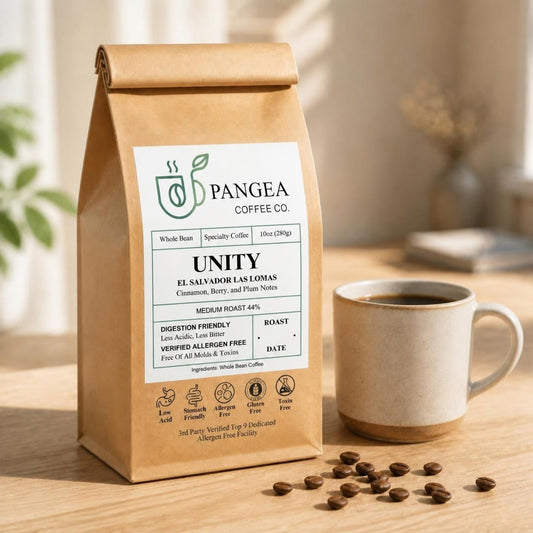
Unity – El Salvador Las Lomas — Smooth and clean, sourced from El Salvador's naturally low-acid growing region. A washed coffee that stays gentle on the stomach because of where it grows, not despite how it's processed.
Dark Roast Espresso
Bold Respect No. 3 — Our low-acid espresso blend, sourced from Brazil and Sumatra. The combination of natural and wet-hulled processing from these origins creates a rich, smooth dark roast that's genuinely easy on the stomach.
For Caffeine-Sensitive Individuals
Pangea Sugarcane EA Decaf — Decaffeinated using natural ethyl acetate from sugarcane — no harsh chemical solvents. Naturally low-acid, SPOKIN-verified, and perfect for evening enjoyment or anyone managing caffeine sensitivity alongside digestive health. You can read more about our approach to decaf in our decaf and GERD guide.
Not sure where to start? The Flavor Discovery Pack lets you try multiple roast profiles and processing styles side-by-side — all verified allergen-free, all low-acid.
Doctor Endorsement

Frequently Asked Questions
Does honey process coffee contain honey or bee products?
No. "Honey process" is a farming and drying technique named for the sticky, honey-like texture of the coffee cherry's mucilage layer. No bee-produced honey is used at any stage of processing, roasting, or packaging. People with honey or bee-product allergies have nothing to fear from the processing method name itself. Always verify the roasting facility for allergen safety — Pangea is SPOKIN-verified Top-9 allergen-free.
What does "natural process" coffee mean?
Natural process (also called dry process) means the whole coffee cherry — skin, fruit, and all — is dried in the sun with the bean inside. After drying, the outer layers are hulled off mechanically. No additives are used. The "natural" in the name refers to the absence of water washing during processing, not to organic certification or ingredient status.
Which coffee processing method is best for acid reflux or GERD?
Natural and honey processed coffees tend to have lower perceived acidity than washed coffees, making them generally gentler for acid reflux and GERD. However, origin matters just as much — coffees from Brazil, Sumatra, Guatemala, and Mexico are naturally lower in acid regardless of processing method. For the full picture, see our complete GERD coffee guide.
Are tasting notes like "almond" or "hazelnut" on a coffee bag allergens?
No. Tasting notes describe flavor compounds produced naturally during roasting and fermentation — not ingredients. A coffee described as having "hazelnut notes" does not contain hazelnuts. That said, if you have severe nut allergies, the roasting facility matters, and you need to carefully examine the practices of each roaster you purchase coffee from. Pangea makes it easy — our SPOKIN-verified facility is free from all Top-9 allergens, so our tasting notes are just flavor descriptions, never a cross-contamination risk.
What is the difference between red honey and yellow honey process?
The color names refer to how much mucilage (fruit pulp) is left on the bean during drying. Yellow honey has the least mucilage — lighter, cleaner flavor, faster drying. Red honey has more — more sweetness, more body, longer drying time. Black honey has the most — closest to a natural process in terms of fruit intensity and complexity. All are allergen-free by nature; none contain any added ingredients.
Why does Pangea source from Brazil, Sumatra, Guatemala, and Mexico?
These four origins produce naturally lower-acid coffee beans due to their growing conditions — altitude, soil composition, and climate. Brazil and Sumatra's traditional processing methods (natural and wet-hulled respectively) compound this benefit. Guatemala and Mexico add clean, mild profiles to the lineup. Together, they give us a sourcing foundation that's inherently stomach-friendly before roasting even begins.
What is Giling Basah and why is Sumatran coffee so low-acid?
Giling Basah, or wet-hulling, is a processing method unique to Indonesia and Sumatra. The parchment layer is removed from the bean while it's still wet, exposing it to air earlier than in other methods. The result is a distinctively earthy, full-bodied, very low-acid cup. Combined with Sumatra's volcanic soil and equatorial growing conditions, wet-hulled beans are among the most naturally gentle coffees in the world for sensitive stomachs.
Does processing method affect mold risk in coffee?
Processing method can influence mold risk if drying is done improperly — particularly with natural and honey processes, where moisture management during drying is critical. At Pangea, our Q graders evaluate all coffees for quality and sensory defects. We source from producers and cooperatives with rigorous drying protocols, and every coffee is assessed before it reaches your bag. For more on mold in coffee and how to avoid it, see our mold-free coffee guide.
Is anaerobic coffee safe for people with digestive issues?
Anaerobic processing itself doesn't add ingredients or change the coffee's fundamental composition — it's still just coffee. The intense fermentation character can be strong, however, and some people with very sensitive digestion find heavily fermented coffees harder to tolerate simply due to the flavor compounds produced. If you have GERD, gastritis, or a sensitive stomach, starting with a natural or honey process from a low-acid origin is usually a safer first step than anaerobic.
What Our Customers Say
★★★★★ Alison K.
"I have REALLY bad GERD and acid reflux. This unity roast does not bother me at all. I also have severe food allergies to nuts and shrimp and drink this safely."
★★★★★ Daniel C.
"The Costa Rica Hope is so smooth and highlighted the notes are well rounded and very enjoyable cup of coffee."
★★★★★ Drea
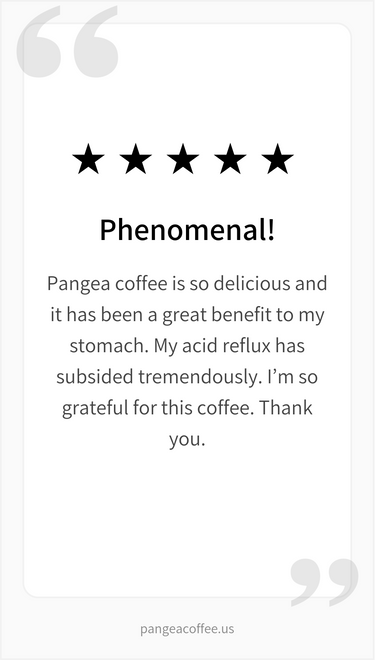
"Delicious coffee that goes down easy. I have to be very careful with my stomach, and I am delighted that I can still drink this coffee."
Explore Every Processing Style — All Verified Allergen-Free
Honey process. Natural. Light roast. Espresso. Decaf. Every Pangea coffee is SPOKIN-certified and doctor-backed — no matter how it was processed at origin.
Shop All Coffees →Medical Disclaimer: This article is for educational purposes only and does not constitute medical advice. If you have food allergies, GERD, gastritis, or other health conditions, consult your physician or a registered dietitian before making dietary changes.
Scientific References:
- Tajik N, et al. "The potential effects of chlorogenic acid, the main phenolic components in coffee, on health." European Journal of Nutrition. 2017. https://pubmed.ncbi.nlm.nih.gov/28391515/
- Pereira GV, et al. "Wet processing of coffee." Food Research International. https://pubmed.ncbi.nlm.nih.gov/24290641/
- Specialty Coffee Association. "Processing Methods Overview." https://sca.coffee
- Food Allergy Research & Education. "Top 9 Allergens." https://www.foodallergy.org/living-food-allergies/food-allergy-essentials/common-allergens
Quality Assurance: All Pangea Coffee products are roasted in a SPOKIN-verified Top-9 allergen-free facility. Our Q graders evaluate every coffee at our facility — and sometimes at the source — for flavor quality and sensory standards. Same-day weekday shipping ensures freshness from roast to cup.
Last updated: April 2026