
Coffee Tasting Notes Guide: Train Your Palate Like a Q Grader

Why Coffee Tasting Notes Matter (Even for Health-Focused Coffee Drinkers)
If you've ever picked up a bag of specialty coffee and wondered what "bright citrus notes" or "chocolate finish" actually mean, you're not alone. Coffee tasting notes can feel like a foreign language—but learning to identify these flavors transforms your daily coffee ritual from routine to remarkable.
Here's something most people don't realize: the ability to taste and identify flavors in your coffee isn't just for coffee snobs or professional cuppers. It's actually a powerful tool for finding the best tasting low acid coffee that works for your sensitive stomach. When you can recognize what truly smooth, naturally low-acid coffee tastes like, you'll never settle for harsh, bitter brews that trigger your acid reflux again.
At Pangea Coffee, our Q graders use professional tasting techniques to ensure every batch meets our exacting standards for flavor and digestive comfort. In this guide, we'll teach you the same techniques the pros use—so you can train your palate, identify quality coffee, and discover why clean, allergen-free coffee actually tastes better.
The Science Behind Coffee Flavor: Over 1,000 Compounds Create Your Perfect Cup
Coffee is one of the most chemically complex beverages we consume, containing over 1,000 identified volatile aromatic compounds. According to peer-reviewed research published in scientific journals, these natural chemical compounds develop throughout the coffee's journey from seed to cup, influenced by soil composition, altitude, processing methods, and roasting techniques.
When you taste "blueberry notes" in an Ethiopian coffee, you're experiencing ethyl-3-methylbutanoate—the exact same compound found in actual blueberries. These aren't added flavors or artificial ingredients. They're naturally occurring molecules that developed as the coffee cherry matured on the tree.
The Specialty Coffee Association's research demonstrates that factors like altitude, volcanic soil minerals, and processing methods directly impact which flavor compounds develop in coffee beans. Higher altitude coffees (grown above 4,000 feet) develop more complex sugars due to slower maturation, resulting in brighter acidity and more intricate flavor profiles.
How Low-Acid Coffee Develops Superior Flavor
Here's where it gets interesting for those of us with sensitive stomachs: naturally low-acid coffee isn't just easier on your digestive system—it often tastes smoother and more balanced than high-acid varieties.
Coffee grown in specific regions of Brazil, Indonesia, and parts of Central America naturally produces beans with lower perceived acidity. These coffees develop rich, chocolatey, nutty flavor profiles with smooth body and minimal tartness. When you combine naturally low-acid beans with precise roasting (like we do at Pangea), you get coffee that's both gentle on your stomach and incredibly flavorful.
This is why training your palate matters: you'll be able to identify truly smooth, best tasting mold free coffee versus harsh, over-roasted beans that companies try to pass off as "low acid."
Understanding the Coffee Taster's Flavor Wheel: Your Road Map to Better Coffee
The Coffee Taster's Flavor Wheel, developed by the Specialty Coffee Association in collaboration with World Coffee Research, is the industry standard tool for identifying and describing coffee flavors. Originally published in 1995 and completely redesigned in 2016, the current wheel is based on the World Coffee Research Sensory Lexicon—the most comprehensive scientific study of coffee flavor ever completed.
The wheel uses a hierarchical structure that guides you from general impressions to specific flavor notes:
Center of the Wheel: Broad categories (Fruity, Sweet, Cocoa, Spices, Floral, Sour/Fermented, Green/Vegetative, Other)
Middle Ring: More specific categories (Berry, Chocolate, Stone Fruit, Brown Spice)
Outer Ring: Precise descriptors (Blackberry, Dark Chocolate, Apricot, Cinnamon)
How to Use the Flavor Wheel as a Beginner
Start at the center and work outward. When you taste your coffee, first identify the broad category—does it taste generally fruity? Sweet? Malty? Then narrow down: if it's fruity, does it lean toward berry or citrus? Finally, get specific: is that berry note more like strawberry or blackberry?
Don't worry if you can't identify every specific note. Professional cuppers spend years calibrating their palates. The goal isn't perfection—it's building awareness of what you're tasting and developing vocabulary to describe it.
Important: Tasting Notes Are NOT Ingredients
Before we dive deeper into coffee tasting, let's clear up the single most common source of confusion—and concern—about coffee tasting notes.
When you see "chocolate" or "earthy" notes on a coffee bag, these are NOT ingredients. Nothing has been added to the coffee. No nuts, no fruits, no chocolate, no spices. It's 100% pure coffee beans.
What Are Tasting Notes, Really?
Tasting notes are descriptive language that coffee professionals use to communicate what naturally occurring flavors remind them of when they taste the coffee. Think of it like this:
When coffee beans grow, process, and roast, they develop over 1,200 different chemical compounds. Many of these same compounds exist in other foods we eat. For example:
- Ethyl-3-methylbutanoate exists in both blueberries AND certain Ethiopian coffee beans
- Pyrazines create "nutty" flavors in both roasted almonds AND medium-roast Brazilian coffee
- Furaneol gives strawberries their sweetness AND appears in naturally processed coffees
When a trained taster detects these compounds, they describe them using familiar reference points. "This coffee has chocolate notes" means "the flavor compounds in this coffee remind me of chocolate"—not "we added chocolate to your coffee."
Why This Matters for People with Food Allergies
At Pangea Coffee, we frequently hear from concerned customers: "I have a severe tree nut allergy—is coffee safe if it has 'almond notes'?"
The answer is absolutely YES. Here's why:
- Tasting notes describe flavor similarities, not actual ingredients
- The chemical compounds that create these flavors occur naturally in coffee beans
- At Pangea, we operate a SPOKIN-verified Top 9 allergen-free facility
- Our coffee never comes in contact with tree nuts, peanuts, or any Top 9 allergens
- We roast 100% pure coffee beans—nothing else
We know that consumers and our customers live completely nut free lives. Because of that, we at Pangea Coffee NEVER use terms like "almond notes" or "nutty finish" on one of our bags. So you can confidently brew that coffee knowing it's completely nut-free and safe for your allergies.
How Coffee Develops These Natural Flavors
Coffee's complex flavor profile comes from four main factors:
1. Origin & Terroir: Where the coffee grows (soil, altitude, climate) affects which flavor compounds develop in the bean. Brazilian coffee naturally develops "chocolatey, nutty" profiles due to lower altitude and specific soil composition, while Ethiopian coffee often develops "fruity, floral" notes from high-altitude volcanic soil.
2. Processing Method: How farmers remove the fruit from the bean dramatically impacts flavor. Natural processing (drying inside the fruit) creates more "berry, wine-like" notes. Washed processing creates "clean, bright" flavors.
3. Roasting: Heat transforms the chemical structure of coffee beans through a process called the Maillard reaction (the same reaction that browns bread or sears steak). This creates hundreds of new flavor compounds including "caramel, chocolate, toasted" notes.
4. Brewing: How you extract the coffee affects which compounds end up in your cup. Different brew methods highlight different aspects of the flavor profile.
The key takeaway: All these flavors develop naturally—they're not added, they're discovered through careful tasting.
Tasting Notes Are Subjective Interpretations
Here's something else important to understand: tasting notes are subjective. Two professional tasters might describe the same coffee differently, and both can be correct.
One taster might detect "dark chocolate" while another tastes "cocoa powder." One might say "blueberry" while another says "mixed berry." Your own palate, genetics, sensory memory, and life experiences all influence how you perceive and describe flavors.
This is completely normal and expected. Don't worry if the tasting notes on the bag don't match exactly what you taste. The goal isn't to "get it right"—it's to develop your awareness of what you're experiencing in your cup.
As you train your palate using the techniques in this guide, you'll start picking up on these naturally occurring flavor compounds yourself. You might taste "toast" notes and think, "Oh, this reminds me of fruit or blueberry" or "This has that citrus quality like a melon"—all while knowing you're drinking 100% pure, allergen-free coffee.
The 5 Essential Elements Every Coffee Taster Evaluates
Now that you understand what tasting notes really are (and aren't!), let's explore how professional coffee tasters evaluate coffee quality. Understanding these elements will help you identify what makes least acidic coffee rich flavor stand out from ordinary grocery store brands.
1. Aroma: The Preview of Your Coffee Experience
Your sense of smell accounts for approximately 80% of what you perceive as "flavor." This is why coffee smells so incredible—you're actually previewing the flavor compounds before you even take a sip.
How to evaluate aroma:
- Smell your coffee beans before grinding (notice: fruity? chocolatey? floral?)
- Smell again immediately after grinding (the aroma intensifies)
- Inhale the steam from freshly brewed coffee
- Notice how aromas change as the coffee cools
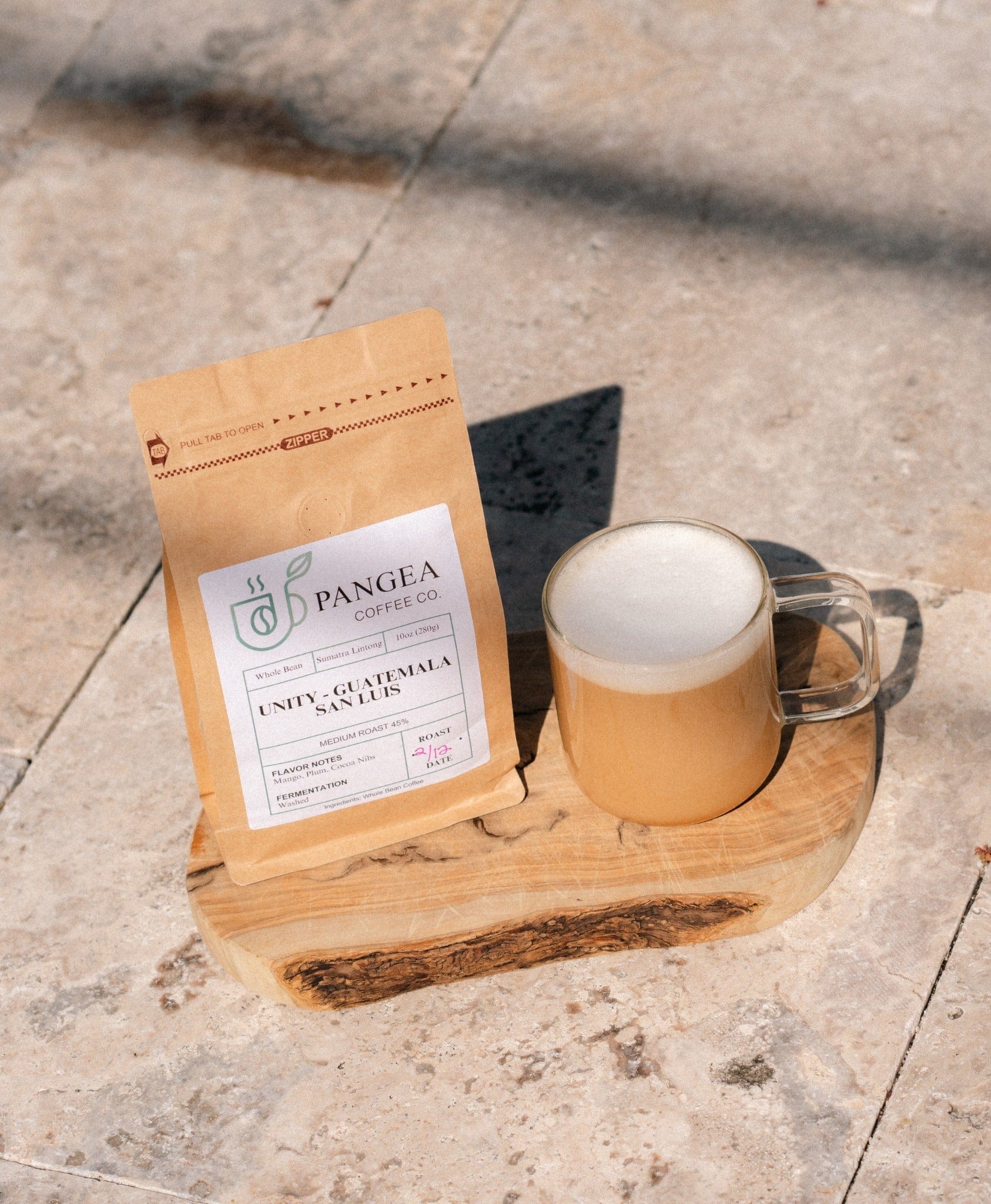
Pangea's Unity Medium Roast offers inviting aromas of chocolate and caramel, with subtle fruit undertones—a hallmark of naturally low-acid coffee from volcanic soil regions.
2. Acidity: Brightness vs. Sourness (And Why It Matters for GERD)
Acidity in coffee refers to the perceived brightness or liveliness on your palate—not the pH level that triggers your acid reflux. This is an important distinction that most coffee drinkers don't understand.
According to research published in Scientific Reports (2018), coffee's pH level typically ranges from 4.85 to 5.10, making it moderately acidic. Johns Hopkins Medicine notes that acidic beverages can trigger GERD symptoms by increasing stomach acid production and relaxing the lower esophageal sphincter. However, 'perceived acidity'—what coffee tasters call brightness—is a flavor characteristic, not a measure of pH.
Acidity spectrum in coffee:
- Bright/High Acidity: Citrus, apple, wine-like (often triggers reflux)
- Moderate Acidity: Berry, stone fruit notes
- Low Acidity: Smooth, mellow, chocolatey (easier on sensitive stomachs)
When you develop your palate, you'll be able to identify truly low-acid coffee by its smooth, balanced flavor—not harsh bitterness or astringent sourness.
3. Body: The Weight and Texture of Your Coffee
Body describes how coffee feels in your mouth—its weight, texture, and viscosity. This tactile sensation significantly impacts your overall coffee experience.
Body categories:
- Light Body: Tea-like, delicate, clean (like Hope Light Roast)
- Medium Body: Balanced, smooth, approachable
- Full Body: Rich, creamy, syrupy (like Bold Respect Espresso)
Naturally low-acid coffees often have a smoother, more rounded body compared to high-acid varietals—making them more comfortable for those with sensitive stomachs.
4. Sweetness: Natural Sugars That Develop at High Altitudes
Sweetness in coffee comes from natural sugars that develop during cherry maturation and caramelize during roasting. You're not tasting added sugar—you're experiencing the inherent sweetness of well-grown, properly roasted coffee.
Common sweetness descriptors:
- Brown sugar, honey, molasses
- Caramel, toffee, butterscotch
- Chocolate (milk chocolate vs. dark chocolate)
- Maple syrup, vanilla
High-quality, naturally low-acid coffee tends to showcase more prominent sweetness because harsh acidity isn't masking these delicate notes.
5. Finish: The Aftertaste That Reveals Quality
The finish describes how flavors linger after you swallow. A clean, pleasant finish is a hallmark of specialty-grade coffee, while a harsh, bitter, or astringent aftertaste often indicates lower quality beans or improper roasting.
Quality indicators in finish:
- Clean finish: Flavors fade gracefully, leaving pleasant sweetness
- Lingering finish: Positive flavors persist (chocolate, fruit notes)
- Short finish: Flavors disappear quickly (not necessarily bad)
- Harsh finish: Bitter, astringent aftertaste (indicates defects or over-roasting)
Step-by-Step: How to Taste Coffee Like a Professional Q Grader
At Pangea Coffee, our Q graders use standardized cupping protocols developed by the Specialty Coffee Association. Here's how you can taste coffee like the pros—right at your kitchen table.
What You'll Need
- 2-3 different coffees to compare (try our Flavor Discovery Pack)
- Freshly boiled water (just off boil, around 200°F)
- A grinder (or pre-ground coffee for simplicity)
- Small cups or bowls (white or clear preferred)
- A spoon for tasting
- Water for rinsing between samples
- Notebook for recording observations
The Professional Cupping Process
Step 1: Evaluate the Dry Fragrance
Smell your whole beans before grinding. Notice any immediate impressions—fruity? earthy? chocolatey? Write them down.
Step 2: Smell the Wet Aroma
After brewing, lean over your cup and inhale deeply. The wet aroma often reveals different notes than the dry fragrance. This is where floral, fruit, and spice notes become more prominent.
Step 3: The Slurp (Yes, Really!)
Professional cuppers slurp coffee loudly to aerate it across the entire palate. Take a small spoonful of coffee, purse your lips, and slurp it forcefully—spreading it across your tongue and toward the back of your palate. This activates all your taste receptors and sends aromatic compounds through your retronasal passage.
Step 4: Evaluate at Different Temperatures
Coffee reveals different flavor notes as it cools. Taste your coffee hot, warm, and at room temperature. You'll often discover subtle sweetness and complexity that weren't apparent when the coffee was piping hot.
Step 5: Compare Side-by-Side
Tasting multiple coffees simultaneously makes differences obvious. You might not notice the chocolate notes in Coffee A until you taste it next to the fruity Coffee B.
Building Your Flavor Vocabulary: Common Coffee Tasting Notes Explained
Here are the most common flavor descriptors you'll encounter, organized by category:
Fruity Notes
Berry: Strawberry, blueberry, blackberry, raspberry
Citrus: Lemon, orange, grapefruit, lime
Stone Fruit: Peach, apricot, plum, cherry
Tropical: Pineapple, mango, papaya
Fruity notes are most common in African coffees (especially Ethiopian and Kenyan) and lighter roasts. They're also prominent in natural-processed coffees where the bean dried inside the fruit.
Chocolate and Malty Notes
Chocolate: Dark chocolate, milk chocolate, cocoa powder
Earthy, Toast: Can be perceived as Almond-like, hazelnut-like, walnut-like, pecan-like (these are descriptive flavor profiles only)
Malt: Graham cracker, toasted bread
⚠️ IMPORTANT FOR ALLERGEN SAFETY: When coffee professionals describe "nutty notes" or "almond flavors," they're referring to naturally occurring chemical compounds in coffee beans that remind tasters of these flavors. No actual tree nuts are present in coffee. At Pangea Coffee, we operate a SPOKIN-verified Top 9 allergen-free facility—our coffee never comes in contact with tree nuts, peanuts, or any Top 9 allergens. These are purely descriptive terms for coffee's natural flavor profile, safe for people with nut allergies.
These are the dominant notes in naturally low-acid coffee from Brazil, Indonesia, and Central America. Our Unity Medium Roast showcases beautiful chocolate and malty notes—exactly what makes low-acid coffee so appealing to sensitive stomach sufferers.
Sweet and Caramel Notes
Caramel: Butterscotch, toffee, caramel candy
Brown Sugar: Molasses, honey, maple syrup
Vanilla: Vanilla bean, custard
Sweetness notes develop through caramelization during roasting. Medium roasts typically showcase the most prominent sweetness before darker roasting introduces more bitter, smoky flavors.
Floral Notes
Delicate florals: Jasmine, lavender, honeysuckle, rose
Herbal florals: Chamomile, bergamot, tea-like
Floral notes are most common in high-altitude African coffees and washed-process beans. While beautiful, intensely floral coffees sometimes have higher perceived acidity—something to consider if you're managing GERD.
Spice Notes
Sweet spices: Cinnamon, nutmeg, clove
Peppery spices: Black pepper, cardamom
Earthy spices: Cedar, tobacco leaf
Why Clean, Allergen-Free Coffee Tastes Better (And How to Recognize Quality)
Here's something most coffee companies won't tell you: coffee quality directly impacts flavor—and clean coffee simply tastes better.
At Pangea Coffee, we're SPOKIN-verified as America's first third-party certified allergen-free coffee facility. This isn't just about safety for people with food allergies—it's about uncompromising quality standards that result in superior-tasting coffee.
How to Identify Clean Coffee Through Taste
Off-flavors that indicate quality issues:
- Musty or moldy notes: Indicates contamination or improper storage
- Fermented or overripe flavors: Poor processing or defective beans
- Chemical or medicinal taste: Pesticide residue or chemical processing (common in cheap decaf)
- Harsh, astringent finish: Low-grade beans or over-extraction
- Flat, one-dimensional flavor: Stale beans or poor roasting
Quality indicators in clean coffee:
- Complex, layered flavors (multiple notes present)
- Balanced acidity, sweetness, and body
- Clean, pleasant finish with no harsh aftertaste
- Distinctive origin characteristics
- Aromatic complexity (smells as good as it tastes)
When you train your palate using the techniques in this guide, you'll immediately recognize the difference between clean, specialty-grade coffee and commodity-grade beans roasted to mask defects.
Practical Training Exercises: How to Develop Your Coffee Palate in 30 Days
Palate development isn't mysterious—it's a learnable skill that improves with consistent practice. Here's a 30-day training plan to accelerate your coffee tasting abilities.
Week 1: Build Your Sensory Memory Bank
Exercise 1: The Fruit and Chocolate Test
Taste fresh blueberries, strawberries, and dark chocolate. Close your eyes and focus on the flavors. These are three of the most common coffee tasting notes—experiencing them directly builds your sensory reference library.
Exercise 2: Hot to Cold Tasting
Brew your favorite coffee and taste it at three different temperatures: hot (immediately after brewing), warm (after 10 minutes), and cool (after 20 minutes). Write down what you notice at each stage. Many people discover sweetness and complexity they'd never noticed when drinking coffee only hot.
Week 2: Side-by-Side Comparisons
Exercise 3: Light vs. Dark Roast
Brew our Hope Light Roast and Bold Respect Espresso side by side. Notice how roast level affects flavor—lighter roasts showcase origin characteristics and fruit notes, while darker roasts emphasize chocolate, caramel, and roast-derived flavors.
Exercise 4: Origin Comparison
Compare coffees from different origins (try our Flavor Discovery Pack). Notice how Brazilian coffee differs from Ethiopian coffee. One is typically chocolatey and smooth (low acid), while the other is often fruity and bright (higher acid).
Week 3: Focus on Individual Attributes
Exercise 5: Acidity Awareness
Dedicate an entire week to noticing acidity levels. Compare our naturally low-acid coffees to grocery store brands. This exercise is especially valuable for GERD sufferers—you'll learn to identify truly low-acid coffee versus marketing claims.
Exercise 6: Body Exploration
Pay attention only to mouthfeel this week. Is the coffee light and tea-like? Full and creamy? This attribute significantly impacts your enjoyment but often goes unnoticed.
Week 4: Advanced Palate Calibration
Exercise 7: Blind Tasting
Have someone prepare three coffees without telling you which is which. Try to identify them based solely on taste. This removes psychological bias and forces you to rely on your developing palate.
Exercise 8: The Flavor Wheel Challenge
Reference the SCA Flavor Wheel while tasting. Start at the center with broad categories, then work outward to specific notes. Don't worry if your assessments don't match the bag's tasting notes—everyone's palate is unique.
Special Considerations: Tasting Coffee with Acid Reflux or Sensitive Stomach
If you're managing GERD, heartburn, or a sensitive stomach, you can absolutely develop your coffee palate—you just need to approach it strategically.
How to Taste Coffee Safely with Digestive Issues
1. Always taste on a full stomach
Never cup coffee first thing in the morning or on an empty stomach if you have acid reflux. Cleveland Clinic recommends avoiding coffee on an empty stomach for those with reflux, as drinking coffee increases stomach acid production when the stomach is already empty, which may worsen symptoms. Having food in your stomach can help buffer the acidic effects of coffee.
2. Spit, don't swallow (during formal tasting)
Professional cuppers often spit out coffee after evaluating it. This allows you to train your palate without consuming large quantities of coffee that might trigger symptoms.
3. Start with naturally low-acid varieties
Begin your palate training with our low-acid coffee collection. Once you develop sensitivity to flavor nuances in gentle, stomach-friendly coffee, you can occasionally sample higher-acid varieties for comparison (in small amounts).
4. Notice how acidity affects your stomach
This is valuable feedback. When you taste a bright, citrusy coffee and notice discomfort, you're calibrating both your palate and your body's tolerance. This knowledge helps you make better coffee choices long-term.
Best Low-Acid Coffees for Developing Your Palate
Our naturally low-acid coffees offer complex, interesting flavor profiles without the harsh acidity that triggers GERD:
- Unity Medium Roast: Chocolate, caramel, and malty notes—perfect for learning to identify sweetness and body
- Bold Respect Espresso: Rich, full-bodied with dark chocolate finish—ideal for understanding body and intensity
- Hope Light Roast: Bright but gentle, showcasing origin characteristics without harsh acidity
Learn more about choosing the right low-acid coffee in our comprehensive guide: Best Coffee for Acid Reflux and GERD.
Common Mistakes That Prevent People from Developing Their Coffee Palate
Mistake #1: Adding Milk and Sugar Before Tasting
Cream and sugar mask subtle flavor notes. If you're serious about developing your palate, taste coffee black first—then add what you like. You might be surprised to discover you actually enjoy the natural sweetness and complexity of quality coffee without additions. Make sure the milk is organic and lactose free.
Mistake #2: Drinking Coffee Too Hot
Scalding hot coffee numbs your taste buds. Let your coffee cool to around 140-160°F before seriously evaluating flavor. Many subtle notes only emerge as coffee cools.
Mistake #3: Using Stale Coffee
Coffee is best within 2-4 weeks of roasting. Using stale beans means you're tasting oxidation and degradation—not the coffee's true flavor profile. This is why we roast to order and ship fresh.
Mistake #4: Inconsistent Brewing
Changing your brew method, grind size, or coffee-to-water ratio makes it impossible to isolate what you're actually tasting. Use consistent brewing parameters when training your palate.
Mistake #5: Tasting Only One Coffee at a Time
Comparison is the fastest way to develop your palate. A chocolate note might not be obvious when tasting one coffee, but becomes immediately apparent when compared to a fruity Ethiopian coffee side-by-side.
Mistake #6: Getting Frustrated with "Not Tasting" What's on the Bag
Tasting notes are subjective interpretations. If the bag says "raspberry" but you taste "general berry," that's perfectly valid. Your palate, genetics, and sensory memory influence what you perceive. The goal isn't matching the bag exactly—it's building your own sensory awareness.
How Q Graders Ensure Quality at Pangea Coffee
Q Graders are coffee professionals who have passed rigorous certification exams administered by the Coffee Quality Institute. Think of them as the sommeliers of the coffee world—trained to evaluate coffee quality using standardized protocols.
What Makes Q Grader Certification Special
To become a licensed Q Grader, professionals must:
- Pass 20 separate examinations testing sensory skills, cupping ability, and coffee knowledge
- Demonstrate ability to identify defects and quality issues
- Score coffees consistently using SCA standards
- Recertify every three years to maintain skills
At Pangea Coffee, our Q graders taste-test every batch to ensure it meets our standards for flavor and perceived acidity. We're not just checking that coffee is "low acid" on paper—we're actively tasting to confirm the smooth, gentle profile our customers with sensitive stomachs require.
The Difference Between Tasting and Lab Testing
Some coffee companies claim to lab-test for mold or acidity. We take a different approach: our Q graders cup every batch on-site, using their trained palates to identify any quality issues, off-flavors, or defects.
Why? Because the human palate is more nuanced than any machine. We can detect subtle flavor notes that indicate terroir, processing quality, and roast precision—ensuring you receive coffee that's not just safe and clean, but truly delicious.
Learn more about our quality standards: Truth in Coffee: Our Quality Promise.
Putting It All Together: Your Journey to Coffee Mastery
Developing your coffee palate is a journey, not a destination. Even professional Q Graders continuously refine their tasting abilities throughout their careers. The goal isn't to become a coffee expert overnight—it's to deepen your appreciation for the incredible complexity in every cup.
Here's what you can expect as you progress:
After 1 Week: You'll start noticing whether coffee is fruity vs. chocolatey, bright vs. smooth
After 1 Month: You'll identify specific notes (dark chocolate vs. milk chocolate, berry vs. citrus)
After 3 Months: You'll recognize origin characteristics and immediately know if coffee is truly low-acid or just marketing hype
After 6 Months: You'll taste coffee the way wine enthusiasts taste wine—appreciating subtlety, complexity, and craftsmanship
Most importantly, you'll never again settle for mediocre coffee that triggers your acid reflux. You'll recognize quality, demand clean sourcing, and know exactly what smooth low acid coffee should taste like.
Start Your Coffee Tasting Journey with Pangea Coffee
Ready to train your palate with clean, allergen-free, naturally low-acid coffee that actually tastes incredible? Our Flavor Discovery Pack gives you three distinct flavor profiles to compare side-by-side—the perfect introduction to professional coffee tasting at home.
Every Pangea coffee is:
- ✓ Q grader tested for flavor quality
- ✓ SPOKIN-verified allergen-free (Top 9 allergen-free facility)
- ✓ Naturally low-acid from carefully selected origins
- ✓ Roasted to order for maximum freshness
- ✓ Never chemically processed
Because when you understand what quality coffee should taste like, you'll never go back to ordinary coffee again.
Are tasting notes ingredients? Is coffee with "almond notes" safe for nut allergies?
Tasting notes are NOT ingredients—they're descriptive language only. When you see "hazelnut notes," "almond finish," or "pecan undertones" on a coffee bag, nothing has been added to the coffee. These terms describe naturally occurring flavor compounds in coffee beans that remind professional tasters of those flavors. For example, pyrazines create "nutty" flavors in both roasted almonds AND medium-roast coffee—but no actual nuts are present. At Pangea Coffee, we operate a SPOKIN-verified Top 9 allergen-free facility. Our coffee never comes in contact with tree nuts, peanuts, or any Top 9 allergens. Every bag contains 100% pure coffee beans—nothing else. At Pangea, do not want to confuse consumers, so we NEVER use terms with any type of nuts in them to describe our coffee. This way you can confidently enjoy Pangea coffee because it's completely nut-free and safe, without any confusion.
What does "tasting notes" mean on coffee bags?
Tasting notes describe the natural flavors present in coffee beans—they're not added ingredients or artificial flavors. These notes come from chemical compounds that develop during the coffee's growth, processing, and roasting. When you see "chocolate notes," you're tasting similar compounds to those found in actual chocolate (like pyrazines), which naturally occur in coffee beans from certain origins.
Can you train yourself to taste coffee better?
Absolutely! Coffee tasting is a learnable skill that improves with practice. Research shows that regular, intentional tasting exercises can significantly improve your ability to identify flavor notes within just 30 days. The key is consistency: taste coffee mindfully, compare different origins side-by-side, and build your sensory memory by experiencing common flavor references (like tasting actual dark chocolate, fresh berries, and cinnamon). Professional Q Graders spend years refining their palates through systematic training.
How do I identify flavors in coffee if I've never tasted them before?
Start with the Coffee Taster's Flavor Wheel, working from the center outward. Begin by identifying broad categories (Is it fruity? Sweet? Earthy?) before narrowing to specific notes. Taste coffee alongside actual flavor references—for example, taste dark chocolate, then your coffee, to see if you notice similarities. Comparing multiple coffees side-by-side also makes differences obvious. Most importantly, trust your own experience—if the bag says "raspberry" but you taste "berry," that's perfectly valid.
Is coffee tasting different from coffee cupping?
Coffee cupping is a specific, standardized method of tasting coffee used by professionals. It involves precise protocols: specific coffee-to-water ratios, standardized brewing time, and systematic evaluation using a cupping form. "Coffee tasting" is a broader term that includes cupping but also encompasses casual, everyday tasting. The techniques overlap significantly—professional cuppers use the same sensory evaluation skills you're developing at home, just with more formal protocols and calibration.
Can I develop my coffee palate if I have acid reflux or GERD?
Yes! In fact, developing your palate is especially valuable when managing digestive issues because you'll learn to identify truly low-acid coffee versus harsh, high-acid varieties. Start by tasting on a full stomach, use naturally low-acid coffees like our Unity Medium Roast or Bold Respect Espresso, and consider spitting rather than swallowing during formal tastings. As your palate develops, you'll immediately recognize smooth, gentle coffee versus acidic varieties that trigger symptoms—making it easier to choose coffee that works for your stomach.
What's the difference between acidity in coffee taste vs. pH level?
This is a crucial distinction! "Acidity" as a tasting term refers to perceived brightness, tanginess, or liveliness on your palate—it's a flavor characteristic. The pH level (which triggers acid reflux) is a chemical measurement. A coffee can have bright, pleasant "acidity" as a flavor note while still being naturally low in pH-related compounds that cause GERD. Conversely, over-roasted coffee might taste flat (low perceived acidity) but still trigger reflux due to other irritants formed during excessive roasting.
How long does it take to develop a professional coffee palate?
Most people notice significant improvement within 30 days of consistent practice, with the ability to identify broad flavor categories and distinguish between coffee origins. Identifying specific, subtle notes (like "apricot" vs. "general stone fruit") typically develops over 3-6 months. Professional-level palate calibration takes years of practice and often requires formal training and certification (like Q Grader certification). However, you don't need professional-level skills to dramatically improve your coffee enjoyment—even basic palate development transforms your daily coffee ritual.
Why does the same coffee taste different at different temperatures?
Coffee flavor compounds are temperature-sensitive. Hot coffee emphasizes bitterness and intense roast flavors while partially masking subtle sweetness and complexity. As coffee cools to around 140-160°F, your taste buds can better detect nuanced flavors, sweetness, and aromatic complexity. Very cool coffee (near room temperature) often reveals even more subtle notes but loses some pleasant aromatic intensity. This is why professional cuppers taste coffee at multiple temperatures—each reveals different aspects of the flavor profile.
What does Q Grader certification mean for coffee quality?
Q Graders are certified coffee professionals who have passed rigorous examinations testing their ability to evaluate coffee quality using standardized protocols developed by the Coffee Quality Institute. The certification ensures consistent, objective coffee assessment across the industry. At Pangea Coffee, our employees taste-test every batch on-site to ensure flavor quality and verify low perceived acidity. This means your coffee has been evaluated by trained palates—not just tested in a lab, but actually tasted by experts who ensure it meets our standards for both flavor and digestive comfort.
Why don't I taste the same notes listed on the coffee bag?
Tasting notes are subjective interpretations, not absolute truths. Your unique palate, genetics, sensory memory, and life experiences all influence what you perceive. If the bag says "raspberry" but you taste "general berry," that's perfectly valid—you're both detecting the same fruity compounds, just describing them differently. Two professional Q Graders might describe the same coffee as "dark chocolate" vs. "cocoa powder" and both be correct. The goal isn't to match the bag exactly—it's to develop awareness of what you're experiencing. As your palate develops, you'll notice more specific nuances, but your interpretation will always be uniquely yours.
Are flavor notes in coffee subjective or objective?
Both! The chemical compounds that create flavor notes are objectively present and measurable—when you taste "blueberry notes," you're experiencing ethyl-3-methylbutanoate, the same compound found in actual blueberries. However, your perception and description of those compounds is subjective, influenced by your sensory memory, genetics, and personal experience. This is why trained tasters might describe the same coffee differently while still being accurate. The Specialty Coffee Association's Flavor Wheel provides objective categories, but individual interpretations within those categories vary naturally.