



Clean Coffee vs Regular Coffee: What Actually Makes Coffee "Clean"? (2026)

Is "clean coffee" just marketing hype, or is there a real difference? Discover what makes coffee truly clean—from SPOKIN verification to mold-free standards, allergen-free facilities, and low-acid processing. Learn why Pangea Coffee sets the standard for verified clean coffee.
What Is "Clean Coffee"? (And Why Most Brands Can't Define It)
"Clean coffee" has become a buzzword in the specialty coffee industry—but what does it actually mean? The problem? Most coffee brands use "clean" as a marketing term without defining their standards or providing proof.
At Pangea Coffee, we define clean coffee with measurable, third-party verified standards:
- Mold-free — Q-grader inspected, every batch
- Allergen-free facility — SPOKIN-verified, roasted in a dedicated allergen-free facility
- Low-acid processing — Sensitive-stomach friendly
- Specialty-grade beans — Top 1% of coffee globally (80+ points)
- Transparent sourcing — Fair Trade, Non-GMO
- Fresh roasted — Small-batch roasting with clear roast dates
We're SPOKIN-verified—one of the first coffee companies in America to achieve independent third-party certification proving our facility is allergen-free and contamination-conscious. Our Q graders inspect every batch on-site. When we say "clean," we can prove it.
Clean Coffee vs Regular Coffee: The Key Differences
Regular coffee—the kind you find at grocery stores or most coffee shops—often lacks the quality controls and testing that define clean coffee. Here's what sets them apart:
Contamination Risk
Regular Coffee: May be processed on shared equipment with flavored coffees (hazelnut, vanilla) that leave allergen residue. No third-party verification of mold or mycotoxin levels. Roasted in facilities that process multiple product lines with potential cross-contamination.
Clean Coffee (Pangea): SPOKIN-verified allergen-free facility—no nuts, gluten, dairy, soy, or other top-9 allergens ever enter our roastery. Q-grader inspected for mold on every batch. Roasted in a dedicated allergen-free facility.
Acid Content & Stomach Comfort
Regular Coffee: Typically high in chlorogenic acid (pH 4.5-5.0), which triggers heartburn, acid reflux, and stomach discomfort for millions of people. Harsh, bitter taste from over-roasting or poor bean quality.
Clean Coffee (Pangea): Low-acid processing (pH 5.5-6.0) designed specifically for sensitive stomachs. Smooth, balanced flavor without bitterness.
Bean Quality & Sourcing
Regular Coffee: Often commodity-grade beans (below 80 points) with defects, insect damage, or improper fermentation. Unknown origin or vague "100% Arabica" claims. May sit in warehouses for months before roasting.
Clean Coffee (Pangea): Specialty-grade beans (80+ points) from the top 1% globally. Sourced from high-altitude, low-acid regions with optimal growing conditions. Wet-processed with controlled fermentation for cleaner beans. Fresh-roasted weekly in small batches.
Facility Standards
Regular Coffee: No third-party verification. Shared roasting equipment with flavored or lower-grade coffees. Standard cleaning protocols that may not prevent allergen cross-contact.
Clean Coffee (Pangea): SPOKIN-verified facility—independent third party verified allergen-free, contamination-conscious protocols. Dedicated equipment for clean coffee only.
Why Pangea's Clean Coffee Standards Matter
- SPOKIN-verified facility — Third-party verified allergen-free
- Q graders on staff — Every batch inspected for quality and contamination
- Low-acid — Sensitive-stomach friendly
- Mold-free — Q-grader inspected before and after roasting
- Specialty-grade only — Top 1% of coffee globally
- Fresh roasted — Roast date on every bag, and we strive for same-day weekday shipping
The Health Benefits of Clean Coffee
Switching from regular coffee to verified clean coffee can make a significant difference in how you feel—especially if you've struggled with coffee-related issues in the past.
1. Better Digestion & Less Heartburn
Studies show that low-acid coffee may reduce esophageal acid exposure substantially compared to regular coffee. This means fewer symptoms for people with:
- Acid reflux and GERD
- IBS and digestive sensitivities
- Chronic heartburn
- Stomach ulcers
If acidic coffee bothers you, many readers choose a low-acid roast. Ours are low-acid, mold-free and Q-grader inspected.
2. No Allergen Cross-Contamination
For people with severe food allergies, cross-contamination is a serious risk. Regular coffee roasted on shared equipment can harbor trace amounts of:
- Tree nuts and peanuts (from flavored coffees)
- Gluten (from malt-flavored coffee)
- Dairy (from equipment cleaning residue)
- Soy (from lecithin in flavoring)
Pangea is SPOKIN-verified allergen-free, and top-9 allergens don't enter our dedicated allergen-free facility. Parents with allergic children and adults with severe allergies can trust our coffee completely.
3. More Sustained Energy, Less Crash
Mycotoxin contamination in regular coffee can cause:
- Brain fog and mental fatigue
- Energy crashes despite caffeine
- Headaches and irritability
- Weakened immune function
Clean, mold-free coffee delivers the clean energy boost coffee is supposed to provide.
4. Better Flavor, No Bitterness
Specialty-grade, freshly roasted clean coffee tastes significantly better than mass-produced regular coffee. You'll notice:
- Smooth, balanced flavor without harsh bitterness
- Natural sweetness from high-quality beans
- Complex tasting notes (chocolate, caramel, fruit)
- No need for excessive sugar or cream to mask bad taste
How to Identify Truly Clean Coffee (Not Just Marketing)
Many brands claim "clean coffee" without backing it up. Here's how to identify legitimate clean coffee brands:
Is Clean Coffee Worth the Price Difference?
Let's address the cost question directly: yes, clean coffee costs more than grocery store regular coffee. But the value difference is substantial—and the price gap is smaller than you think.
The Real Cost Comparison
Regular grocery store coffee: $8-12/lb (commodity-grade, unknown mold risk, roasted months ago, potential allergen cross-contamination)
SPOKIN-verified clean coffee (Pangea): $16-19/lb (specialty-grade, mold-free, allergen-free, fresh-roasted)
Difference per cup: About $0.25-0.35
That's less than the cost of oat milk at a coffee shop—and you're getting verified clean, low-acid coffee with:
- Low-acid roasts
- Mold-free, Q-grader inspected beans
- A dedicated allergen-free facility
- Sensitive-stomach friendly roasts
- Small-batch, specialty-grade Arabica
For people with sensitive stomachs or food allergies, those standards make clean coffee an easy choice.
Clean Coffee for Specific Needs
Different people choose clean coffee for different reasons. Here's how Pangea's clean coffee fits different needs:
For Acid Reflux & GERD Sufferers
Our Bold Respect Dark Roast has the lowest perceived acidity of all our coffees. If acidic coffee bothers you, many readers choose a low-acid roast like this one: low-acid, mold-free and Q-grader inspected.
- Low-acid
- Q-grader inspected
- Rich espresso flavor without bitterness
- SPOKIN-verified and mold-free

For Food Allergy Families
Parents of allergic children (like us!) need coffee they can trust completely. Our SPOKIN verification means:
- Top-9 allergens kept out of our facility (nuts, gluten, dairy, soy, eggs, fish, shellfish, wheat, sesame)
- No flavored coffees (eliminates nut contamination risk)
- Independent third-party audits verify our protocols
- Family-owned commitment to food safety
We started Pangea because our own kids have food allergies—this isn't just business for us, it's personal.
For Mold-Sensitive Individuals
If you experience brain fog, fatigue, or headaches from regular coffee, mycotoxin contamination may be the culprit. Pangea's clean coffee is mold-free and Q-grader inspected:
- Q-grader inspected for mold on every batch
- Wet-processed beans with controlled fermentation
- Proper storage prevents contamination
- Fresh-roasted weekly for maximum quality
For Health-Conscious Coffee Lovers
Want the best coffee possible—period? Our Unity Medium Roast and Hope Light Roast deliver specialty-grade flavor with all the clean coffee benefits:
- Top 1% specialty-grade beans globally
- Complex flavor notes (chocolate, fruit, caramel)
- Low-acid and sensitive-stomach friendly
- Fair Trade, Non-GMO sourcing
- Fresh-roasted in small batches
For Caffeine-Sensitive Individuals
If caffeine keeps you up at night or triggers jitters, our Pangea Decaf uses naturally derived Sugarcane EA processing (not harsh chemical solvents) for the same mold-free, low-acid, SPOKIN-verified quality with very little caffeine. Read our complete decaf guide for GERD and acid reflux.
SPOKIN Verification: The Clean Coffee Gold Standard
SPOKIN is an independent third-party certification platform that verifies allergen-free products. Pangea Coffee is proud to be SPOKIN-verified—making us one of the first coffee companies in America to achieve this certification.
What SPOKIN Verification Means for You
- Independent third party verification
- Top-9 allergens kept out of our roastery
- Strict contamination protocols prevent any cross-contact
This isn't self-certification or vague marketing claims—this is independent verification that our facility meets the highest allergen-free standards in the food industry.

Real Customer Reviews: Clean Coffee That Actually Works
"My family and I love how all of the coffee varieties taste and how they don't hurt our stomachs. We will be drinkers of Pangea for as long as it's roasted."
— Thomas E., Verified Buyer
"Wonderful product and wonderful service. I really like that the medium roast is not burnt but still has a full body taste."
— Ellie, Verified Buyer
"Love the taste and quality of this espresso."
— Heather M., Verified Buyer
Frequently Asked Questions About Clean Coffee
Why Healthcare Professionals Recommend Clean Coffee
Gastroenterologist-recommended — Dr. Joseph Salhab (@StomachDoc). Dr. Joseph Salhab is Sam’s brother and a co-founder of Pangea Coffee.
What goes into clean coffee from Pangea:
- SPOKIN-verified facility — Roasted in a dedicated allergen-free facility
- Low-acid profile — Sensitive-stomach friendly
- Q-grader inspected — Every batch checked for quality
- Mold-free — Q-grader inspected beans
- Family-owned commitment — Personal dedication to food safety (our kids have allergies)

Try Pangea's SPOKIN-Verified Clean Coffee
Ready to experience what truly clean coffee tastes like—and how much better you'll feel?
Our Top Picks for Clean Coffee:
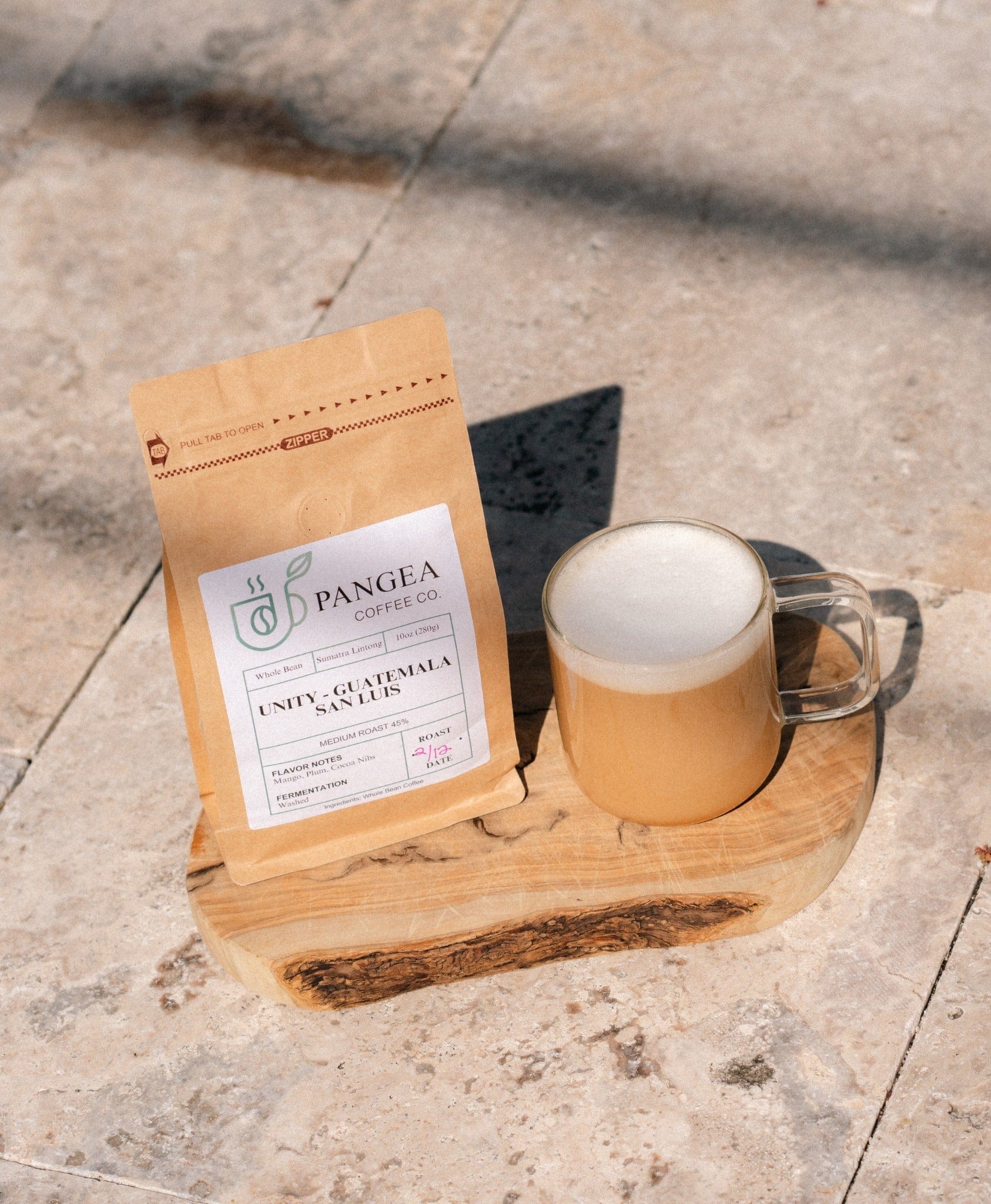
Unity Medium Roast — Our most popular roast. Smooth, balanced, and perfect for everyday drinking. Clean, low-acid, and delicious.
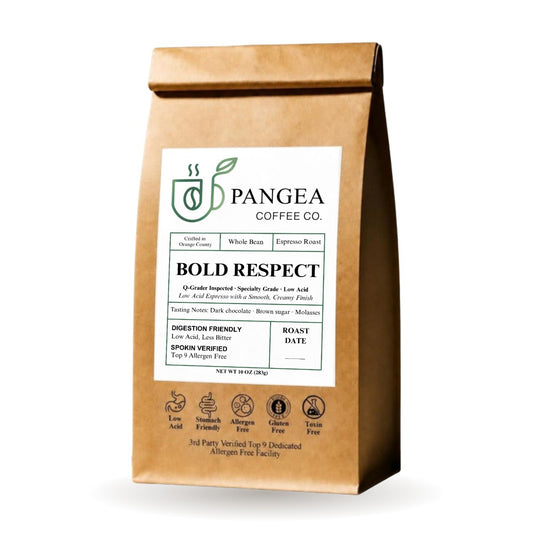
Bold Respect Dark Roast — Our lowest perceived acidity. Low-acid, mold-free and Q-grader inspected. Rich espresso flavor.
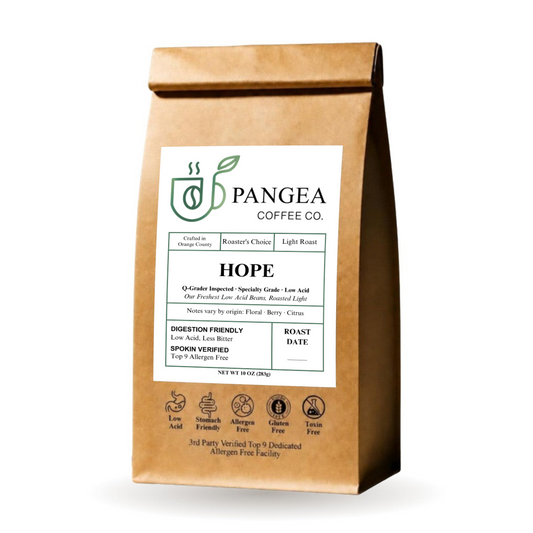
Hope Light Roast — Bright, fruity, complex. For light roast lovers who still want clean, low-acid, sensitive-stomach friendly coffee.
Pangea Decaf — Sugarcane-process decaf (Sugarcane EA) for the same clean, mold-free, SPOKIN-verified quality with very little caffeine.
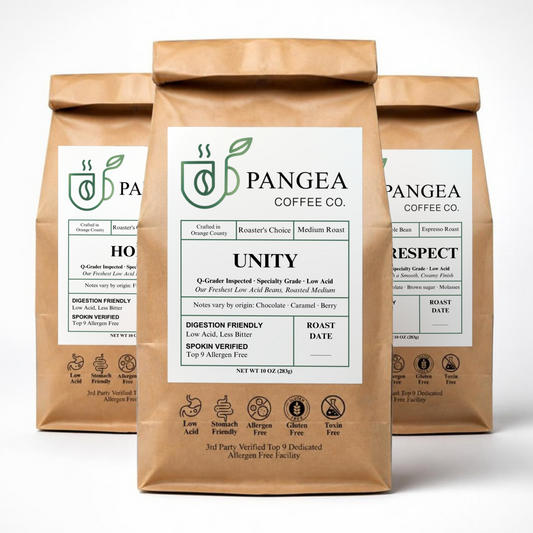
Not sure which roast? Try our Discovery Pack with all three roasts in one package.

Our Commitment: Clean Coffee You Can Actually Trust
At Pangea Coffee, "clean" isn't a marketing buzzword—it's our family's commitment to food safety.
We're not just another coffee brand making unverified claims. We're a family-owned company with kids who have food allergies. This isn't business for us—it's personal.
That's why we invested in becoming SPOKIN-verified. Why we have Q graders on staff inspecting every batch. Why we're completely transparent about our processes and standards.
We're not perfect, but we're genuinely committed to providing the cleanest, safest, most delicious coffee possible.
When you choose Pangea clean coffee, you're supporting:
- A family business that takes allergen safety seriously
- Third-party verified standards, not marketing hype
- Small-batch roasting for maximum freshness
- Sustainable sourcing that supports coffee farmers
- Transparent practices—we answer every question
Join Our Clean Coffee Community
Thousands of coffee lovers have discovered clean coffee—low-acid, mold-free, allergen-free, and incredible flavor.
Follow us on Instagram: @pangea_coffee_co
Questions about clean coffee? Email us at info@pangeacoffee.us or DM us on Instagram. We're a small family team and we personally read every message.

Scientific References & Quality Standards
This article references peer-reviewed research on coffee quality, food safety standards, and allergen-free certifications. Pangea Coffee maintains SPOKIN certification for allergen-free production and employs licensed Q graders for quality assurance.
References:
- Low-Acid Coffee and Acid Reflux: Boekema, P. J., et al. "Coffee and gastrointestinal function: facts and fiction." Scandinavian Journal of Gastroenterology. 1999. PubMed
- Specialty Coffee Quality Standards: Specialty Coffee Association. "Arabica Green Coffee Defect Handbook." SCA Coffee Standards Committee. SCA Standards
- SPOKIN Allergen Verification: SPOKIN Platform. "Third-Party Allergen Verification Process." SPOKIN
- Coffee Processing and Quality: International Coffee Organization. "Coffee Processing Methods and Quality." ICO Research. ICO
- Food Allergen Standards: FDA. "Food Allergen Labeling and Consumer Protection Act." U.S. Food and Drug Administration.
- Mycotoxins in Coffee: Batista, L. R., et al. (2009). "Ochratoxin A in coffee beans processed by dry and wet methods." Food Control, 20(9), 784-790.
Medical Disclaimer: This article is for informational purposes only and is not intended as medical advice. If you have food allergies, mold sensitivity, or digestive concerns, please consult with a qualified healthcare provider. Individual responses to coffee vary.
Quality Assurance: Pangea Coffee maintains SPOKIN certification for allergen-free production. Our Q graders (licensed coffee quality experts) evaluate every batch on-site. We source from high-altitude regions known for optimal growing conditions and employ processing methods to minimize contamination risk. We do not conduct independent laboratory testing for mycotoxins but rely on our sourcing standards, Q grader evaluation, and SPOKIN-verified facility protocols to ensure clean coffee.