
What Is a Light Roast Coffee? The Complete Guide to Flavor, Acidity & Finding the Best Cup

If you've ever stood in a coffee aisle staring at “light,” “medium,” and “dark” and had no idea what you'd actually be tasting, you're not alone. Most coffee labels don't explain what those words mean — or why they matter to your stomach, your energy, and your morning.
This guide breaks it all down: what light roast coffee actually is, how it compares to darker roasts, why it's naturally lower in perceived bitterness, and how to know if a light roast is right for you. By the end, you'll know exactly what to look for — and what to avoid.
What Is a Light Roast Coffee?
Light roast coffee is coffee roasted to an internal bean temperature of roughly 356–401°F (180–205°C) — stopping before the bean reaches its “first crack” or shortly after. The result is a lighter brown bean with no surface oil, a more delicate body, and a flavor profile that reflects the origin of the bean rather than the roasting process.
That last part is important. With light roast, you taste the coffee — not the roast. Floral notes, fruit brightness, natural sweetness, and regional character all come through in ways that disappear in darker roasts.
What Does Light Roast Coffee Taste Like?
Light roast coffee tends to be bright and tea-like in body with high clarity. Depending on the origin, you might taste:
- Floral notes — jasmine, bergamot, hibiscus
- Fruit brightness — citrus, stone fruit, berry
- Natural sweetness — honey, brown sugar, caramel
- Delicate complexity — layers that unfold as the cup cools
It is not weak. Caffeine content is actually slightly higher than dark roast by weight (roasting breaks down caffeine, so lighter roasts retain more). The “weak” perception comes from the lighter color and thinner body — but flavor complexity and caffeine are both present.
Light vs. Medium vs. Dark Roast: Key Differences
| Roast Level | Flavor Profile | Caffeine | Acidity | Body |
|---|---|---|---|---|
| Light | Floral, fruit, bright sweetness | Highest | Higher perceived brightness* | Light, tea-like |
| Medium | Balanced, caramel, nutty | Moderate | Balanced | Medium, smooth |
| Dark | Bold, smoky, bitter-sweet | Lowest | Lower perceived brightness | Full, heavy |
*Perceived brightness refers to flavor brightness, not stomach acidity. See the section below on light roast and sensitive stomachs.
Is Light Roast Coffee Hard on Your Stomach?
This is where most people get confused — and where origin matters more than roast level.
Light roasts have a brighter flavor profile, which some people mistakenly associate with higher acidity in the stomach. But flavor brightness and stomach acidity are not the same thing. The pH of your cup depends primarily on where the bean was grown, not how dark it was roasted.
At Pangea, our Q graders inspect every lot at our facility — and sometimes at the source itself. We're not guessing at acidity — we're selecting for it. That's how a light roast can be both bright and complex in flavor while remaining gentle on a sensitive stomach.
Research published in the European Journal of Gastroenterology & Hepatology confirms that perceived gastric irritation from coffee is multifactorial — influenced by chlorogenic acid levels, caffeine content, and individual gut response — not simply pH or roast level.
Who Is Light Roast Coffee For?
Light roast is the right choice if any of these describe you:
- You love complex, nuanced flavors — florals, fruit, brightness — and find dark roast too one-note
- You drink coffee black or lightly sweetened and want the bean's character to shine
- You want slightly more caffeine per cup
- You appreciate single-origin traceability — light roast showcases terroir like nothing else
- You're an adventurous coffee drinker who's ready to explore beyond the standard dark roast
Light Roast for Sensitive Stomachs: What to Look For
Not all light roasts are created equal. If you have a sensitive stomach, acid reflux, or GERD, the origin of your light roast matters enormously. Look for:
- High-altitude growing regions — Guatemala, Mexico, Brazil, Sumatra are naturally lower acid
- Small-batch roasting — freshness reduces harsh compounds that irritate the stomach lining
- Q grader inspected — professional tasting at our facility (and sometimes at the source) screens for perceived acidity before it reaches you
- Allergen-free facility — especially important if food allergies or sensitivities are part of your picture
- No additives or flavorings — flavored coffees often hide compounds that trigger reflux
The Best Low-Acid Light Roast: Hope by Pangea
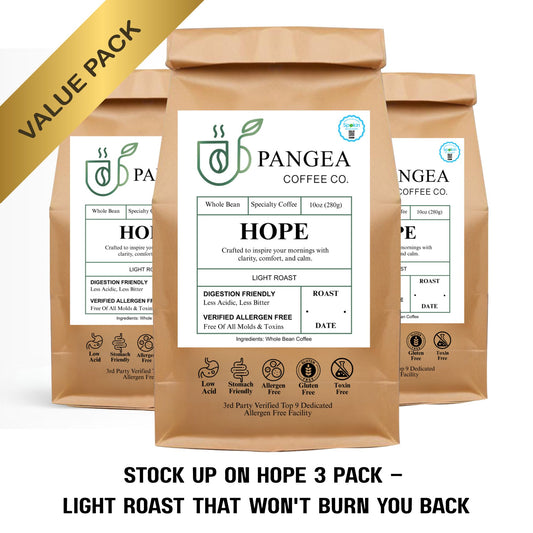
Hope is Pangea's light roast — and it's the reason we started this company.
Our family deals with real food allergies. Finding a coffee that was clean, traceable, and gentle while still delivering real complexity felt impossible. So we built it. Hope is sourced from high-altitude farms in Guatemala (and seasonally from Mexico), inspected by our Q graders at our facility and sometimes at the source, small-batch roasted, and shipped same-day on weekdays so freshness is never a question.
☕ Hope Light Roast — What Makes It Different
- Origin: High-altitude Guatemala & Mexico — naturally low-acid growing conditions
- Flavor: Floral, bright, with natural fruit sweetness and a clean finish
- SPOKIN-Verified: One of the first Top-9 allergen-free verified coffee companies in the nation
- Q Grader Inspected: Tested for perceived acidity at our facility — and sometimes at the source
- Small-batch: We strive for same-day weekday shipping — roasted fresh, not sitting in a warehouse
- No cross-contamination: Dedicated allergen-free facility
How to Brew Light Roast Coffee for the Best Cup
Light roast is more forgiving than people think — but a few brewing adjustments will make a noticeable difference.
Water Temperature
Use water between 200–205°F (just off boil). Light roasts are denser than dark roasts and need higher heat to fully extract their flavor compounds. Cooler water will produce a flat, underdeveloped cup.
Grind Size
Grind slightly finer than you would for a medium roast. The density of a light roast bean means coarser grinds can under-extract, producing a thin or sour cup rather than the bright, sweet flavor you're after.
Brew Method
Light roast shines in methods that highlight clarity and complexity: pour over, Aeropress, and drip all work beautifully. Cold brew is also excellent — the slow cold extraction brings out the fruit and floral notes while further reducing any stomach irritation potential. For those who love espresso, Hope pulls a uniquely delicate shot with none of the harsh bitterness typical of dark espresso roasts.
Let It Cool Slightly
Light roast opens up as it cools. The first sip at 190°F will taste different — and often better — than a sip at 155°F. Give it 2–3 minutes and taste the difference.
Doctor-Backed: Why Clean Light Roast Matters for Gut Health

Dr. Joseph Salhab, a board-certified gastroenterologist, highlights that for patients with digestive sensitivities, the sourcing and processing of coffee matters as much as the roast level. Coffee from low-acid origins, roasted clean without additives, and free from cross-contamination is a fundamentally different product than what most people buy off a grocery shelf — regardless of whether it's light, medium, or dark.
Pangea's approach — Q grader inspection at our facility, SPOKIN-verified allergen-free roasting, and small-batch freshness — reflects exactly the kind of clean standard that sensitive stomachs benefit from.
Not Sure Which Roast Is Right for You?
Every palate is different. If you love light roast's brightness, Hope is your coffee. But if you want to explore what Pangea's clean approach tastes like across the full roast spectrum, here are your options:
- Hope — Light roast. Floral, bright, fruit-forward. Guatemala & Mexico origin.
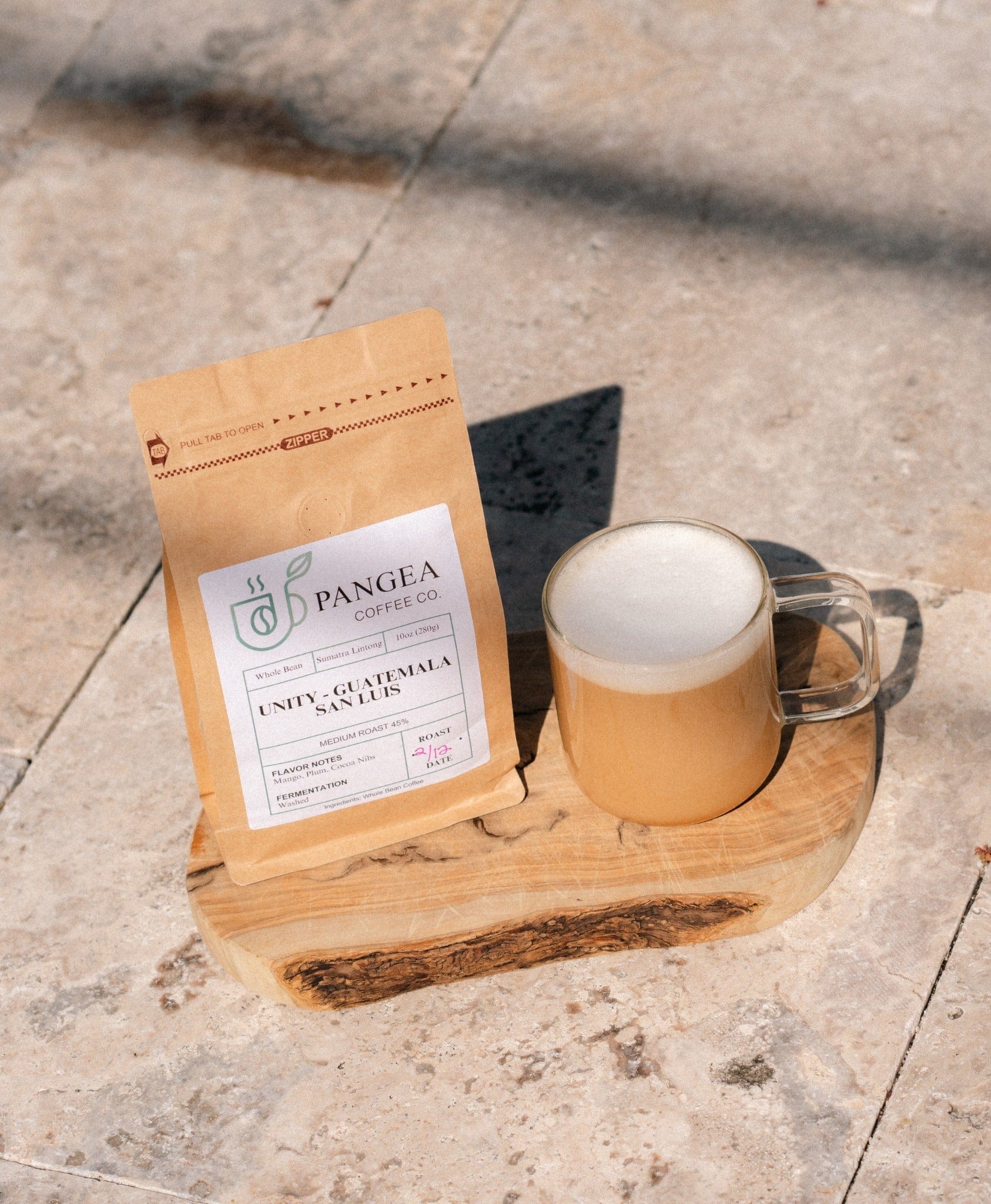
- Unity — Medium roast. Balanced, smooth, caramel sweetness. Great for everyday drinking.
- Bold Respect — Dark roast / espresso. Rich, full-bodied, zero bitterness. For the dark roast lover.
- Sugarcane Decaf — Chemical-free EA process. SPOKIN-verified. Perfect for caffeine-sensitive individuals or evening cups.
- Discovery Pack — Try all roasts side by side and find your perfect cup.
Frequently Asked Questions About Light Roast Coffee
What is a light roast coffee?
Light roast coffee is roasted to a lower temperature — roughly 356–401°F — stopping at or just after the bean's first crack. It retains more of the bean's original character, resulting in a brighter, more complex flavor profile with floral, fruit, and sweet notes that reflect the coffee's origin.
Does light roast coffee have more caffeine than dark roast?
Yes — slightly. Roasting breaks down caffeine, so lighter roasts retain marginally more caffeine per bean. The difference is modest, but if you're measuring by weight (as most home brewers do), light roast will deliver a slightly higher caffeine content per cup than the same weight of dark roast.
Is light roast coffee good for people with acid reflux or GERD?
It can be — but origin and sourcing matter more than roast level. Light roast coffee sourced from naturally low-acid growing regions like high-altitude Guatemala or Mexico, roasted fresh in small batches, can be very gentle on a sensitive stomach. Pangea's Hope light roast is Q-grader inspected at our facility and specifically selected for low perceived acidity. For a deeper look, read our complete GERD coffee guide.
Why does light roast taste sour sometimes?
Sourness in light roast is almost always a brewing problem, not a bean problem. Under-extraction — caused by water that's too cool, a grind that's too coarse, or too short a brew time — leaves fruity acids without the sweetness that balances them. Use water at 200–205°F and grind slightly finer than you would for a medium roast.
Is light roast coffee low acid?
Roast level alone doesn't determine acid content — growing region does. High-altitude farms in Guatemala, Mexico, Brazil, and Sumatra produce beans with naturally lower chlorogenic acid levels. When you combine low-acid origin beans with light roasting and fresh small-batch processing, you get a cup that's both bright in flavor and gentle in the stomach.
What's the difference between light roast and blonde roast?
“Blonde roast” is Starbucks' marketing term for light roast coffee. They are essentially the same thing — both roasted to a lighter level that preserves the bean's original flavors. The difference is quality and sourcing: specialty light roasts like Hope prioritize single-origin traceable beans, while commercial blonde roasts often blend multiple origins for consistency at scale.
Can people with food allergies drink light roast coffee?
Pure coffee — just the bean, nothing added — is naturally free of the Top-9 allergens. The concern is cross-contamination in processing and roasting facilities. Pangea's Hope light roast is produced in a SPOKIN-verified allergen-free facility, making it one of the safest options available for people managing food allergies. For more detail, see our allergen-free coffee guide.
Is light roast coffee anti-inflammatory?
Coffee in general contains polyphenols — including chlorogenic acids — that have demonstrated anti-inflammatory properties in research. Light roast retains higher levels of these compounds than darker roasts because extended roasting degrades them. Clean, additive-free light roast from low-acid origins may offer the best combination of anti-inflammatory potential and stomach gentleness. Read more in our anti-inflammatory coffee guide.
What is the best light roast coffee for a sensitive stomach?
Look for light roast from naturally low-acid origins (Guatemala, Mexico, Brazil, Sumatra), Q-grader sourced, small-batch roasted fresh, and produced in a clean allergen-free facility. Pangea's Hope light roast checks every one of these boxes and is SPOKIN-verified allergen-free — making it our top recommendation for sensitive stomach coffee drinkers who want complexity without the compromise.
What Hope Light Roast Customers Say
★★★★★ Heather M. — Verified Purchase · Hope Light Roast
“LOVE THE FLAVOR OF THIS ROAST. I LOVE MOST THAT I CAN ENJOY IT WITHOUT ANY SENSITIVITY.”
★★★★★ Daniel C. — Verified Purchase · Hope Light Roast
“The Costa Rica Hope is so smooth and the notes are well rounded and very enjoyable cup of coffee. Did this as a drip — will try it doing pour over.”
★★★★★ Allyson K. — Verified Purchase · Unity Medium Roast
“I have REALLY bad GERD and acid reflux. This roast does not bother me at all. I also have severe food allergies to nuts and shrimp and drink this safely.”
Ready to Try a Light Roast That's Actually Gentle?
Hope is sourced at origin, SPOKIN-verified allergen-free, and shipped fresh same-day. No compromises — just a clean, complex cup.
☕ Shop Hope Light Roast →Related Articles
- Best Coffee for Acid Reflux & GERD: Complete Doctor-Backed Guide
- Mold-Free Coffee: What It Is and Why It Matters
- Is Coffee Anti-Inflammatory? The Science Behind Clean Coffee
- The Ultimate Guide to Allergen-Free Coffee
- Decaf Coffee & Acid Reflux: Finding a Decaf That's Actually Safe
Medical Disclaimer: This article is for informational purposes only and does not constitute medical advice. If you have GERD, acid reflux, gastritis, or any digestive condition, please consult your physician or gastroenterologist before making changes to your diet or coffee consumption.
- Nehlig A. Effects of coffee on the gastro-intestinal tract. European Journal of Gastroenterology & Hepatology. 1999. PubMed
- Farah A, et al. Chlorogenic acids from green coffee extract. Journal of Agricultural and Food Chemistry. 2006. ACS Publications
- Ludwig IA, et al. Variations in caffeine and chlorogenic acid contents of coffees: what are we drinking? Food & Function. 2014;5(8):1718–26. PubMed
Quality Assurance: Pangea Coffee Company is SPOKIN-verified allergen-free. Our Q-certified graders inspect all beans at our facility — and sometimes at the source — ensuring every lot meets our low-acid and quality standards. Our roasting facility maintains strict Top-9 allergen-free protocols with zero cross-contamination. Same-day weekday shipping ensures maximum freshness.
Last updated: April 2026