The 2026 Guide to Pesticide-Free Coffee — What You're Really Drinking & How to Choose Clean
Backed by peer-reviewed research. Written by a family that takes allergies & food safety seriously.
Most coffee drinkers never think about what's on their beans. But if you drink one to two cups a day — as roughly 150 million Americans do — that daily ritual adds up to thousands of cups over a lifetime. What's coating those beans matters. A lot.
At Pangea Coffee Company, we built this brand because our own children live with food allergies. We know better than most that what goes into a product — and what's kept out of it — can change someone's quality of life. That philosophy extends beyond allergens to the chemicals used to grow the coffee in the first place.
This guide will walk you through everything the research actually says about pesticides in coffee, what "clean coffee" really means, why sourcing geography matters, and what to look for so your morning cup genuinely supports your health.
Sources: EWG Pesticide Methodology 2025; International Growth Centre — Ethiopia Coffee Report; Safety Survey on Pesticide Residues in Green Coffee Beans, 2021
Why Pesticide Use in Coffee Farming Is a Real Concern
Coffee is grown in tropical regions — primarily Brazil, Vietnam, Colombia, Indonesia, and Ethiopia — where heat, humidity, and dense vegetation create ideal conditions for pests and fungal disease. Conventional farmers routinely apply synthetic pesticides to protect their yields. A comprehensive review published in Frontiers in Sustainable Food Systems confirmed that coffee is among the world's most chemically treated agricultural commodities, with organophosphates, pyrethroids, carbamates, and chlorinated compounds among the most commonly applied classes.
Studies show that pesticides have been linked to a range of health concerns including disruptions to the nervous system, endocrine dysfunction, and neurodegenerative disorders. Organophosphate pesticides specifically can inhibit acetylcholinesterase (AChE), an enzyme critical to proper nervous system function. Exposure to pesticide mixtures compounds these risks — and the average person's coffee habit means daily, cumulative exposure.
PMC Review: Pesticides in Coffee — Health Effects Section; Pesticide Residues in Green, Roasted, and Capsule Coffee — ScienceDirect 2025
A 2025 study in Food Chemistry confirmed that even after washing, drying, roasting, and grinding, pesticide residues used in coffee farming can persist and continue to pose health risks to consumers. This is particularly important for everyday, high-frequency drinkers — and for families with sensitivities or health conditions.
Does Roasting Remove Pesticides? The Science (It's Complicated)
This is the question we hear most often, and the honest answer is: it depends, and it's not guaranteed.
Research has shown that roasting can significantly reduce certain pesticide concentrations. A landmark study published in The Journal of Agricultural and Food Chemistry found that the roasting process reduced some pesticide levels by up to 99.8%. At higher temperatures, many pesticide compounds degrade through pyrolytic reactions.
However, the same research literature confirms that not all pesticides are destroyed by heat. A 2024 study tracking glyphosate — the world's most widely used herbicide — through the full roasting and brewing cycle found that while roasting reduced glyphosate content by more than 73%, residual glyphosate still passed into the final brewed cup in measurable amounts.
Roasting helps, but it is not a complete solution. The only true safeguard is starting with coffee beans that were never sprayed with pesticides in the first place. Source purity is the only real guarantee.
How Coffee Growing Regions Compare on Pesticide Use
Not all coffee-growing countries are equal when it comes to chemical inputs — and this is exactly why sourcing geography matters to us at Pangea.
| Region / Country | Typical Pesticide Use | Notes | Risk Level |
|---|---|---|---|
| Brazil | High — world's largest pesticide consumer in agriculture | Largest coffee producer globally; conventional large-scale farming common | Higher Risk |
| Vietnam | Moderate to high | Primarily Robusta; industrial growing methods widespread | Higher Risk |
| Colombia | Moderate | Mix of conventional and sustainable; improving regulatory oversight | Moderate |
| Indonesia | Low to minimal | Mostly smallholder farms with minimal inputs; limited fertilizer/pesticide use | Lower–Moderate |
| Ethiopia | Very low — naturally near-organic | ~95% of smallholder farmers use no synthetic pesticides or fertilizers; Ethiopia has perfect natural soil conditions | Lowest Risk |
Sources: International Growth Centre — Ethiopia Coffee & Sustainability; Coffee Geography — Indonesia Annual Report 2023; Coffee Watch — Pesticide Use by Country
Ethiopia's highland coffee grows in conditions so naturally favorable — rich volcanic soil, ideal altitude, and consistent shade — that synthetic inputs simply aren't needed. According to research supported by the World Bank, the use of synthetic pesticides and fertilizers is almost non-existent among Ethiopian smallholder coffee farmers. This is one of the primary reasons we source from regions with this kind of natural purity.
World Bank Feature — Ethiopian Coffee Farming & Sustainability
What "Pesticide-Free Coffee" Actually Means (And What It Doesn't)
The phrase "pesticide-free coffee" is used loosely in the market, and it's worth understanding exactly what it does and doesn't guarantee.
Organic Certification ≠ Zero Pesticides
USDA Organic certification means that no synthetic pesticides are used — but organic-approved pesticides are still permitted. These natural-origin compounds can still carry health and environmental concerns. Organic certification is valuable, but it is not the same as a guarantee of zero chemical exposure.
Geography-Based Sourcing: A More Direct Guarantee
Sourcing coffee from regions where synthetic pesticide use is culturally and practically near-zero — because of the soil quality, altitude, and farming heritage — is arguably the most direct way to reduce chemical exposure at the source. Ethiopia is the clearest example of this globally.
Aggressive Taste-Testing and Sensory Quality Control
At Pangea, we have Q Graders — internationally certified coffee quality professionals — on staff. They inspect every batch on site. Part of what they evaluate is perceived acidity, flavor clarity, and clean cup profile. A coffee that's been treated with heavy chemicals often carries off-flavors that are perceptible to trained palates. Our commitment to sensory excellence is inseparable from our commitment to purity.
Key areas of training and testing for Q Grader certification include:
- Sensory Training & Calibration: Detecting and identifying specific aromas (olfactory tests) and tasting organic acids to ensure calibration with global standards.
- Cupping & Scoring: Evaluating coffee based on flavor, aftertaste, acidity, body, and balance, using the Specialty Coffee Association (SCA) cupping protocol.
- Green Coffee Grading: Physical examination of green beans to identify defects (quakers, primary/secondary defects).
- Roast Identification: Identifying specific roasting defects, such as baked, under-developed, or over-developed roasts.
- Triangulation: Sensory tests that require identifying the different coffee sample among three cups (two identical, one different).
- General Knowledge: A comprehensive written exam on coffee processing, botany, and industry protocols.
We source from regions of the world known for naturally low-acid, naturally low-pesticide coffee. We do not use chemical processing. We aggressively inspect and taste-test every batch for cup clarity and perceived acidity with certified Q Graders. And we are SPOKIN verified — making us one of the very first third-party verified allergen-free coffee companies in the United States.
SPOKIN Verified Allergen-Free FacilityPesticide-Free Coffee and Sensitive Stomachs: The Connection You Might Be Missing
If you have acid reflux, GERD, a sensitive stomach, or food allergies, your concern about coffee quality is doubly important. Coffee acidity is only one piece of the digestive puzzle. Pesticide residues and processing chemicals can also trigger inflammation in the gut lining, compound acid sensitivity, and provoke reactions in allergy-prone individuals.
Research has documented that pesticide exposure is linked to disorders of the nervous and endocrine systems, but the gut — which houses roughly 70% of the immune system — is also directly affected. Agricultural chemicals can disrupt the gut microbiome, increase intestinal permeability, and contribute to the kind of low-grade inflammation that worsens reflux symptoms.
This is why many doctors who recommend low-acid coffee to their GERD patients also emphasize the importance of choosing coffee that is as clean as possible — free of chemical residues that can compound digestive distress.
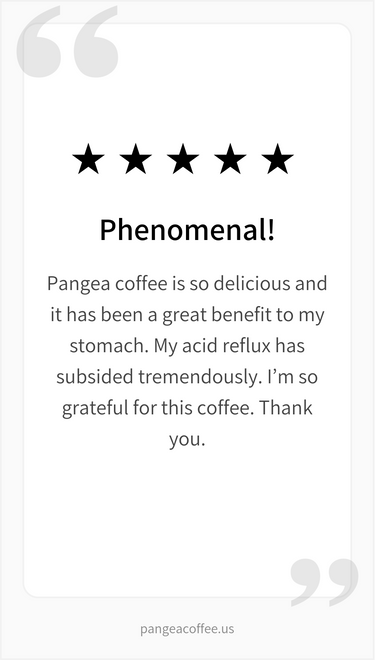
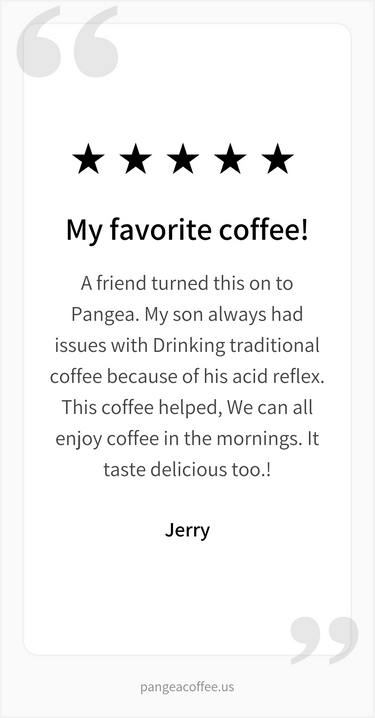
Pangea Coffee's low-acid formulation is backed by gastroenterologists. We source from altitude regions known for naturally lower-acid, naturally cleaner beans — and our Q Graders confirm this through on-site inspection and sensory testing of every small batch.
"I was told by my GI doctor to cut coffee entirely because of my GERD. A friend told me to try Pangea first. I'm two months in and my symptoms are dramatically better. I can finally enjoy my morning coffee again without the burning and bloating. This coffee is different — it tastes genuinely clean."
How to Choose a Truly Pesticide-Free Coffee: A Checklist
Not all clean coffee claims are equal. Use this checklist when evaluating any brand:
| What to Look For | Why It Matters | Pangea Status |
|---|---|---|
| Geography-based sourcing | Regions like Ethiopian highlands use near-zero synthetic pesticides by default | ✓ Yes |
| No chemical processing (decaf) | Solvent-based decaf processes (ethyl acetate, methylene chloride) add chemical residues | ✓ No solvents |
| Third-party allergen verification | Independent verification of facility-level allergen and contamination control | ✓ SPOKIN Verified |
| On-site quality control | In-house certified Q Graders confirm clean cup quality every batch | ✓ Q Grader on Staff |
| Small-batch roasting | Maintains quality control; reduces cross-contamination between batches | ✓ Small Batch |
| Low acid sourcing | High-altitude, naturally low-acid growing regions often correlate with lower pesticide use | ✓ Yes |
| Transparency about sourcing | Brands that don't disclose origins often have something to hide | ✓ Transparent |
Our Pesticide-Free Coffee Lineup
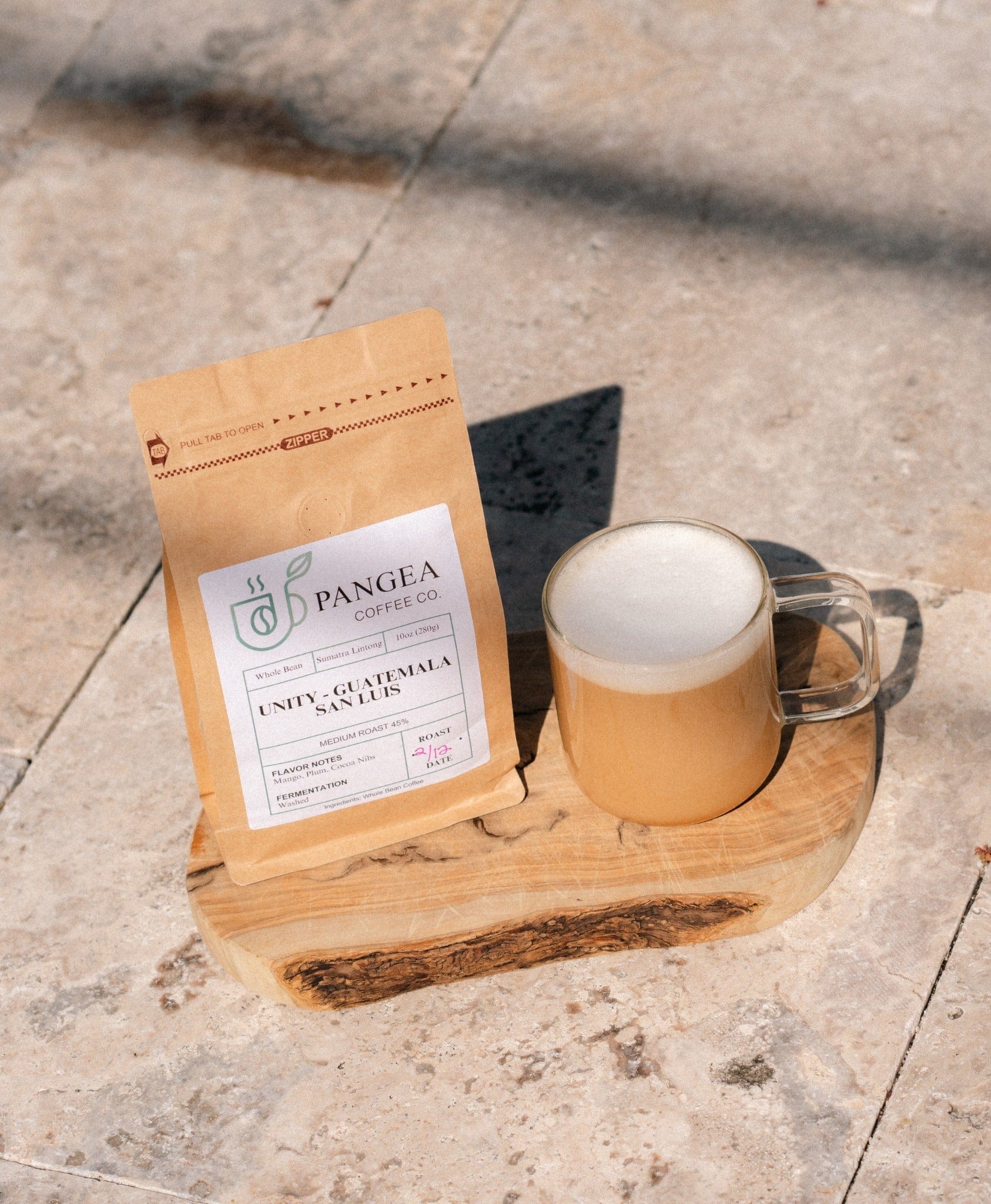
Every Pangea roast is sourced from regions with naturally clean growing conditions, inspected by our on-site Q Graders, and roasted in our allergen-free facility. Our three roasts give you options whether you prefer a gentle morning cup or a bold, espresso-style brew.
Delicate, smooth, and gentle on the stomach. Our lightest roast for sensitive coffee drinkers who want clean flavor without the acid spike.
Shop Hope →Our best-seller. Balanced, clean, and naturally low acid. Perfect for everyday enjoyment with a sensitive stomach or GERD.
Shop Unity →Rich and full-bodied with low perceived acidity. Ideal for espresso lovers who refuse to compromise on clean coffee.
Shop Respect →Chemical-free decaf processed with naturally derived Sugarcane EA. Same pesticide-free purity, zero caffeine, perfect for evenings.
Shop Decaf →What About Mold and Mycotoxins in Coffee?
While this guide focuses on pesticides, it's worth addressing the closely related topic of mold in coffee — since many consumers searching for "pesticide-free coffee" are also concerned about mycotoxin exposure.
Mycotoxins are produced by molds that can develop on improperly stored or processed coffee. They are a legitimate quality concern. At Pangea, we do not use laboratory mold testing. Instead, our on-site Q Graders inspect every batch — a sensory-first quality standard. Mold-affected coffee produces unmistakable flavor defects (musty, earthy, or fermented off-notes) that our Q Graders are specifically trained to detect and reject. Combined with rigorous storage protocols and our small-batch approach, this ensures cup quality that goes beyond a single lab number.
Our SPOKIN verification covers our allergen-free facility practices — giving coffee drinkers with food allergies an independent, third-party assurance that goes beyond anything a conventional roaster offers.
Frequently Asked Questions
Is all organic coffee also pesticide-free?
No. USDA Organic certification prohibits synthetic pesticides but permits naturally-derived pesticides that are organically approved. Truly pesticide-free coffee requires sourcing from regions where farming practices result in little to no pesticide use at all — such as the Ethiopian highlands — combined with rigorous quality control throughout processing.
Does roasting coffee remove all pesticide residues?
Roasting significantly reduces many pesticide concentrations — sometimes by up to 99.8% for certain compounds. However, research published in 2024 confirmed that glyphosate and other stable pesticide residues can survive the roasting process and still be present in the final cup. The safest approach is sourcing beans that were never treated with pesticides in the first place.
What makes Pangea Coffee pesticide-free?
Pangea sources only from regions of the world known for naturally low-acid, naturally low-pesticide growing conditions — including areas where up to 95% of smallholder farmers use no synthetic pesticides or fertilizers. We further protect quality through on-site Q Grader inspection of every small batch, and our facility is SPOKIN verified allergen-free.
Can pesticide residues in coffee worsen acid reflux or GERD?
Emerging research suggests that certain pesticide compounds can disrupt the gut microbiome and contribute to intestinal inflammation — which may compound symptoms of acid reflux and GERD. While coffee acidity itself is a primary trigger, choosing the cleanest possible coffee reduces the total chemical burden on a sensitive digestive system.
Is Pangea Coffee safe for people with food allergies?
Yes. Pangea Coffee Company is one of the very first SPOKIN-verified allergen-free coffee facilities in the United States. Our entire facility is maintained to allergen-free standards, verified by an independent third party. This makes Pangea coffee one of the safest choices available for people with food allergies who also want to enjoy quality coffee.
How does Pangea test for mold without lab testing?
We rely on our on-site Q Graders — internationally certified coffee quality professionals — who inspect and taste-test every batch for sensory defects including the off-flavors that mold-affected coffee produces. Combined with our small-batch roasting protocols and proper storage standards, this sensory-first approach ensures a high-quality, clean cup every time.
What coffee growing regions have the lowest pesticide use?
Ethiopia consistently ranks as the region with the lowest synthetic pesticide use in coffee farming globally. According to the International Growth Centre and World Bank research, approximately 95% of Ethiopian smallholder coffee farmers use no synthetic pesticides or fertilizers, because the country's natural soil, altitude, and climate conditions make chemical inputs unnecessary. Indonesia's smallholder farms also typically use minimal inputs.
What is SPOKIN verification and why does it matter?
SPOKIN is an independent platform dedicated to food allergy safety. SPOKIN verification of Pangea Coffee's facility means that an independent third party has confirmed our allergen-free protocols and practices. This is particularly meaningful for the food allergy community, as it provides a level of assurance that goes beyond a brand's own claims.
Is low acid coffee also more likely to be pesticide-free?
Often, yes — though not always. Naturally low-acid coffee tends to come from high-altitude growing regions with rich volcanic soils, like Ethiopia's highlands. These same conditions — altitude, shade, soil richness — are the reasons farmers in those areas need fewer chemical inputs. At Pangea, our commitment to low acid and our commitment to clean sourcing come from the same place: a deep focus on quality at the origin.
Can I get pesticide-free decaf coffee?
Yes. Most conventional decaf uses harsh chemical solvents which can leave residues. Our Sugarcane EA decaf uses naturally derived ethyl acetate from fermented sugarcane—no synthetic solvents. It maintains the same pesticide-free purity, sourced from clean regions and verified by our Q Graders. Learn more in our decaf coffee guide.