Best Organic Low Acid Coffee: Certification Guide 2026

You see "organic" on a coffee label and assume it's pure, clean, and gentle on your stomach. But here's the reality: organic certification says nothing about acidity levels, mold contamination, or allergen safety. Most "organic" coffee still triggers heartburn, GERD, and digestive distress.
The truth is, organic certification alone doesn't guarantee low-acid coffee or protection from mycotoxins. Understanding what "organic" actually means—and what it doesn't—is critical for anyone seeking truly stomach-friendly, allergen-safe coffee.
What Does "Organic Coffee" Actually Mean?
When you see the USDA Organic seal on coffee, it confirms that the product has followed rigorous organic supply chain management from farm to roaster. But what does that actually include?
USDA Organic Certification Requirements
According to the USDA's National Organic Program, coffee producers must meet strict standards:
🌱 No Synthetic Pesticides or Fertilizers Organic coffee cannot be grown with synthetic nitrogen fertilizers, prohibited pesticides, or genetically modified organisms (GMOs).
⏳ 3-Year Transition Period Land must prove the absence of all prohibited substances for a minimum of three years before achieving certification.
📋 Annual Inspections Third-party certifying agents conduct on-site inspections and review detailed documentation to verify compliance throughout the entire supply chain.
♻️ Environmental Impact Standards address biodiversity, carbon sequestration, soil health, and positive environmental practices beyond just chemical avoidance.
This certification process is rigorous and expensive—often costing several hundred to several thousand dollars in fees alone, not including the operational costs of transitioning to organic methods.
The Critical Truth: Organic ≠ Low-Acid
Here's what most people don't realize: USDA organic certification has nothing to do with coffee acidity levels.
Coffee acidity is determined by origin, altitude, processing method, and roast level—not by whether pesticides were used during cultivation.
What Actually Determines Coffee Acidity?
Scientific research confirms that coffee acidity comes from organic acids like citric, malic, chlorogenic, and quinic acids. These compounds are naturally present in all coffee beans—organic or conventional.
Reality check: An organic coffee grown at high altitude in Kenya (known for bright acidity) will have a pH of around 4.8-5.0—just as acidic as conventional high-altitude coffee. The organic certification doesn't change the chlorogenic acid content that triggers GERD, acid reflux, and stomach irritation.
Studies show that roast level, brewing method, and bean origin have far more impact on perceived acidity than organic vs. conventional cultivation practices.
The Shocking Truth About Organic Coffee and Mold
If you're buying organic coffee to avoid mold and mycotoxins, you need to know this: organic certification does not test for or guarantee mold-free coffee.
A 2023 meta-analysis of mycotoxin prevalence in green coffee found that 38.35% (95% CI: 24.77-52.77%) of green coffee samples worldwide contained detectable ochratoxin A (OTA)—a mycotoxin produced by mold.
Why Organic Doesn't Mean Mold-Free
Mycotoxin contamination occurs during harvesting, drying, fermentation, and storage—stages where organic and conventional coffee face identical risks. The USDA organic standards focus on what's added to soil and crops, not what naturally grows on improperly stored beans.
Research shows that both organic and conventional coffee can harbor mold species including Aspergillus, Penicillium, and Fusarium. Without proper wet processing, quality sorting, and third-party testing, even certified organic coffee can contain mycotoxins that trigger inflammation and digestive distress.
The solution? Look for coffee that's tested for mold, not just certified organic. At Pangea Coffee, Q-graders test every batch for mold and mycotoxin contamination—a standard that goes far beyond organic certification requirements.
Organic ≠ Allergen-Free: The Hidden Cross-Contamination Risk
Here's another critical gap in organic certification: it says nothing about allergen cross-contamination.
Most coffee roasters—organic or conventional—process multiple products on shared equipment. Flavored coffees containing tree nuts, dairy-based creamers, and gluten-containing additives all pass through the same roasters, grinders, and packaging lines.
Why This Matters for People with Food Allergies or Sensitivities
For individuals with severe food allergies, digestive conditions like GERD or gastritis, or immune system issues, even trace amounts of cross-contamination can trigger symptoms. The USDA organic program doesn't address this risk at all.
"GET IT. Unity is so smooth and it makes me love my mornings. I look forward to this coffee! It has such a lovely taste and is so smooth. No bitterness. It's now my go-to coffee and the only one I want to buy now!"
— Alex., Verified Buyer
This is where third-party allergen-free certification becomes critical. SPOKIN verification requires dedicated allergen-free facilities with zero cross-contamination from the Top 9 allergens—a standard completely separate from organic certification.
The Triple Certification Standard: What You Actually Need
If you want truly clean, stomach-friendly coffee, look for the trifecta: Organic + Low-Acid + Allergen-Free.
Here's what each certification actually protects you from:
| Certification Type | What It Guarantees | What It Doesn't Guarantee |
|---|---|---|
| USDA Organic | No synthetic pesticides, GMOs, or prohibited fertilizers. Environmental sustainability. | ❌ Low acidity ❌ Mold-free ❌ Allergen-free |
| Low-Acid Processing | Reduced chlorogenic acids, lower pH (5.5-6.0), gentle on sensitive stomachs. | ❌ Organic ❌ Mold-free ❌ Allergen-free |
| SPOKIN Allergen-Free | Zero Top 9 allergen cross-contamination. Dedicated facility. Third-party audits. | ❌ Organic ❌ Low-acid ❌ Mold testing |
| Q-Grader Mold Testing | Batch-by-batch testing for mold, mycotoxins, and quality defects. | ❌ Organic ❌ Low-acid ❌ Allergen-free |
Why Pangea Coffee Maintains All Four Standards
At Pangea Coffee Co., we don't believe in choosing between organic, low-acid, allergen-free, or mold-tested. Our family's experience with food allergies taught us that partial protection isn't enough.
☕ Organic-Style Sourcing We source from regions using organic farming practices (Brazil, Sumatra, Central America) that naturally produce lower-acid beans.
🔬 Q-Grader Testing Every batch is tested by on-staff Q-graders for mold, mycotoxins, and quality defects before roasting.
🌡️ Precision Roasting Medium to medium-dark roasts break down chlorogenic acids while preserving flavor complexity.
🛡️ SPOKIN Verification America's first SPOKIN-verified coffee facility guarantees zero Top 9 allergen cross-contamination.
How to Choose Truly Clean, Stomach-Friendly Organic Coffee
When shopping for organic low-acid coffee, here's what to look for beyond the USDA seal:
✅ Questions to Ask Coffee Roasters
1. "Where do you source your beans?"
Look for naturally low-acid regions: Brazil, Sumatra, Peru, Guatemala lowlands.
2. "Do you test every batch for mold and mycotoxins?"
Q-grader testing or third-party lab analysis is essential—organic certification alone doesn't cover this.
3. "Is your facility allergen-free or do you process flavored coffees?"
Shared equipment with hazelnut, vanilla, or nut-flavored coffees creates cross-contamination risks.
4. "What's your roasting method for reducing acidity?"
Medium to dark roasts naturally reduce chlorogenic acids. Light roasts preserve more acids regardless of organic status.
5. "How fresh is your coffee?"
Fresh roasting matters. Coffee that's been sitting for months oxidizes, creating rancidity that triggers inflammation.
🚩 Red Flags to Avoid
❌ "Organic" as the only claim: If a brand only mentions organic certification without addressing acidity, mold testing, or allergen safety, dig deeper.
❌ Vague sourcing: "Certified organic beans from multiple origins" tells you nothing about acidity levels. Kenyan organic coffee is still high-acid.
❌ No roast date: Coffee loses freshness quickly. If there's no roast date, it could be sitting for months developing mold and oxidation.
❌ Ultra-light roasts: Even organic ultra-light roasts preserve maximum chlorogenic acids—terrible for sensitive stomachs.
Our Recommended Organic Low-Acid Coffees
All Pangea coffees combine organic-style sourcing, low-acid processing, SPOKIN allergen-free verification, and Q-grader mold testing:
For Balanced Daily Drinking:
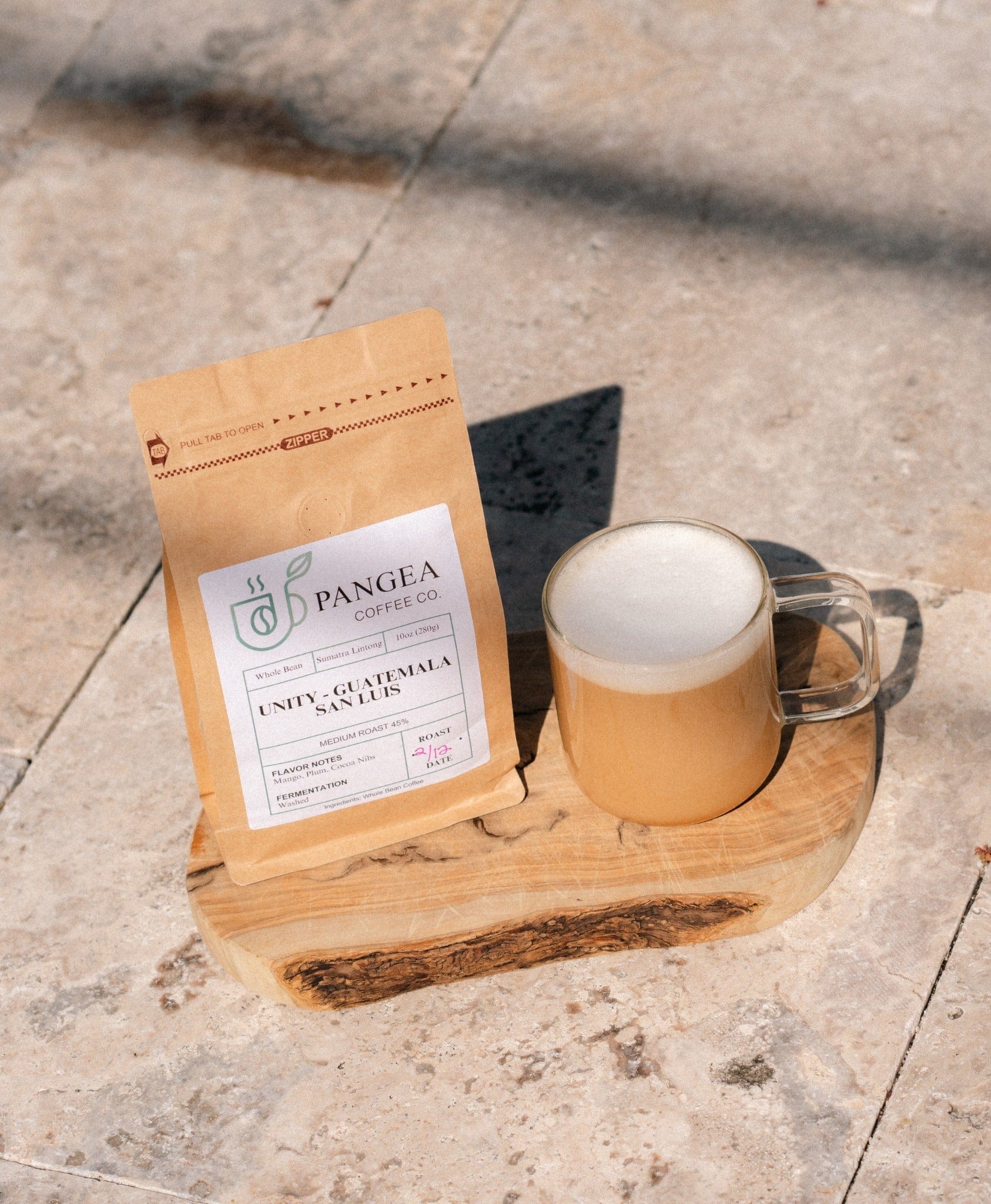
Unity Medium Roast offers smooth berry, cocoa, and caramel notes with naturally low acidity. Sourced from Brazil and Ethiopia using organic farming practices.
For Maximum Stomach Gentleness:
Bold Respect Dark Roast uses extended roasting to break down acidic compounds, creating our smoothest, most stomach-friendly coffee.
For Caffeine-Sensitive Individuals:
Pangea Decaf uses naturally derived Sugarcane EA processing (not harsh chemical solvents) for the same mold-free, low-acid, SPOKIN-verified quality without caffeine. Read our complete decaf guide for GERD and acid reflux.
Frequently Asked Questions
Organic is a great start.
But it's only one piece of the clean coffee puzzle.
Medical Disclaimer: This article is for informational and educational purposes only and is not intended as medical advice. The information provided here should not replace professional medical advice, diagnosis, or treatment. Always consult your physician or qualified healthcare provider before making dietary changes, especially if you have digestive conditions like GERD, acid reflux, gastritis, or food allergies.
Individual tolerance to coffee varies significantly. What works for one person may not be appropriate for another. Never disregard professional medical advice or delay seeking it because of information you have read in this article.