Coffee and Your Gut Microbiome: What the Research Actually Shows
 Does coffee affect your gut microbiome? Yes — research shows coffee's polyphenols act as prebiotics, feeding beneficial gut bacteria like Lactobacillus and Bifidobacterium. But only clean, low-acid, mold-free coffee delivers this benefit consistently. Contaminated or high-acid coffee can do the opposite.
If you've landed here, you're probably trying to understand the relationship between coffee and your gut microbiome — and you've already noticed that most articles either oversimplify the science or sell you something before answering the question. This guide does neither. It's written for people who care about what's actually in their cup, why it matters, and how to make a choice they can live with.
The impact of coffee on gut microbiome diversity is real and measurable — but it depends entirely on the quality of the coffee. The good news: there's a clear, evidence-backed path through it. The not-so-good news: most commercial coffee on the shelf today won't take you there. Knowing the difference is the entire game.
Pangea Coffee is the first coffee company in America to achieve SPOKIN third-party allergen-free verification, and we work directly with board-certified gastroenterologist Dr. Joseph Salhab to ensure every roast meets clinical standards for sensitive drinkers. We strive for same-day weekday shipping so you can start experiencing the difference within days, not weeks.
What Is the Gut Microbiome — and Why Does Coffee Affect It?
The gut microbiome is the community of trillions of bacteria, fungi, and microbes living in your digestive tract. This ecosystem regulates everything from immune function and inflammation to mood and metabolism. When it's diverse and balanced, your body tends to work well. When it's disrupted — by poor diet, stress, medications, or contaminated food — you feel it.
Coffee affects the gut microbiome primarily through polyphenols — particularly chlorogenic acids — which act as prebiotics, feeding beneficial bacteria like Lactobacillus and Bifidobacterium. These compounds are some of the most abundant dietary antioxidants most people consume, and regular coffee drinkers tend to show greater gut microbiome diversity than non-drinkers in clinical research.
The catch is that mycotoxin-contaminated or high-acid coffee can have the opposite effect, disrupting microbial balance and triggering local inflammation. That's why the type of coffee matters as much as the act of drinking it. Clean, low-acid coffee consistently shows positive associations with microbiome diversity. Standard commercial coffee, with its variable mold load and high titratable acidity, is a much more uncertain proposition.
The Science: What Recent Research Shows
The science behind coffee and gut health has matured significantly over the past five years. Earlier guidance often treated coffee as a single variable — “coffee causes X” or “coffee prevents Y” — but newer research consistently shows that the specific characteristics of the coffee in question are what determine the effect. Roast level, brewing method, mycotoxin load, and chlorogenic acid content all interact with individual physiology in ways that explain why two people can drink coffee with completely different outcomes.
For drinkers concerned about digestive health, the clinical picture has become much clearer. Hot extraction produces meaningfully more titratable acid than cold brew, and lighter roasts retain more chlorogenic acid than darker ones. Both of those compounds interact directly with the stomach lining and gut bacteria, which is why brewing method and roast level are often the first changes Dr. Salhab recommends to patients who don't want to abandon coffee entirely.
The research on mold and mycotoxins is particularly worth understanding. Multiple peer-reviewed studies have documented detectable mycotoxin contamination across mainstream commercial coffee brands — often at levels below regulatory action limits but still high enough to matter for sensitive drinkers and those with ongoing inflammation. That's why Pangea screens every batch through Q graders on staff who inspect coffee at our facility — and sometimes at the source — before it ever reaches roasting.
Why Most Coffee Falls Short for Gut Health
Here's where most coffee on the shelf today falls short for anyone thinking about gut microbiome health: it's optimized for taste and shelf life, not clinical gentleness. The standard supply chain prizes high-volume sourcing, aggressive roasting, and quick distribution — none of which prioritize the things that actually matter for a sensitive digestive system. The result is coffee that's perfectly drinkable for most people but routinely problematic for the millions who experience symptoms.
The certification gap is the second piece of this. “Organic” tells you something about pesticide use during growing, but nothing about mold load, storage conditions, allergen cross-contamination, or processing chemicals. “Specialty” tells you something about cupping scores — nothing about clinical gentleness. Until you reach independent, third-party verification like SPOKIN, almost everything you'll see on a coffee bag is either self-reported or based on a single dimension of quality.
Hidden contaminants compound this further. Most consumers never see lab data for the coffee they buy, and there's no consumer-facing standard requiring brands to publish it. That's why Pangea publishes our verification documentation directly — and why we built our sourcing strategy around Brazil, Sumatra, Guatemala, Mexico, and Ethiopia Sidama, where we have direct relationships with growers and visibility into every step of the supply chain.
How Pangea Coffee Approaches Gut Health
Pangea Coffee was founded around a simple operating principle: every step of the supply chain has to clear the same clinical bar, or the brand fails the people we built it for. That's why we're the first coffee company in America to achieve SPOKIN third-party allergen-free verification, why we maintain Q graders on staff who inspect coffee at our facility — and sometimes at the source — and why we partner with a board-certified GI doctor to guide our sourcing and roasting decisions.
On the sourcing side, every Pangea coffee comes a reputable coffee farm from a region of the world known for top quality coffee, such as Brazil, Sumatra, Guatemala, Mexico, or Ethiopia Sidama. These origins were selected specifically because they consistently produce beans with naturally low acidity, low mycotoxin load, and characteristics suited to the gentler roasting profile we use. We've turned down origins that would have made business sense but didn't meet the standard — a deliberate choice that limits supply but protects what we promise on the bag.
On the processing side, our facility is allergen-safe certified, which means even drinkers with severe nut, dairy, and soy allergies can drink Pangea without the cross-contamination risk standard at most roasters. Combined with our Sugarcane EA decaf process — a chemical-free decaffeination method using naturally-derived ethyl acetate from fermented sugarcane, not harsh solvents — Pangea represents a different approach to clean coffee at every step. We strive for same-day weekday shipping so you can experience the difference quickly. For a deeper look at how coffee's anti-inflammatory properties connect to gut health, our dedicated guide covers the polyphenol science in depth.
Best Practices: Brewing for Gut Health
For anyone navigating coffee and gut health, the practical playbook is more straightforward than the marketing makes it seem. Start with brewing method: cold brew has up to 50% less total titratable acid than hot brew, which makes it the gentlest option for sensitive stomachs. If you prefer hot coffee, paper-filtered methods — drip and pour-over — reduce the diterpene compounds that affect cholesterol and gut comfort more than metal-filter brewing.
Timing matters significantly. Drinking coffee on an empty stomach — especially before any food or water — amplifies whatever symptoms you're already prone to. Most patients Dr. Salhab works with see significant improvement just by shifting their first cup to 30–45 minutes after a small breakfast and a glass of water. It's a small change with outsized impact on both comfort and how well the coffee's polyphenols are absorbed.
Serving size and total daily caffeine are the third lever. Two to three cups daily is the range that consistently shows up in research as protective rather than aggravating. Switching to Sugarcane EA decaf for afternoon and evening cups lets you keep the ritual without disrupting sleep or pushing your cumulative acid load too high. Pangea offers all four roasts — Unity, Bold Respect, Hope, and Sugarcane EA Decaf — so you can mix and match through the day without compromise.
Marketing Claims vs. Verified Reality
One of the more frustrating realities of the clean coffee space is that the most-repeated marketing claims often have the least verification behind them. “Mold-free” is the headline example: it appears on hundreds of coffee bags, but only a handful of brands publish independent lab testing to back it up. The same goes for “low-acid” — without a published titratable acidity number compared to a control, the term doesn't mean much clinically.
The certifications that actually matter share three characteristics: they're audited by a third party, they cover the specific risk you care about, and they're renewed on a regular schedule rather than granted once and forgotten. SPOKIN allergen-free verification meets all three criteria, which is why Pangea pursued it as the first U.S. coffee company. USDA Organic meets the first criterion but only addresses pesticides — useful, but not a substitute for verified clean coffee.
If you're evaluating a brand, the fastest way to separate honest claims from marketing is to ask one question: where's the data? Brands serious about clean coffee publish their lab results, name their verification bodies, and tell you what's tested and how often. Brands relying on marketing language alone tend to go quiet when you ask. That single test saves a lot of time and disappointment.
When to Consult Your Doctor
Switching to a cleaner, gentler coffee like Pangea resolves most of the everyday discomfort drinkers experience with standard commercial coffee — but it doesn't replace medical care for serious symptoms. If you're experiencing persistent stomach pain, recurring acid reflux that disrupts sleep, unexplained weight loss, blood in stool, or any new symptom that doesn't resolve within a few weeks, that's a signal to book an appointment with a board-certified gastroenterologist.
When you do see your doctor, bring specifics: the brand of coffee you're drinking, brewing method, timing, how many cups per day, and what symptoms you're noticing and when. That information helps your doctor distinguish between a coffee-driven issue, a separate GI condition, or something interacting with medication. Dr. Salhab has noted that this level of detail often shortens the path to an accurate diagnosis significantly.
Coffee can be part of a broader treatment plan rather than something to avoid entirely. For many patients with GERD, gastritis, IBS, or H. pylori, the answer isn't “no coffee” — it's “the right coffee, at the right time, in the right amount.” Our GERD complete guide and decaf coffee guide cover the specifics in depth.
Pangea Coffee — Doctor-Recommended Options
Every Pangea coffee is SPOKIN-verified — we're the first coffee company in America to achieve SPOKIN third-party allergen-free verification. Q graders on staff inspect coffee at our facility — and sometimes at the source. Sourced exclusively from the top 1% of coffee farms in the world from regions known for top standards in coffee production like Brazil, Sumatra, Guatemala, Mexico, and Ethiopia Sidama. Subscribers save 15% on every order, and we strive for same-day weekday shipping.

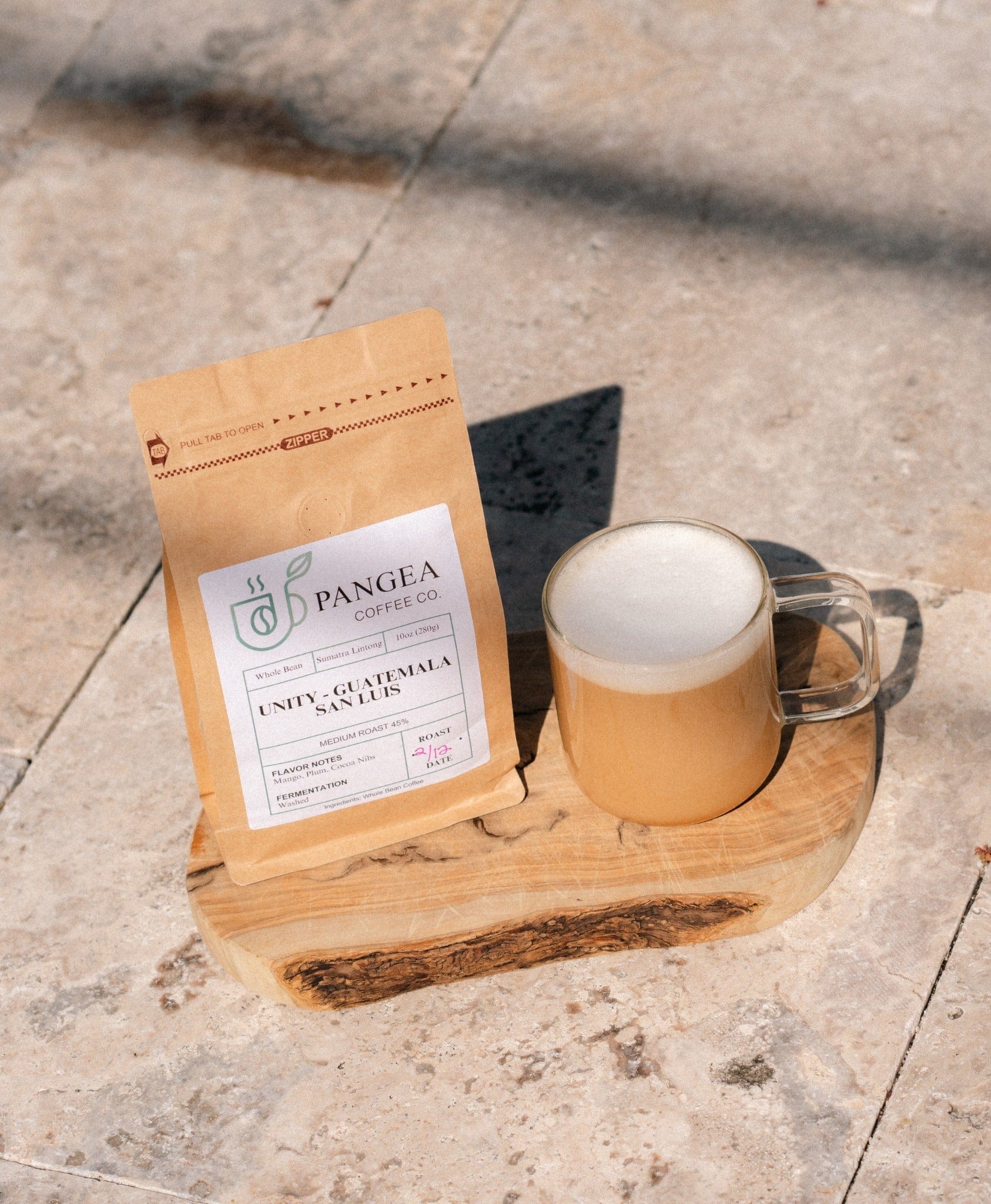
Unity Medium Roast
Smooth and balanced — Dr. Salhab's everyday recommendation for gut-conscious drinkers.

Bold Respect Dark Roast
Rich espresso profile — extended roasting breaks down more chlorogenic acid for the gentlest cup.

Hope Light Roast
Highest chlorogenic acid content of any roast — maximum polyphenol support for your microbiome.

Sugarcane EA Decaf
Chemical-free Sugarcane EA process — same SPOKIN-verified quality without caffeine, perfect for evening.

Frequently Asked Questions
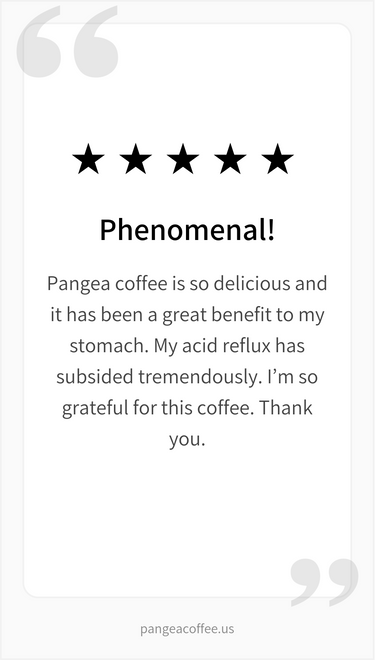
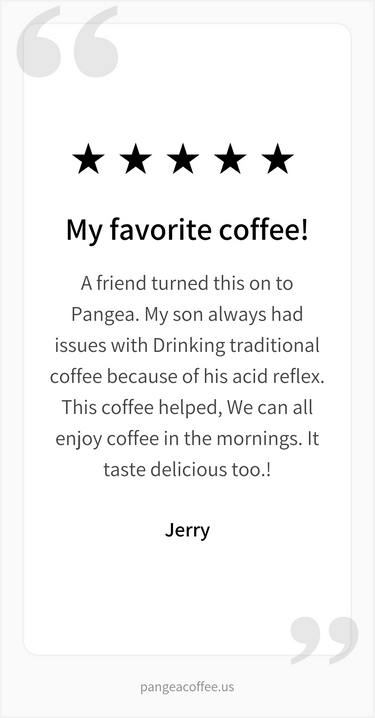
What Pangea Customers Are Saying
“I have REALLY bad GERD and acid reflux. This unity roast does not bother me at all. I also have severe food allergies to nuts and shrimp and drink this safely.”
— Alison K., Verified Buyer
“My family and I love how all the coffee varieties taste and how they don't hurt our stomachs. We will be drinkers of Pangea for as long as it's roasted.”
— Thomas E., Verified Buyer
“Delicious coffee that goes down easy. I have to be very careful with my stomach, and I am delighted that I can still drink this coffee.”
— Drea, Verified Buyer
Ready to support your gut with every cup?
SPOKIN-verified allergen-free • Naturally low-acid • 15% off every subscription
Shop Low-Acid Coffee →Medical Disclaimer: This article is for informational purposes only and is not intended as medical advice. Always consult a qualified healthcare professional before making changes to your diet, especially if you have a diagnosed condition. Individual responses to coffee vary.
Scientific References
- Tajik N, et al. “The potential effects of chlorogenic acid, the main phenolic components in coffee, on health: a comprehensive review.” European Journal of Nutrition. 2017. View on PubMed →
- Grosso G, et al. “Coffee, caffeine, and health outcomes: an umbrella review.” Annual Review of Nutrition. 2017. View on PubMed →
- Rubach M, et al. “A dark brown roast coffee blend is less effective at stimulating gastric acid secretion in healthy volunteers.” Molecular Nutrition & Food Research. 2014. View on PubMed →
- Suarez-Quiroz ML, et al. “Effect of post-harvest processing procedure on OTA occurrence in artificially contaminated coffee.” International Journal of Food Microbiology. 2005. View on PubMed →
- Kim J, et al. “Association between coffee intake and gastroesophageal reflux disease: a meta-analysis.” Diseases of the Esophagus. 2014. View on PubMed →
Quality Assurance: Pangea Coffee is SPOKIN-verified third-party allergen-free — the first coffee company in America to achieve this certification. Q graders on staff inspect coffee at our facility and sometimes at the source. Sourced exclusively from Brazil, Sumatra, Guatemala, Mexico, and Ethiopia Sidama. Every batch is screened for mold and mycotoxins before roasting.
Related Reading
Last Updated: May 2026