



Low Acid Coffee Brands, Compared: Who Can Actually Back the Claim?

If you are shopping for low acid coffee, you have probably noticed that the claims all sound identical. The useful question is not which brand says it is gentlest. It is which brand tells you enough to judge for yourself.
This comparison looks only at what each brand publicly discloses. We have not lab tested anyone's coffee, including our own, and we explain exactly why below.
How We Compared These Brands
Acidity in coffee is driven mostly by where the bean grew and how it was processed. Lower altitude origins such as Brazil and parts of Sumatra, Guatemala and Mexico tend to produce lower perceived acidity than high grown East African lots. Roast level shifts the perception a little, but a dark roast will not rescue a naturally sharp bean.
So we compared brands on six things you can verify from the outside:
- Origin transparency — do they name the region and farm, or just the country?
- Acidity selection — is there a documented process for choosing lower acid lots?
- Q grader involvement — does a licensed grader assess the coffee?
- Allergen handling — is there independent verification of the facility?
- Freshness — roast to ship time, and whether a roast date appears on the bag
- Price — what you pay per ounce
Low Acid Coffee Brands, Side by Side
| Brand | Names region or farm | Q grader inspected | Independent allergen verification | Roast date on bag |
|---|---|---|---|---|
| Pangea Coffee | Yes — region and farm | Yes — inspected before purchase | Yes — SPOKIN verified | Yes — every bag |
| Lifeboost | Country level (Nicaragua) | Not publicly stated | Not publicly stated | Check the bag |
| Volcanica | Yes — region level | Not publicly stated | Not publicly stated | Check the bag |
| Fabula | Country level | Not publicly stated | Not publicly stated | Check the bag |
| Peet's | Varies by line | Not publicly stated | Not publicly stated | Check the bag |
| Starbucks | Blend level | Not publicly stated | Not publicly stated | Check the bag |
"Not publicly stated" means we could not find the information published by that brand at the time of writing. It is not a claim about the quality of their coffee. "Check the bag" means packaging varies by product and we would rather you look than take our word for it. If a brand publishes this information and we have missed it, tell us and we will correct the page.
Brand by Brand
Pangea Coffee
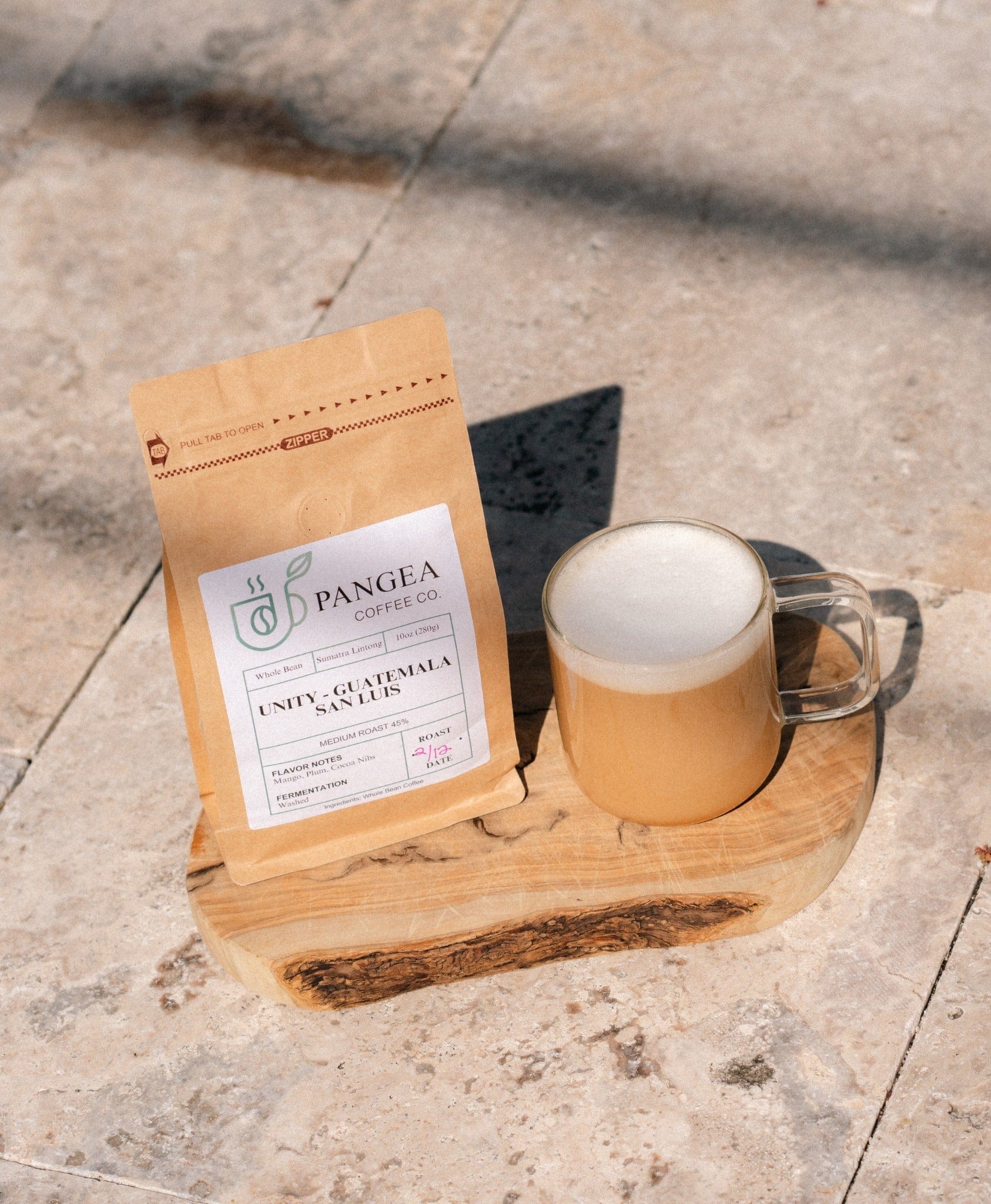
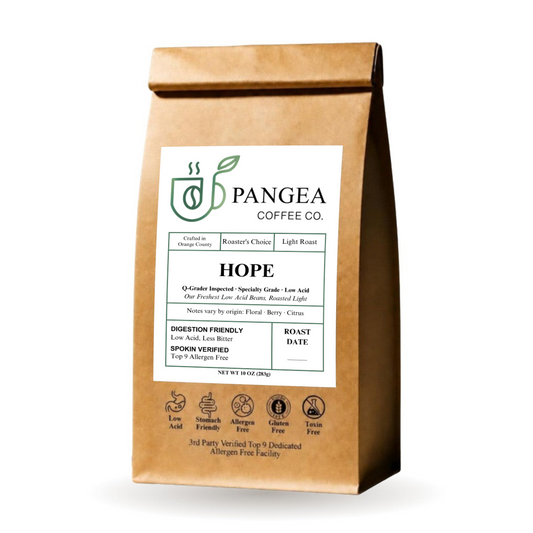
We select lots for low perceived acidity, and a licensed Q grader inspects the coffee at our facility, and sometimes at origin before we buy it. We roast in small batches in Orange County, California, in a facility that handles none of the Top 9 allergens, and we are SPOKIN verified, which is an independent assessment rather than something we declare about ourselves.
Why you won't find a batch lab report from us
This one is worth understanding, because it is the direct result of how we roast rather than a gap in it.
A lab assay takes one to two weeks to come back. We roast in small batches and ship within days. On that timeline, a batch is ground and in your cup long before a certificate about it would exist. A report on coffee you finished a fortnight ago is a historical document, not a safety check.
The brands that can publish a batch certificate alongside the bag are generally holding that batch in a warehouse while the paperwork catches up. That is a legitimate way to run a coffee company. It is simply the opposite trade to ours: they buy you a document, we buy you freshness. Every bag we ship carries its roast date, so you can check which side of that trade you are getting rather than take our word for it.
There is a fair follow-up here: green coffee sits for months before it is roasted, so why not test that instead? It is the right question, and the honest answer is that we do not do it yet. Testing green lots and publishing those results is exactly what we are working toward, because it is the one approach that survives our turnaround — the lot is assessed long before it is ever roasted, so the paperwork and the freshness stop competing.
Until that exists, what we do is inspect before we buy. A licensed Q grader assesses the lot for defects and quality at our facility, and sometimes at origin. That is a trained sensory and physical assessment, not a laboratory assay, and we would rather name the difference than blur it. When the green lot results are published, they will appear on this page.
Browse the low acid collection if you want to see the current lineup.
Lifeboost
Lifeboost has built a real presence in this category and its Nicaragua sourcing focus is a genuine positive — that growing region does tend toward lower perceived acidity. It sits at the premium end on price. We could not find published detail on Q grader involvement or independent allergen facility verification, which is the gap that matters most if food allergies are part of your picture.
Volcanica
Volcanica offers one of the widest single origin ranges of any brand here and names regions rather than just countries, which is more transparency than most. Volcanic soil origins often produce a rounder cup. We could not find published facility or allergen handling standards. A sensible option if you are chasing lower acidity and do not have allergy constraints.
Fabula
Fabula markets directly to people with reflux and sensitive stomachs, and that focus is real rather than incidental. Sourcing is described at country level. We could not find published Q grader or independent allergen verification detail.
Peet's and Starbucks
Neither markets a low acid line, so it is a little unfair to grade them against one. Both are large scale roasters selling blends where consistency matters more than lot level selection. Darker roasts from either will taste less bright, but that is a flavour outcome rather than a sourcing standard. If acidity is a medical issue for you rather than a taste preference, neither is built for that job.
Are There Low Acid Coffee Brands in Grocery Stores?
A few supermarket brands use low acid language on the pack. The practical problem is not the claim, it is the timeline. Supermarket coffee often sits in distribution for months, and stale coffee tastes harsher regardless of where it was grown. Most bags carry a best before date rather than a roast date, so you cannot tell how old it is.
If you are buying from a shelf, look for a printed roast date and buy the most recent one you can find. If you cannot find a roast date at all, that is your answer about how the brand thinks about freshness.
How to Judge Any Low Acid Coffee Brand Yourself
- Does the bag carry a roast date, not just a best before date?
- Does the brand name a region or farm, or only a country?
- Is there a described process for selecting lower acid lots, or only an adjective?
- If allergens matter to you, is the facility independently verified or self declared?
- When a brand claims testing, do they say who tested it, for what, and how old the batch was by the time you drank it?
That last one is worth applying to us as well. Precision about what a claim actually covers is the whole point.
Which Pangea Roast Suits You
- Hope — light roast, floral and fruit forward. For people who drink it black.
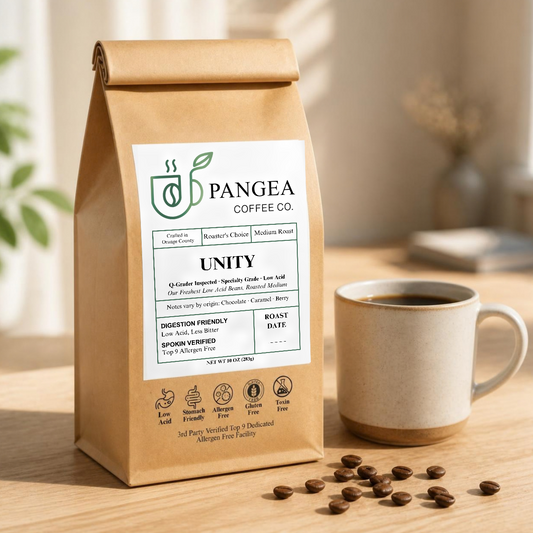
- Unity — medium roast, smooth and balanced. The everyday choice.
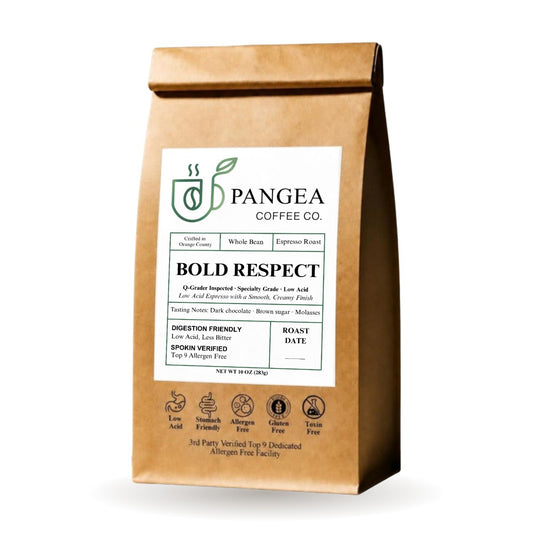
- Bold Respect — dark roast and espresso, rich without the bite.
- Sugarcane Decaf — sugarcane EA process, no harsh solvents.
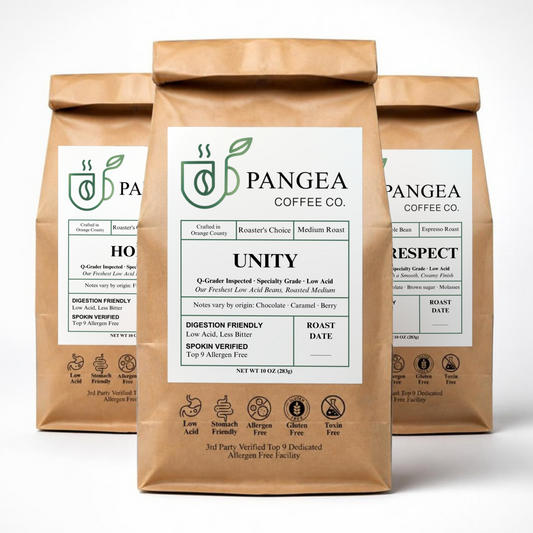
- Discovery Pack — all three roasts, if you would rather taste than guess.

Pangea is gastroenterologist-recommended — Dr. Joseph Salhab (@StomachDoc).
Dr. Joseph Salhab is Sam's brother and a co-founder of Pangea Coffee.
What Customers Say
⭐⭐⭐⭐⭐
"I have REALLY bad GERD and acid reflux. This unity roast does not bother me at all. I also have severe food allergies to nuts and shrimp and drink this safely."
— Alison K., verified customer
⭐⭐⭐⭐⭐
"Delicious coffee that goes down easy. I have to be very careful with my stomach, and I am delighted that I can still drink this coffee."
— Drea, verified customer
Frequently Asked Questions
Which low acid coffee brand is best?
It depends on what you need verified. If independent allergen verification matters, Pangea is the only brand in this comparison with it. If you only care about acidity and want breadth of origins, Volcanica has the widest range. If price is the constraint, none of the specialty brands here are cheap, and a fresh supermarket bag with a visible roast date will beat a stale specialty one.
What makes one coffee brand lower in acid than another?
Mostly origin and altitude, then processing, then roast level. A brand that selects lots specifically for low perceived acidity will be more consistent than one that simply roasts dark and calls it smooth.
Does Pangea lab test its coffee?
Not batch by batch, and the reason is our turnaround. A lab assay takes one to two weeks; we roast small batches and ship within days, so the coffee reaches you well before a certificate about it could exist. Brands that publish a batch report alongside the bag are usually holding that batch while the lab catches up. Instead, a licensed Q grader inspects the lot at our facility, and sometimes at origin before we buy it — a trained sensory and physical assessment rather than a laboratory assay. Testing our green lots and publishing those results is what we are working toward, since green coffee is assessed long before it is roasted.
Do your bags show a roast date?
Yes — every bag we ship carries its roast date. It is the simplest thing a coffee company can be checked on, which is probably why so much supermarket coffee prints a best before date instead.
What is SPOKIN verification?
SPOKIN independently verifies products as safe for people with food allergies. It is an outside assessment rather than a self declaration. Pangea is America's first SPOKIN verified coffee brand, and our facility handles none of the Top 9 allergens.
Is low acid coffee better for acid reflux?
Many people with reflux tolerate lower acid coffee better, though responses vary and coffee affects reflux through more than acidity alone. Our GERD and acid reflux guide covers this properly.
See the lineup for yourself
Q grader inspected, SPOKIN verified allergen-free, roasted in small batches in California — with the roast date on every bag.
Shop Low Acid CoffeeLearn More
- Mold-Free Coffee: What It Is and Why It Matters — the separate standard, covered in full.
- Best Coffee for Acid Reflux and GERD — if reflux is the reason you are here.
- Coffee With Gastritis or Ulcers — for a diagnosed stomach condition.
About this comparison: brand information reflects what each company published at the time of writing and has not been independently verified by us. Nothing here is a claim about the safety or quality of another company's coffee. If a brand believes something here is inaccurate, contact us and we will review and correct it.
Quality Assurance: Pangea Coffee maintains SPOKIN verification for allergen-free production. Our Q graders inspect coffee at our facility, and sometimes at origin before purchase. We source from naturally low-acid regions and roast fresh in small batches, with the roast date printed on every bag.
Medical Disclaimer: This article is for informational purposes only and does not constitute medical advice. If you have GERD, acid reflux, gastritis, food allergies or any related condition, please consult a qualified healthcare provider.