



Coffee for People Who Don't Like Coffee

Most people who say they don't like coffee are describing one specific cup: bitter, burnt, sour or harsh, usually from a pot that sat too long or a bag that was ground months ago. That is not what coffee has to taste like. Brewed well from a fresh, low-acid roast, coffee is sweet, and the bitterness most people brace for is small and soft.
I built a coffee company around a family that mostly could not drink the coffee in the supermarket, so this is familiar ground. This guide is for the person who wants to like coffee, or who has to drink it in the morning and would rather enjoy it. It covers why your past cups tasted the way they did, which roast to start with, the brewing fixes that matter most, and a two-week plan that works.
Quick answer: Start with a fresh, low-acid light or medium roast, ground right before brewing, at 1 gram of coffee to 16 grams of water, with water just off the boil. Drink it within 20 minutes. Add milk if you like it; cut back as the cup grows on you. If the first cup is still too much, a half-caff or a decaf made from the same beans gives you the taste with less of the jolt.
Why don't you like coffee? It is usually one of four things
- Bitterness. The most common complaint, and mostly a brewing fault: water too hot, grind too fine, or coffee left on a hot plate. Dark, oily supermarket roasts add roast bitterness on top.
- Sourness. The opposite fault: water too cool, grind too coarse, or a very light roast brewed weak. Reads as "acidic" or "sharp."
- Staleness. Pre-ground coffee goes flat in days; whole beans in weeks. Stale coffee tastes like cardboard, and no amount of sugar fixes it.
- The caffeine itself. Some people dislike how a strong cup makes them feel more than how it tastes. That has a separate fix (below).
Notice that none of these is "coffee." They are the particular coffee you were given. Fix the brew and the bean and you are tasting something different.

Which coffee should a beginner start with?
A light or medium roast with a soft, sweet profile and low acidity. Here is how the three roast levels land for someone starting out.
| Roast | What it tastes like | Start here if | Ours |
|---|---|---|---|
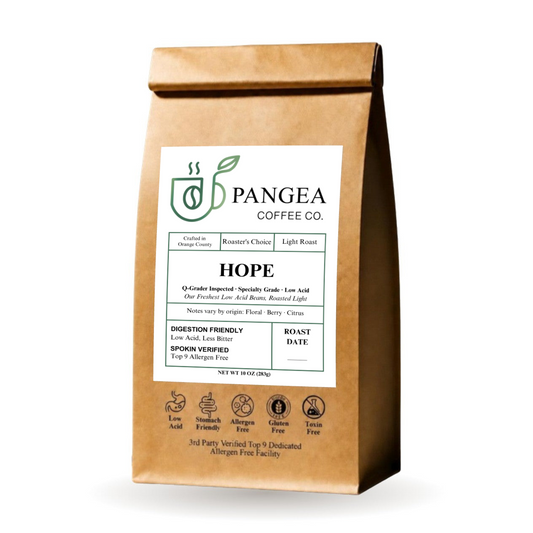
| Light | Floral, fruit-forward, tea-like body, clean finish | You like tea, fruit, or anything delicate | Hope |
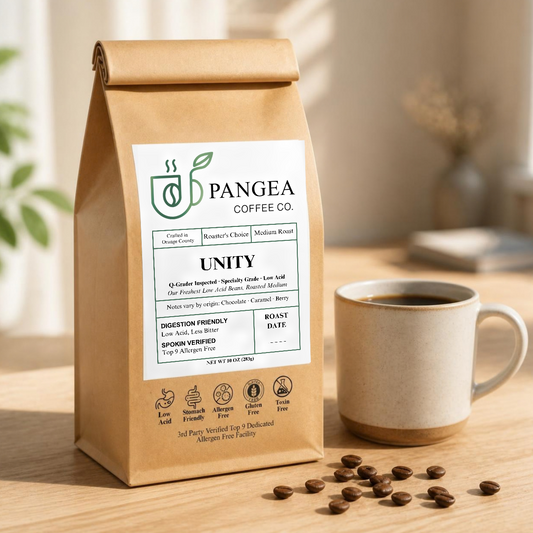
| Medium | Caramel, chocolate, rounded, smooth | You want the "classic" coffee taste without harshness | Unity |
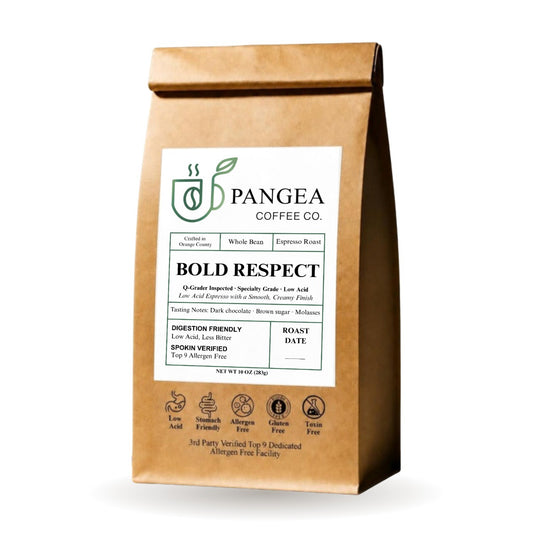
| Dark | Dark chocolate, bold, heavy body | You already like espresso drinks or strong lattes | Bold Respect |
Most people who think they dislike coffee do best on a medium. It has the familiar flavor without the burnt edge, and it takes milk well while you adjust. A low-acid coffee helps here too: less of the sharp, sour note that puts new drinkers off.

The three brewing fixes that change everything
You do not need equipment. You need three habits.
- Fresh, and ground at home. Buy whole beans with a roast date on the bag and use them within a month. A basic burr grinder costs less than a few weeks of coffee-shop drinks and does more for the taste than any machine.
- The right ratio. 1 g coffee to 16 g water: two level tablespoons per 6 oz cup, or 60 g per liter. Too little coffee tastes thin and bitter at the same time; too much tastes muddy. A $15 kitchen scale makes every cup the same.
- Water just off the boil, and drink it fresh. Boil, wait 30 seconds, then brew. Pour the pot into a carafe or mugs within 20 minutes; a hot plate cooks the coffee into the drink you remember not liking.
Those three fixes are the first page of our Brewing Guide, with the grind and timing for each brewer underneath.
Milk, sugar and the "training wheels" question
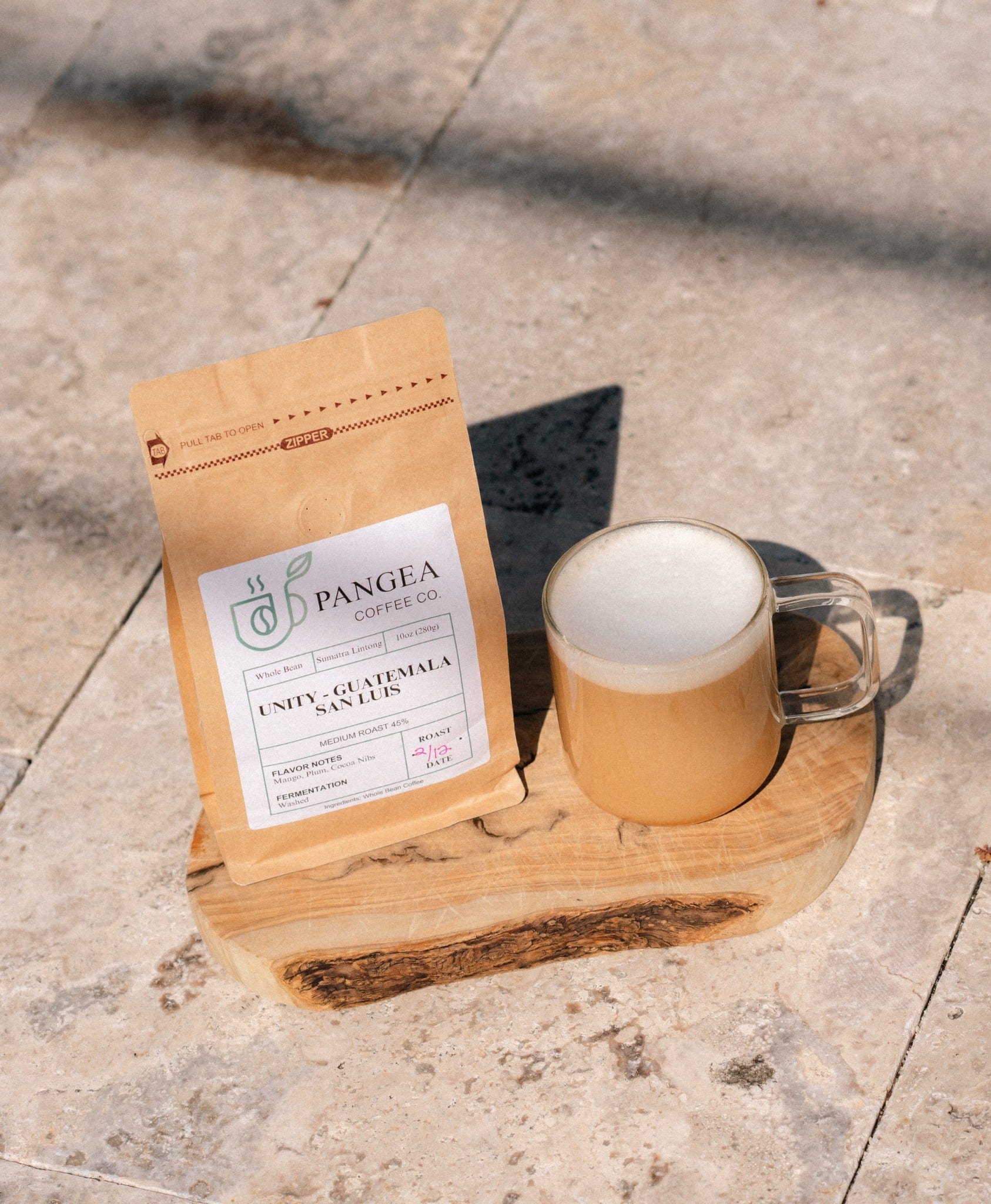
Use them. There is no prize for drinking black coffee on day one. A splash of milk softens bitterness and adds sweetness, and a medium roast like Unity was chosen partly because it takes milk well. The trick is to let the cup improve underneath the milk: as the beans get fresher and the brew gets better, you will find yourself adding less without trying.
Two drinks that convert a lot of non-coffee-drinkers: an iced latte made with a smooth medium roast, and cold brew, which is steeped in cold water for 12–18 hours and comes out low in bitterness and naturally sweet. If hot coffee is what put you off, start cold.
What if it is the caffeine you don't like?
Then change the dose, not the drink. Three options, from the gentlest change up:
- A smaller cup, later in the morning. Six ounces after breakfast lands very differently from sixteen before breakfast.
- Half-caff. A 50/50 blend of regular and decaf beans, roasted together: the full taste with about half the caffeine. Our Half Caff is a medium roast for exactly this.
- Decaf. A good decaf tastes like coffee, not like a substitute. Ours is a Sugarcane-Process Decaf, roasted the same way as the rest of the range, and most people cannot pick it out blind in a milk drink.
A two-week plan: week one, a medium roast brewed as above, with milk, one small cup a day. Week two, the same cup with a little less milk, or a second small cup instead of a large one. By the end you will know whether you like coffee or whether you liked the idea of it; most people find it is the former.
Where Pangea fits
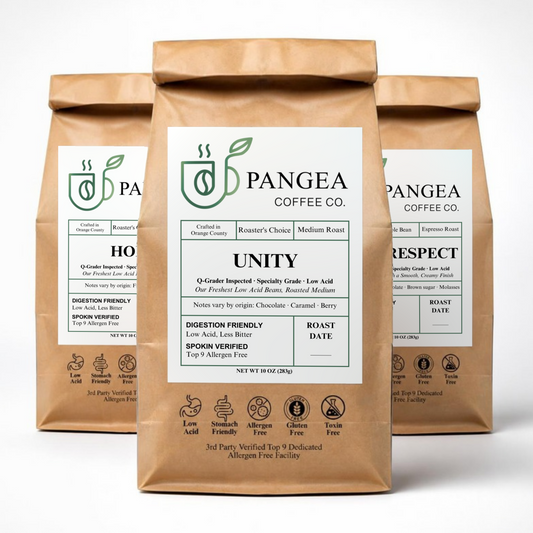
We roast for people who were told coffee was not for them. All three Pangea roasts are low-acid, mold-free and Q-grader inspected, roasted fresh weekly in small batches with the roast date on the bag. The Discovery Pack is the beginner's order: one bag each of Hope, Unity and Bold Respect, so you can find your roast by tasting rather than guessing. Give each one a week.
Frequently asked questions
What is the least bitter coffee for someone who doesn't like coffee?
A fresh light or medium roast brewed at the right ratio and temperature. Bitterness comes from over-extraction and from dark, oily roasts, so a lighter roast ground right before brewing at 1:16 with water just off the boil is the least bitter cup most people have had. Cold brew is the least bitter method of all.
How do I start drinking coffee if I hate the taste?
Start with a smooth medium roast, brewed fresh, in a small cup with milk. Keep it to one cup a day for a week while the brewing improves, then reduce the milk gradually. If hot coffee is the problem, start with an iced latte or cold brew, which are naturally sweeter and less bitter.
Is light roast or dark roast better for beginners?
Medium is the safest start; between the two extremes, light. Dark roasts carry roast bitterness that new drinkers notice first. Light roasts are gentler and sweeter but can taste sour if under-brewed. A low-acid medium roast gives the familiar coffee flavor without either edge.
Does adding milk ruin coffee?
No. Milk rounds off bitterness and adds sweetness, and medium roasts in particular are often chosen for how they taste with it. Drink it the way you like it; as your beans and brewing improve, most people add less on their own.
Related reading
If a light roast sounds like your starting point, read what is a light roast coffee before you buy. Our two most popular roasts are compared in Unity vs Bold Respect. And if you are brewing at home for the first time, home cafe trend covers the inexpensive setup that beats the coffee shop.