



How to Reduce Coffee Acidity Even Further: Solutions for Heartburn Sufferers
Quick Takeaway
Even with low-acid coffee, some people still experience heartburn. The good news? There are proven, science-backed methods to reduce coffee acidity even further. From brewing cold brew (up to 67% less acidic) to starting with dark roasts and adding a pinch of baking soda, these strategies can help you keep coffee in your life without the burn. We'll also debunk popular myths and share what actually works.
You've already made the switch to low-acid coffee, but you're still experiencing that uncomfortable burning sensation. You're not alone, and more importantly, you don't have to give up coffee entirely.
As a family-owned coffee company where our own kids suffer from allergies and sensitivities, we understand the frustration. We've spent years researching, testing, and talking with gastroenterologists to find real solutions. This isn't just marketing talk—it's personal for us.
Let's dive into the proven methods that can help you lower coffee's acidity even further, plus we'll expose some popular myths that don't actually work.
Why You Might Still Get Heartburn from Low-Acid Coffee
First, let's understand what's happening. Coffee contains over 1,000 chemical compounds, and while pH level is important, it's not the only factor triggering heartburn:
Caffeine relaxes your lower esophageal sphincter (LES)—the valve between your esophagus and stomach. When this relaxes, stomach acid can flow back up, causing that familiar burn. Even low-acid coffee contains caffeine unless it's decaf.
Coffee stimulates gastric acid production. Your stomach naturally produces more acid when you drink coffee, regardless of the coffee's pH level. This is why some people experience heartburn even with the gentlest low-acid options.
Individual sensitivity varies dramatically. Your body's response to coffee depends on your unique digestive system, stress levels, what you've eaten, and even your hydration status. What works for one person might not work for another.
Compound sensitivity beyond pH. Some people react to specific compounds in coffee—like chlorogenic acids or certain oils—that aren't directly related to pH but can still trigger symptoms.
Understanding these factors is the first step. Now let's explore the practical solutions.
The Most Effective Methods to Lower Coffee Acidity
1. Switch to Cold Brew (The Game-Changer)
Cold brew isn't just a trendy beverage—it's scientifically proven to be significantly less acidic than hot-brewed coffee. Studies show cold brew can be up to 67% less acidic than traditional hot brew methods.
Why it works: Heat extraction pulls more acidic compounds from coffee beans. Cold water extraction over 12-24 hours creates a smoother, less acidic concentrate that's gentler on sensitive stomachs.
How to make it: Combine 1 cup of coarsely ground coffee with 4 cups of cold water. Let it steep in the refrigerator for 12-24 hours, then strain. Start with a 1:1 ratio of concentrate to water and adjust to taste.
Pro tip: Use our Bold Respect dark roast for cold brew—dark roasts are already lower in acid, and the cold brew method reduces acidity even further.
2. Start with Dark Roast, Then Progress
This is crucial advice we give to customers with severe sensitivity. The roasting process breaks down chlorogenic acids—the compounds most responsible for coffee's acidity. The longer the roast, the less acidic the final cup.
The progression strategy:
Week 1-2: Start with dark roast only, preferably as cold brew. Our Bold Respect espresso is specifically designed for this.
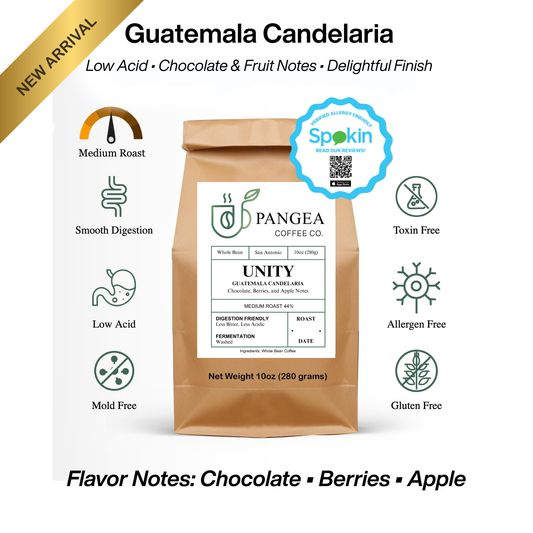
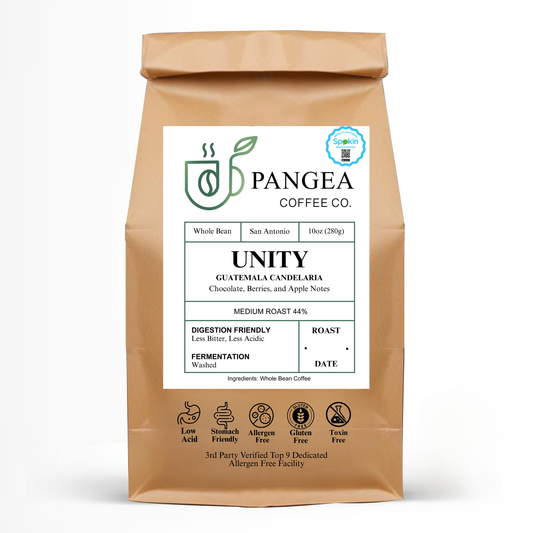
Week 3-4: If you're tolerating dark roast well, try a medium roast like our Unity blend.
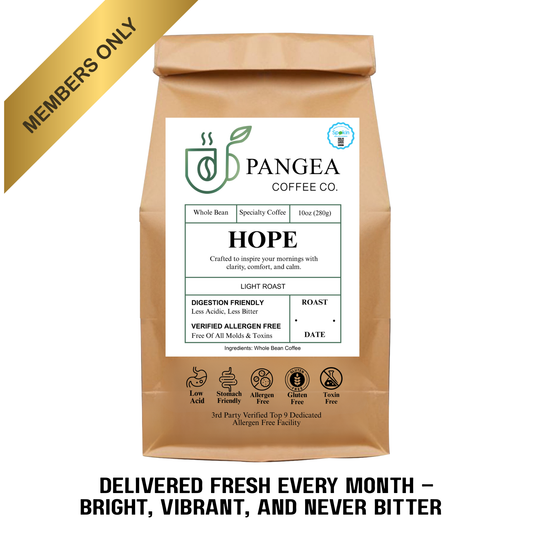
Week 5+: Gradually introduce lighter roasts if desired. Our Hope light roast maintains naturally low acidity even as a lighter roast.
Why this works: You're training your digestive system to handle coffee gradually, starting with the gentlest option and building tolerance over time.
⚠️ Important: Don't rush this process. If you experience symptoms, go back to the previous step and stay there longer before advancing.
3. Add a Tiny Pinch of Baking Soda (Sodium Bicarbonate)
This method is backed by science and recommended by many gastroenterologists for patients with severe acid reflux.
The science: Baking soda is alkaline (pH 9), which neutralizes acids. Adding just 1/4 teaspoon per cup can raise coffee's pH from around 5 to nearly 7 (neutral), dramatically reducing acidity.
How to do it correctly: Start with just a small pinch (1/8 teaspoon) per 8-ounce cup. Stir thoroughly. You can gradually increase to 1/4 teaspoon if needed, but more isn't better—too much creates a soapy taste and can cause bloating.
When to use it: This works best with already low-acid coffee. Don't use baking soda to "fix" regular high-acid coffee—start with quality low-acid beans first.
4. Never Drink Coffee on an Empty Stomach
This simple rule makes a massive difference for most heartburn sufferers, yet it's often overlooked.
Why it matters: When your stomach is empty, coffee's acids and caffeine directly stimulate your stomach lining with nothing to buffer them. This triggers maximum acid production and LES relaxation—the perfect storm for heartburn.
What to eat first: Choose foods that are gentle and slightly alkaline or neutral. Good options include oatmeal, bananas, whole grain toast, eggs, or Greek yogurt (if you tolerate dairy). Avoid acidic fruits like oranges or tomatoes.
Timing matters: Wait at least 30 minutes after eating before drinking coffee. This gives your stomach time to begin digestion and creates a protective buffer.
5. Control Your Brewing Temperature
Water temperature significantly impacts the extraction of acidic compounds from coffee grounds.
Optimal temperature: Brew at 195-205°F (90-96°C) instead of boiling water. Boiling water (212°F) extracts more acids and bitter compounds.
Practical tip: After your kettle boils, wait 30-60 seconds before pouring. This allows the temperature to drop into the ideal range.
Alternative method: Consider a coffee maker with temperature control. Many modern machines let you adjust brewing temperature, which can make a noticeable difference in acidity.
6. Shorter Brewing Times = Lower Acidity
The longer coffee grounds contact water, the more compounds—including acids—are extracted.
For drip coffee: Aim for 4-6 minutes total brewing time.
For French press: Instead of the standard 4 minutes, try 3 minutes. You might sacrifice a bit of strength, but you'll gain gentleness.
For pour-over: Keep your total brew time under 3 minutes for a single cup.
7. Consider the Grind Size
Finer grinds expose more surface area to water, leading to greater acid extraction.
Recommendation: Use a medium to medium-coarse grind for most brewing methods. This reduces over-extraction of acidic compounds while still creating flavorful coffee.
Exception: For cold brew, always use coarse grind regardless—the long steeping time compensates for the larger particles.
8. Stay Hydrated Throughout the Day
This often-overlooked factor significantly impacts how your body handles coffee's acidity.
The connection: Dehydration concentrates stomach acid and makes your digestive system more sensitive to irritants. Proper hydration dilutes stomach acid and supports healthy digestion.
The strategy: Drink a full glass of water before your coffee and maintain steady hydration throughout the day. Aim for at least 8-10 glasses of water daily.
What About Adding Milk or Cream?
You've probably heard that milk reduces coffee's acidity. Here's the nuanced truth:
It does raise pH slightly—adding milk can increase coffee's pH from about 5 to around 6, making it technically less acidic.
But there's a catch: For many people with acid reflux or GERD, dairy actually worsens symptoms. Whole milk is high in fat, which relaxes the LES and can trigger reflux. Additionally, some people have lactose sensitivity that compounds digestive issues.
Better alternatives: If you want to lighten your coffee, try unsweetened almond milk or oat milk. These plant-based options are naturally alkaline and don't carry the same reflux risks as dairy.
⚠️ Allergy Alert: Plant-Based Milks
While almond milk and oat milk can reduce perceived coffee acidity, they may contain allergens. Almond milk contains tree nuts, and oat milk often has cross-contamination concerns with gluten and other allergens. If you have food allergies, carefully check labels or stick with black coffee. Our coffee is verified allergen-free by SPOKIN, but we cannot control what you add to it.
Debunking Popular Myths: What Doesn't Actually Work
Let's address some common recommendations that sound good but don't hold up to scrutiny:
Myth 1: Eggshells in Your Coffee Grounds
The claim: Adding crushed eggshells to coffee grounds neutralizes acidity because eggshells are alkaline.
The reality: While eggshells are indeed alkaline (calcium carbonate), they don't dissolve enough during brewing to meaningfully impact your coffee's pH. You'd need a significant amount of dissolved calcium carbonate to notice any difference, and eggshells simply don't release enough during the brief contact time of brewing.
The verdict: Not effective, and potentially unsafe due to bacteria concerns if eggshells aren't properly cleaned.
Myth 2: Adding Salt Reduces Acidity
The claim: A pinch of salt neutralizes coffee's acidity and reduces bitterness.
The reality: Salt doesn't change coffee's pH at all. What it does do is mask bitterness by suppressing bitter taste receptors on your tongue. This might make coffee taste smoother, but it does nothing to reduce actual acidity or help with heartburn.
The verdict: Not effective for acid reflux, though it may improve taste perception.
Myth 3: Paper Filters Remove Acids
The claim: Using paper filters instead of metal filters removes acidic compounds.
The reality: Paper filters primarily remove coffee oils (including beneficial cafestol and kahweol), but they don't significantly filter out the acidic compounds that cause heartburn. The pH of filtered coffee versus unfiltered coffee is nearly identical.
The verdict: Paper filters have other benefits (like reducing cholesterol-raising compounds), but reducing acidity isn't one of them.
Myth 4: Reheating Coffee Increases Acidity
The claim: Reheating coffee makes it more acidic and harder on your stomach.
The reality: Reheating doesn't change the pH of coffee. What it does is break down flavor compounds, creating bitter and burnt tastes that people sometimes confuse with acidity. The perceived "sourness" is actually just bad-tasting coffee.
The verdict: Reheating creates bad flavor but doesn't increase actual acidity. However, fresh coffee is always better.
When to Consider Decaf (But Choose Carefully)
If you've tried all these methods and still struggle with heartburn, reducing or eliminating caffeine might help—but the decaffeination process matters tremendously for your health.
Why caffeine removal can help: Caffeine relaxes your LES (lower esophageal sphincter) and stimulates acid production. Removing caffeine eliminates a major heartburn trigger while keeping the coffee ritual you love.
⚠️ Critical: Most Decaf Uses Harsh Chemicals
The vast majority of decaf coffee is processed using chemical solvents like methylene chloride or ethyl acetate. These chemicals are used to strip caffeine from beans, and trace amounts can remain in the final product. For people with sensitivities, allergies, or compromised digestive systems, this is a serious concern.
If you choose decaf, ONLY select Swiss Water Process or CO2 Process decaf. These are the only truly chemical-free decaffeination methods available. If a coffee doesn't explicitly state "Swiss Water Process" or "CO2 Process," assume it uses chemical solvents.
Swiss Water Process: This patented method uses only water, temperature, and time to remove caffeine. No chemicals touch your coffee. It's more expensive and harder to find, but it's the gold standard for clean decaf.
CO2 Process (Supercritical Carbon Dioxide): This method uses pressurized CO2 to extract caffeine. It's chemical-free and preserves more flavor compounds than Swiss Water, though it's even less common.
Our stance: At Pangea Coffee, we don't currently offer decaf because we refuse to compromise on our clean coffee standards. We will only introduce decaf when we can source Swiss Water or CO2 Process beans that meet our allergen-free, mold-free quality standards. Your health is too important to cut corners.
If you need decaf: Look for explicitly labeled "Swiss Water Process Decaf" from reputable roasters who prioritize clean processing. Decaf isn't completely acid-free—you'll still want to apply all the brewing methods we've discussed, especially cold brew with dark roast beans.
How Our Coffee Is Designed for Sensitive Stomachs
At Pangea Coffee, we don't just talk about being gentle on stomachs—we've built our entire business around it because our own family members struggle with these issues.
Natural low-acid processing: We select beans from specific growing regions and elevations known for naturally lower acidity. Our beans are grown at high altitudes where slower maturation creates sweeter, less acidic coffee.
Careful roasting: Our roasting process is specifically calibrated to break down chlorogenic acids while preserving flavor. This isn't about roasting dark to hide defects—it's precision roasting for digestive wellness.
SPOKIN verified allergen-free: We're one of the first coffee companies in America to achieve SPOKIN verification. This means our entire facility is free from the top 9 allergens, giving you peace of mind if you have multiple sensitivities.

Q grader quality control: Unlike companies that claim to "lab test for mold," we have certified Q graders on staff who evaluate every batch. Q graders are trained coffee professionals who can identify defects, including mold, by taste and visual inspection—a more comprehensive quality check than any single lab test.
Doctor-backed: Our approach is endorsed by gastroenterologists who recommend our coffee to their patients with GERD and acid reflux.

Creating Your Personal Coffee Strategy
Everyone's digestive system is different. Here's how to develop a strategy that works for your body:
Week 1: Establish a baseline. Start with our Bold Respect dark roast prepared as cold brew. Drink it after a meal, never on an empty stomach. Track your symptoms.
Week 2-3: Add alkaline support. If you still experience mild symptoms, add 1/8 teaspoon of baking soda to your coffee. Continue tracking.
Week 4: Experiment with timing. Try different times of day to find when your body handles coffee best. Many people find mid-morning (after breakfast has had time to digest) is optimal.
Week 5: Progress gradually. If you're doing well with dark roast cold brew, try hot-brewed dark roast. Then advance to medium roasts like our Unity blend.
Ongoing: Listen to your body. Some days you might need to go back to gentler methods. Stress, diet, sleep, and hydration all affect how your body handles coffee. Be flexible and kind to yourself.
Beyond Coffee: Lifestyle Factors That Help
Even the best low-acid coffee can cause problems if other lifestyle factors aren't addressed:
Don't lie down after drinking coffee. Stay upright for at least 2-3 hours after your last cup. Gravity helps keep stomach acid where it belongs.
Avoid late-day coffee. Having coffee close to bedtime increases nighttime reflux risk. Set a personal cutoff time—for most people, this means no coffee after 2 PM.
Manage stress. Stress increases stomach acid production and makes you more sensitive to irritants. Coffee during high-stress periods may trigger symptoms even if it normally doesn't.
Watch your portion size. A small 6-8 ounce cup is gentler than a 16-ounce mug. Start smaller and see how your body responds.
Track trigger foods. Coffee might not be the only culprit. Chocolate, tomatoes, citrus, spicy foods, and fatty foods can all contribute to reflux. Keep a food diary to identify patterns.
When to Talk to Your Doctor
While these strategies help most people, persistent heartburn deserves medical attention:
See a gastroenterologist if you experience:
- Heartburn more than twice per week despite lifestyle modifications
- Difficulty swallowing or pain when swallowing
- Persistent nausea or vomiting
- Unexplained weight loss
- Blood in stool or vomit
- Chest pain (always get this evaluated immediately—don't assume it's heartburn)
Chronic acid reflux can lead to serious complications like esophageal damage, Barrett's esophagus, or even esophageal cancer. Don't ignore persistent symptoms.
The Bottom Line: You Don't Have to Give Up Coffee
If you're still experiencing heartburn with low-acid coffee, the solution isn't necessarily giving up coffee forever—it's finding the right combination of brewing methods, timing, and personal strategies that work for your body.
Start with cold brew using dark roast beans, always drink after eating, stay well-hydrated, and be patient with the process. Add baking soda if needed, and don't be afraid to experiment with timing and portion sizes.
Most importantly, remember that you're not alone in this struggle. Millions of coffee lovers face the same challenge, and many have found ways to keep coffee in their lives without the burn.
Ready to Experience Coffee Designed for Sensitive Stomachs?
Start your journey with our doctor-backed, allergen-free coffee built specifically for people with acid reflux and GERD.
Try Bold Respect Dark Roast Explore Our Sampler PackFrequently Asked Questions
What is the least acidic way to brew coffee?
Cold brew is scientifically the least acidic brewing method, producing coffee up to 67% less acidic than hot brew methods. For maximum gentleness, make cold brew using dark roast beans and add a small pinch of baking soda if needed. At Pangea Coffee, we recommend starting with our Bold Respect dark roast prepared as cold brew for the lowest possible acidity.
Can I drink coffee with GERD if I take medication?
You should always consult your gastroenterologist before making dietary decisions while on GERD medication. However, many patients taking PPIs (proton pump inhibitors) like omeprazole or pantoprazole can still enjoy low-acid coffee using the methods outlined in this guide. Start with small amounts, monitor your symptoms, and work closely with your doctor to find what's safe for your specific situation.
Does adding baking soda to coffee really work?
Yes, adding baking soda (sodium bicarbonate) to coffee is scientifically proven to reduce acidity. Just 1/4 teaspoon per cup can raise coffee's pH from around 5 to nearly 7 (neutral). Start with a smaller amount (1/8 teaspoon) and increase gradually. Too much creates a soapy taste and can cause bloating. This method works best when combined with already low-acid coffee like Pangea's SPOKIN-verified options.
Is dark roast or light roast better for acid reflux?
Dark roast is significantly better for acid reflux. The longer roasting process breaks down chlorogenic acids—the compounds most responsible for coffee's acidity. Light roasts retain more of these acids. If you have severe sensitivity, start with dark roast (like our Bold Respect) and only progress to medium or light roasts after building tolerance over several weeks.
Why do I get heartburn from coffee but not other drinks?
Coffee uniquely combines multiple heartburn triggers: it's acidic, contains caffeine that relaxes your lower esophageal sphincter (LES), and stimulates your stomach to produce more acid. Even low-acid coffee contains caffeine (unless it's decaf), which is why some people still experience symptoms. Using the brewing methods and timing strategies in this guide can help address these multiple factors.
Should I switch to decaf if I have acid reflux?
Decaf can be helpful because it removes caffeine—a major trigger for LES relaxation and acid production. However, decaf isn't automatically less acidic; it still contains the acidic compounds in coffee. If you choose decaf, select Swiss Water Process decaf for the cleanest option, and still apply the brewing methods we've discussed (especially cold brew with dark roast) for maximum gentleness on your stomach.
How long after eating should I wait to drink coffee?
Wait at least 30 minutes after eating before drinking coffee. This gives your stomach time to begin digestion and creates a protective buffer between coffee and your stomach lining. Never drink coffee on an empty stomach if you have acid reflux or GERD. Pairing coffee with a balanced meal significantly reduces heartburn risk for most people.
Can I drink coffee if I have Barrett's esophagus?
Barrett's esophagus is a serious condition that requires medical supervision. You must consult your gastroenterologist before drinking any coffee. Some doctors allow patients with well-controlled Barrett's to have small amounts of low-acid coffee, while others recommend complete avoidance. Never make this decision without your doctor's explicit guidance, as Barrett's increases your risk of esophageal cancer.
Join Our Community of Coffee Lovers with Sensitive Stomachs
Get exclusive tips, recipes, and early access to new low-acid coffee releases. We're building a community of people who refuse to give up the coffee they love.
Disclaimer: This article is for educational purposes only and does not constitute medical advice. Always consult with a qualified healthcare provider regarding acid reflux, GERD, or any other medical condition. Individual results may vary, and what works for one person may not work for another.
Related Articles:
Images


